-
Thank You for Supporting USMF
-
Forum Donations
-
-
To send a donation, just click on
FORUM DONATIONS in the box above. -
Recent Posts
-
By milihfra · Posted
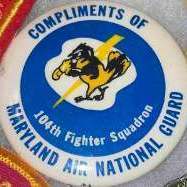
Some great stuff jonesy, love your flight test badges. I see mine, yours and others all have different color numbers and symbols. I know ID badges all have unique numbers, but I wonder what the different colors and symbols mean. I actually interviewed a man who had been considering taking a job in flight testing for the A-10, but he decided to pass as he said it was very strenuous. Funny enough, I also just came into another local Fairchild haul, I will not share it all as to keep as on topic as I can but I think it belongs here for the history of the A-10. - Local newspaper bearing the news of the closure of the Fairchild Plant, talks a good bit about the wind-down of the A-10 contract and when the last ones would be finished - Union agreement booklet, the last one for Fairchild workers in Hagerstown. The last A-10 was finished in March 1984 - A brochure all about Fairchild has a couple of cool photos of our beloved A-10 and has a directory listing out what all the different Fairchild departments are. -
By aznation · Posted
For the U.S. Military in WWI, July 30, 1918, is significant for the "baptism of fire" of the 32nd "Red Arrow" Division and continued heavy offensive operations by the 42nd "Rainbow" Division during the Aisne-Marne campaign. Note: I believe that's what the arrow symbol represents in the middle of the compass, that is the 32nd "Red Arrow" Division. I'm not sure what the initials S. F. stand for inside the case of the compass. Maybe an inspectors mark? Not sure. -
By aznation · Posted
SS Tuscania The liner Tuscania was delivered to its owners, the Anchor Line, at the beginning of 1915 for the joint service with Cunard from Glasgow to New York via Liverpool. Its maiden voyage on 6 February of that year was on this route, on which it traveled for the rest of its career. In September 1915 it helped rescue passengers for the Greek Line's ship Athini which had caught fire in the Atlantic. Tuscania first undertook trooping duties in September 1916, carrying Canadian troops from Halifax, Nova Scotia, to Liverpool. In August of the following year she brought 1,236 men of the 16th U.S. Engineer Regiment from New York to Liverpool, and two more successful voyages followed. Tuscania left Hoboken, New Jersey, on her final voyage on 24 January 1918 carrying 2,013 American troops and a crew of 384. She joined Convoy HX-20 at Halifax, Nova Scotia, and proceeded to cross the Atlantic bound for Le Havre. On 5 February the convoy was sighted seven miles north of the Rathilin Island lighthouse by the German Submarine UB-77 under the command of Lt. Cdr. Wilhelm Meyer. At 5:40 p.m he fired two torpedoes at the Tuscania, the first of which missed, the second scoring a direct hit. By 7:00 pm. all the ship's lifeboats had been launched, but approximately 1,350 men remained on board. The convoy's escorting destroyers assisted in removing these but were hampered by the continuing presence of the UB-77 in the area. The Tuscania finally sank at 10:00 p.m., over four hours after being struck, with 230 people lost. (One estimate indicated 201 of these were American troops, the remainder crew members.) Tuscania was the first ship carrying American troops to be sunk, and public opinion in the USA regarded its loss as an outrage. In 1920 the American Red Cross erected a monument on the Isle of Islay, where many of the victims were buried before their transfer that year to the American War Cemetery at Brookwood [England] or to their homeland. Some Quick Facts Data on Tuscania: Gross Tonnage — 14,348 tons Length —549 ft.; Width — 66.5 ft. Builder — A. Stephen & Sons, Glasgow Launch Date — 3 September 1914 Passenger Capacity — 271 in 1st cl.; 246 in 2nd cl.; 1,900 in 3rd cl. Captain — Peter McLean, OBE Sunk — 5 February 1918 by UB-77, Lt. Cdr. Wilhelm Meyer, Commander AEF Units Aboard: 20th Engineers, Companies D,E,F. [Forestry Battalion] 107th Engineer Train 107th Military Police 107th Supply Train 100th, 158th, 263rd Aero Squadrons Replacement detachments for 32nd Division Fifty-one casual [replacement] officers -

By B24Lib.1942 · Posted
Thanks for the welcome, I appreciate it. My Great Uncle enlisted at Camp Forrest, Tennessee on 12/2/42 and was honorably discharged on 10/15/43. I sent off for his records but they were burned in the fire of 1973. Strike one, everyone who knows anything about him has passed away, Strike two. He died from a cerebral hemorrhage causing paralysis, on December 23, 1944. I don't know where to go from here. Strike three. The only items I have are 3 pictures in his uniform and a USAAF shoulder patch that was his. Have a blessed evening, Jeremiah -

By AxolotlHelmet · Posted
Some info on Mr. Tetley from Brown University's Memorial Page: "Egbert Foster Tetley, class of 1916, former English instructor at Brown University, Lieutenant in Co. C., 47th Infantry, was killed in action, during an attack on machine gun nests at Bayoches, France on August 10th, 1918. After Lieutenant Tetley was wounded he lay and smoked a cigarette while waiting for the stretcher bearers. As he was being lifted upon the stretcher, he was hit again, all along the side by machine gun bullets. When asked by one of the men near him what they should do, he told them to “Stick to the last” and died shortly thereafter." -
By 3mxd · Posted
The piece on the left is an authentic Pilgrim's identification badge to Elizabeth Tetley, the step-mother of 2nd Lt Egbert F. Tetley, Co C, 47th Inf, 4th Div, KIA 10 Aug 1918. She was from North Chelmsford, Middlesex County, MA. I'm not sure what the piece on the right is, I've never seen/heard of one like before. The pendant on it appears to be a copy of an authentic one but the image you provided is too blurry to say for sure. Also, I'm not sure by what you mean when you say "the actual medal is the same with the number on the reverse." Do you mean the pendant on the left has a serial number but the pendant on the right does not? Perhaps the one on the right was used for some patriotic event associated with Missouri. The one on the right is certainly not official and the ribbon is incorrectly reversed, the blue stripe should be on the left, red on the right. -
By HBT · Posted
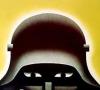
Respectfully, I don’t think cosmetic freshness alone tells the story. Plenty of issued helmets saw limited field use, sat in lockers/cages, were training-only, spare gear, aircrew kit, or were simply well cared for. Not every legitimate item has to be sun-faded and beat to death to be real. My question was less about wear and more about whether anyone recognizes this specific single-bolt ANVIS shroud setup and use-case history. -

By VK WW1 · Posted
Hi everyone, I bought a Saber and it has this Saber Knot that I've never seen before. Does anyone know anything about it? -
By yellowhammer history · Posted
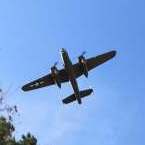
I need to start going to more yard sales.... the trift stores in my area can be good so maybe the yard sales are to. -
By Rooter · Posted
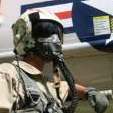
Indeed, they do look amazingly similar! In fact ours has the letters "CO" on either sides of the back of the helmet. Do you think if it was from a commander of VA-164, it would be possible to track down his jet? It sure would be nice detail to add to the display. Since the gear is on loan from the Navy, I have been considering contacting the Naval History and Heritage Command to see if they might have any additional information on it.
-
-

-

-

-
-

-
-
.jpg.2ce6a8d90c750304bcf9d4faa9318f5d.jpg.5a23d93005bf9ba70918d137e8d2e4fc.jpg)
-
-
-

-

-
-
-

-

-

-
-

-
* While this forum is partially supported by our advertisers, we make no claim nor endorsement of authenticity of the products which these advertisers sell. If you have an issue with any advertiser, please take it up with them and not with the owner or staff of this forum.