
-
Current Donation Goals
-
To send a donation, CLICK HERE to go to the DONATE page for options.
-
Recent Posts
-

By DiGilio · Posted
Captain Taylor was 1st Brigade Assistant Intelligence Officer at the time of this photo (July 1965). Seems he took over command of B 2/502 following casualties during Operation Gibraltar in September 1965. Still not sure of the exact ID of this helmet marking, but it would appear to be unrelated to 2/502. -
-

By HBT · Posted
Thanks. On another forum someone suggested this configuration may have been used by 160th "back seaters," so your comment about Air Force/TACPs lines up with other leads I've come across. I'm hoping someone with firsthand experience can eventually confirm the use case. -
By Cobra 6 Actual · Posted
Hey, Wade, that is a tough question to answer. On the one hand there are probably plenty of them still out there “in the wild”. We have to remember that a typical Army or Marine division in Vietnam would have an authorized strength of ~15,000 personnel … and everyone smoked! (The reality is that, rightly or not, guys weren’t concerned about getting cancer in 20 or 30 years; when being “taken out” by “high speed lead poisoning” was much more probable and much sooner.) On the other hand, lighters of any particular unit are not in one obvious location. (You know that already, but I’m just covering the obvious.) However, “putting the word out” here is an excellent start. Plus letting friends, family, and neighbors know is also a good strategy. Still the best source is the much-maligned eBay. Put the particulars of your looked for lighter into its search engine and let it do the work for you. I still have a couple of “Holy Grail” items I’m looking for and have several “bookmarked” on eBay’s search engine. If I get a “hit”, eBay sends me an email. Now, here’s where we can be most helpful to you: if you do get an eBay hit, then post it on here and we can help you determine if it is a authentic engraved-in-Vietnam lighter or one of the ba-zillion fakes out there. I see you’ve posted helpful comments on this thread before, so perhaps you are already aware of the different indicators of fakes, but a second option is often a good idea. Good luck and good hunting! -
-
By SemperFi3007 · Posted
If anyone is selling any of the original mugs I'd be interested, please send a message. -
By doyler · Posted
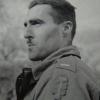
Capt. Thomas Taylor (son of Maxwell Taylor) when arriving in Vietnam was with 1st Brigade 101st Airborne serving with B Company 502nd Infantry. -
By mikie · Posted
Oh, Grant had a drinking problem for sure. He mostly kept it under control except for a few unfortunate incidents where he went off the rails. His wife solved the problem by sending their son to join him at headquarters and she joined them eventually herself. With them around, booze was never a problem again. Some say that he substituted cigars to curbs alcohol urges. That of course led to the throat cancer that killed him. -
-

By ScottG · Posted
He is extolling the evils of slavery quite clearly but he is also using the vernacular of the time and speaking with the norms and mores of the time. Lee is a devout man of God and he believed whole heartedley that the will of God was not known to man and that it would be made clear if and when God chose it to be. Like nearly all Americans, he believed in the superiority both intellectually and racially of the white race. These were not abnormal beliefs at that time, they were normal and were held by academics and by farmers. At best the African was like a child, at worst like cattle. Lee was no different and while he may have been affluent, he was a product of his time. This is a great discussion but I fear we have begun to leave Grant behind. I love to discuss the complexity of Lee's personality and as you point out the duality of it as well. He wrote an opinion as a young engineer about the Michigan Ohio border dispute and found that the border as surveyed favored Toledo being part of Michigan citing the federal survey lines. Ohio claimed states rights as they had administered Toledo all along. Quite interesting as in a few years he would leave federal service for states rights. That was Lee and its part of what makes him so interesting. Grant on the other hand, like Lee was a well respected young officer in the Mexican War, but his moods and his drinking got him on the wrong side of many of his peers and superiors. That said, it seems the drinking was much overstated. Scott Scott
-
-

-

-

-

-
-
.jpg.2ce6a8d90c750304bcf9d4faa9318f5d.jpg.5a23d93005bf9ba70918d137e8d2e4fc.jpg)
-

-
-

-

-

-

-
* While this forum is partially supported by our advertisers, we make no claim nor endorsement of authenticity of the products which these advertisers sell. If you have an issue with any advertiser, please take it up with them and not with the owner or staff of this forum.