
-
Current Donation Goals
-
To send a donation, just click on
FORUM DONATIONS in the box above. -
Recent Posts
-
By S1991 · Posted
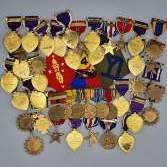
Hi all, I picked up these receivers at a show today for a decent price compared to other vendors. Anyway I was wondering if this is the correct type of receivers for the M-1938 Tanker Helmet? If my research is correct there were two types of R-14 receivers. One with a longer cord and the shorter 13 inch cord. Besides that one type also had the screws in the receivers while the other didn't. Furthermore it's considered that a red PL-54 plug was used for the Army Air Force. With all the information at hand, I believe these to be the "HS-18 Headset with R-14 Receivers". And so, correct for a M-1938 Tanker Helmet? Thanks for any input! -

By blitz67 · Posted
You shouldn’t bid on items unless you are sure what you are buying. Good god you that you cancelled but not fair to seller -
By blitz67 · Posted
Looks good. The anchor is a maker symbol and nothing to do with Navy. Nice looking helmet -

By Charlie Flick · Posted
It is M2 Ball, corrosive and appears to be in nice condition. The value would be about one or two dollars. For example, a 10 second search on Gunbroker shows this 20 round unopened box of M2 Ball for sale at $39.99 opening bid. That would be $2 per round. This ammunition is not scarce. During WW2 Lake City made billions of rounds of .30 caliber ammunition. Indeed, in 1944 it has been reported that LC was making 4,000,000 rounds per day. Hope that helps you. Regards, Charlie -
By patches · Posted
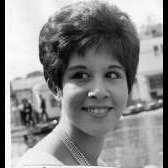
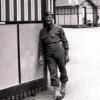
2nd Infantry Division patch on the shoulder, 11th Air Assault Division on pocket, Fort Benning Georgia 1964. -
-
By aerialbridge · Posted
On June 19, 1864, the USS Kearsarge intercepted and sank the notorious Confederate commerce raider CSS Alabama, putting an end to the South's devastating global raids on Northern merchant shipping. The CSS Alabama was a British-built Confederate cruiser that had captured or destroyed dozens of Union merchant vessels during a nearly two-year global voyage (map link below). CSS Alabama slipped out of the River Mersey in Liverpool, England, on July 29, 1862. Billed as a shakedown cruise or "trial run," she quickly made her way to the Azores, where she was officially commissioned and began her two-year globe-skipping, commerce-raiding voyage on August 24, 1862. Over 22 months, she traveled from the Atlantic and Gulf of Mexico to the coasts of Africa, the East Indies, and the Pacific Ocean. Alabama's raider crew under Captain Raphael Semmes, boarded nearly 450 vessels, taking 65 "prize ships" and even sinking the Union warship USS Hatteras off the coast of Galveston, Texas. The estimated $6 million (in 1864 dollars) damages inflicted on Northern shipping caused Union merchant fleets to panic, forced hundreds of ships to re-flag to foreign nations, and ultimately led to Britain paying $15.5 million in international arbitration damages after the war. Map of the global voyage of CSS Alabama from her launch at Liverpool, to her demise in the English Channel, sunk off Cherbourg, France by USS Kearsarge. (click to enlarge) https://civilwartalk.com/threads/map-of-the-route-of-the-css-alabama.200461/ The USS Kearsarge was a heavily armed Union sloop-of-war, under the command of Captain John Ancrum Winslow, ordered to track down and neutralize Alabama. After arriving in Cherbourg, France along the Normandy Coast for much-needed repairs and coal, the Alabama was trapped when the Kearsarge arrived and blockaded the English Channel port. Out of options, Alabama's captain boldly decided to stand out from the Port of Cherbourg, past the 3 mile territorial limit (the "cannon shot" rule, the distance a shore battery could defend) to engage the Kearsarge in international waters. The two ships engaged in a helical, circular gun battle (pictured below), resembling a stretched Slinky (ironically invented by American naval engineer Richard T. James in 1943), circling each other as they fired. Superior Union gunnery and poor powder aboard the Confederate ship allowed the Kearsarge to inflict fatal damage. The Alabama was heavily battered with shot holes beneath the water line, struck its colors, and sank within an hour of the battle's start, 7 miles off the coast of Cherbourg in 200 feet of water. Over 40 Confederate sailors were casualties, including 21 dead or drowned and 20 wounded. USS Kearsarge had one sailor killed and two injured. It rescued 70 CSS Alabama survivors, while a British yacht named the Deerhound (along with French pilot boats) rescued 42 others, including Captain Raphael Semmes, who evaded Union capture. Including the seminal Civil War sloop commanded by Captain Winslow, there have been 5 USN warships bearing that proud name: USS Kearsarge (1861): Wrecked on Roncador Reef off the coast of Central America on February 2, 1894 USS Kearsarge (BB-5): A Kearsarge-class battleship launched in 1898. She was a ship in the famous "Great White Fleet" and later converted to a crane ship before being scrapped. USS Kearsarge (CV-12): An Essex-class aircraft carrier, though she was renamed Hornet prior to her 1943 launch. USS Kearsarge (CV-33): Another Essex-class aircraft carrier, launched in 1945. She served in the Korean and Vietnam Wars and later acted as the recovery ship for the Project Mercury space missions. USS Kearsarge (LHD-3): A Wasp-class amphibious assault ship commissioned in 1993. She remains in active service with the U.S. Navy. Captain John Ancrum Winslow (1811-1873) was advanced to rear admiral in 1870, Winslow commanded the Pacific Squadron from that year to 1872. Shortly after his retirement, he died in Boston, and is buried at Forest Hills Cemetery in Jamaica Plain. His coffin was draped in the Kearsarge's battle flag, and a slab of stone from Mount Kearsarge in New Hampshire covers his grave. Confederate Navy Captain (and former USN officer) Gabriel Semmes (1809-1877) eventually made his way back from England (where he had been hailed a hero) through Mexico to the US and eventually to Richmond, the CSA capital. He was promoted to rear admiral and commanded the James River Squadron, and briefly served as a CSA brigadier general in the final days of the war. He was captured at Mobile, AL in December 1865 and held at the New York Navy Yard under treason and piracy charges. Three months later the charges were dropped and he was released in April 1866. Semmes became a professor at the forerunner to Louisiana State University and later moved back to Mobile, where he practiced law and published Memoirs of Service Afloat During the War Between the States. He died of food poisoning at age 67. Three USN warships have been named in honor of RADM John Ancrum Winslow, naval hero at the Battle of Cherbourg (1864): USS Winslow (TB-5), a torpedo boat during the Spanish–American War. On the morning of May 11, 1898, Winslow and the revenue cutter USRC Hudson escorted USS Wilmington into Cárdenas Bay, Cuba, to search for Spanish gunboats. Spanish shore batteries and gunboats opened heavy fire on Winslow, disabling the steering gear and port engine, leaving the ship dead in the water. Under withering fire, Hudson successfully rigged a towline and pulled Winslow out of harm's way. While being towed, a shell struck near a starboard gun, killing Winslow's executive officer, Ensign Worth Bagley, along with three enlisted men. Bagley was the first American naval officer killed in action during the Spanish-American War. USS Winslow (DD-53), an O'Brien-class destroyer, commissioned in 1915, served during World War I and decommissioned in 1922. USS Winslow (DD-359), a Porter-class destroyer leader, commissioned in 1937, and one of five USN destroyer escorts and one cruiser accompanying FDR embarked on cruiser USS Augusta (CA-31) in August 1941 for the top-secret, shipboard, Atlantic Conference at Placentia Bay, Newfoundland, Canada, offshore from the newly constructed Naval Station Argentia (1941-1994). This was only the second time that Roosevelt and Churchill had met in person. During the three day conference from August 9- 12, 1941, they forged a lifelong friendship and the Atlantic Charter that stated their goals for a post-World War II world, including self-determination and economic cooperation. It served as a foundational document for future international agreements and the establishment of the United Nations. While the pair had first met during WWI, Roosevelt had been unimpressed at the time, saying, "I always disliked him [Churchill] since the time I went to England in 1917 or 1918. At a dinner I attended he acted like a stinker". During WW II. Winslow had duty in the South Atlantic, intercepting German blockade runners (ironically similar to the duty of her namesake, Captain Winslow, during the Civil War) and later convoy duty out of NY, Boston or Charleston, SC, to England or France. During these crossings, Winslow traversed the English channel, where her namesake captain had battled CSS Alabama nearly 80 years before, and was berthed at Liverpool, where CSS Alabama was launched, at least three times after completing Atlantic crossings. Destroyer USS Winslow was redesignated AG-127 as an experimental anti-aircraft platform in 1945 and decommissioned in 1950. Winslow was the last surviving USN destroyer of 66 that were commissioned during the 1930s, when it was sold for scrap in February 1959. It was named for both RADM John Ancrum Winslow and his first cousin, once-removed, RADM Cameron McRae Winslow (1854-1932). During the Spanish-American War, Lieutenant Cam Winslow was attached to the gunboat USS Nashville and cited for extraordinary heroism on May 11, 1898, when he led a boat expedition from that ship, in concert with a similar boat expedition from gunboat USS Marblehead under heavy point-blank enemy fire to cut the Spanish submarine telegraph cables off Cienfuegos, Cuba. Wounded in the hand, Winslow carried on and completed the mission. At that time the Navy did not award the Medal of Honor to officers, but enlisted men in the boat crews were awarded the MoH. -
By Just an Old dude · Posted
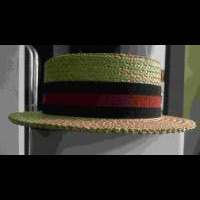
While out and about found this WWII Tank Destroyer piped O/S cap. Only military item at the sale. It is named but I haven't looked him up. Thank for looking. OD -
By Father V · Posted
This source has post-war: https://books.googleusercontent.com/books/content?req=AKW5QafmL5MliNYjRBhJ6p-QGFnopAzNzSGtqtNbeW2iuArMpglIAnOu0GOfwGT55LGO_-3-6L_saGTFjDTceyV9UT1gA6562hOo4__LX09Xe3LUes561KtxleonOU__5wX8f9bERUk5ib392QbouEx9W5Egww4XVKyND4Bnu2iACJgNDYoT4QCaXZ0v-WINJdRLNow-SnoviVOCcd0uBczuU9s_YBeZao5WLzqnvL5idFwD-xhR0Ggb4axjz2zktK3hxNVCL8CxaiQ8BHq4u4wr18_Wz5NfhRJMpmatG0aMjLMP4beXabk pg. 102 -
By thorin6 · Posted
Nice to know, and thanks for the information. The seller was asking $285 I believe.
-
-

-

-
-
-
-
.jpg.2ce6a8d90c750304bcf9d4faa9318f5d.jpg.5a23d93005bf9ba70918d137e8d2e4fc.jpg)
-
-
-
-

-
-
-
* While this forum is partially supported by our advertisers, we make no claim nor endorsement of authenticity of the products which these advertisers sell. If you have an issue with any advertiser, please take it up with them and not with the owner or staff of this forum.