
-
Current Donation Goals
-
Forum DonationsRaised $2,461 of $7,500 target
-
-
To send a donation, just click on
FORUM DONATIONS in the box above. -
Recent Posts
-
By MaximumHistory · Posted
For any and all who are interesting in anything else I have scanned, I will leave a link to my archival website below. I run my archival site as a non-profit, educational source for individuals to see and understand photographs from the Second World War and Postwar that have not been seen digitally before. I currently support over 350 individual photographs on the archive, and I add more every few weeks. While not all the pictures present here are U.S.-focused, many of them are and may be of interest to many people present on this forum. If you are browsing and find any inaccuracies with my information and captioning, please inform me via PMs. I do whatever is in my power to have the most accurate descriptions to help keep people educated on what they see. https://karlhistoricalarchive.weebly.com/ If posting this here is against the rules of this forum, please inform me, but in my searching of the rules section I did not see any direct mentions of posting personal non-profit sites such as mine. Many thanks to all. -

By m1903 · Posted
Never been to this show, is it just insignia or do you get medal dealers also ? -

By Big Iron · Posted
I'm guessing the hat was gone? That is quite a score, really. I have been interested in collecting career military uniforms that started in WWII or previous because of their lower cost and somewhat more interesting history. I'd love to find a double or triple war uniform (WWI-Korea or WWII through Vietnam). I have one from a local vet, but I need to request his service records so I can figure out how to configure it. Did you get both uniform sets (colonel and general)? -
By MaximumHistory · Posted
Hello everyone, In my efforts of scanning and researching photographs in my collection, I've found some quite monumental ones you all may be interested in. The series of photographs is a grouping taken by an individual serviceman only a few hours after the initial landings on the beaches of Okinawa in the Green Zone, where men of the 6th Marine Division's 22nd Marine Regiment and 26th Marine Regiment landing on the first day of the Battle of Okinawa. Pictures depict men of the 22nd Marines already positioned on the island's beach, and men of the 26th Marines directly after having arrived on the beach. It is a wonder to me how an infantryman would have gotten himself a camera on the beaches so early on, leading me to believe these photographs might be some of the rarest of the rare I'll ever have my hands on. The pictures will be included below with captions that are as detailed as I have been able to write. Please enjoy, and if anybody has any comments or further information to provide, please do so. Any words are kindly appreciated! 1. The U.S.S. Tennessee dreadnought battleship floats through the sea off the coast of the island of Okinawa, as the U.S.S. PC-598 submarine chaser passes off the Tennessee's port side in the opposite direction. All along the water, U.S. Navy LCVP landing crafts can be seen heading towards the shore. On the right of the frame, a U.S. Navy LST landing ship is also visible. Far in the background along the horizon, multiple other U.S. Navy ships float along the water in the fog, including another dreadnought battleship. In this picture, the U.S.S. Tennessee has a very visible camouflage scheme, consisting of diagonal shapes of varying sizes. Taken off the coast of the Green Beach landing zones of the Okinawa beachhead, directly after the initial landings on April 1st of 1945. 2. U.S. Marines of the 6th Marine Division, 22nd Marine Regiment, watch as two M4A2 Sherman medium tanks, the one in front identifiable as "A6", pass by along the Okinawa beachhead. As indicated in the tank's name, written on the tank's turret cheek, this M4A2 Sherman belonged to the 6th Marine Division's 6th Tank Battalion, Company A. The M4A2 is equipped with deep wading gear over the engine deck to allow for the vehicle to cross deep water, alongside additional track armor fitted to the hull side and turret. These M4A2 Shermans were more than likely fresh off their transport ships, evident due to the cleanliness of the vehicles and the fact that their deep wading gear is still perfectly intact. In the foreground, U.S. Marines can be seen standing around and talking to each other. It can be noted that a couple of the men on the left of the frame are equipped with full combat loads. In the background, scattered around the water-covered beaches, a U.S. Navy LST landing craft can be seen pulling into the shoreline, as large numbers of DUKW amphibious trucks and a LVT tracked carrier bring supplies and men forward into the island from LCM transport crafts and LCVP landing crafts. Taken in the Green Beach landing zones of the Okinawa beachhead, sometime after Marines had time to set up encampments after the initial landings on April 1st of 1945. 3. U.S. Marines of the 6th Marine Division, 26th Marine Regiment, walk along the Okinawa beachhead as LVT-3 Bushmaster infantry carriers, a DUKW amphibious truck, an International T9 tractor crane, and LVT-2 Water Buffalo infantry carriers position themselves in a line along the beach in preparation to enter into the mainland of Okinawa for proper unloading. On this section of the beach, a tall vertical banner can be seen at the entrance of where the vehicles have gathered. This banner, which would be colored green to match the specific landing zone, indicated the designated unloading area for vehicles carrying cargo and troops. All of the vehicles pictured, excluding the T9 tractor crane, would have belonged to the 6th Marine Division's 1st Amphibian Tractor Battalion's Company C, transporting men of the 26th Marine Regiment and reserve supplies forward to the beaches. In the background along the ocean and the rest of the landing zone, large numbers of LCVP landing crafts and LCM transport crafts can be seen floating around the ocean, alongside LST landing ships parked along the shoreline to directly drop off tanks and other pieces of heavy equipment to U.S. Marines. Taken in the Green Beach landing zones of the Okinawa beachhead, sometime shortly after the arrival of 6th Marine Division reserve troops on April 1st of 1945. 4. A group of Marine Corps tracked vehicles, consisting of a International T9 tractor crane, a LVT-3 Bushmaster, and two LVT-2 Water Buffalos, drive down the Okinawa beachhead, transporting U.S. Marines of the 6th Marine Division, 29th Marine Regiment. These LVT tracked carriers were all attached to the 1st Amphibian Tractor Battalion's Company C, helping transport U.S. Marine reserve forces forward after the initial landing. It can be noted that all of the LVT tracked carriers feature distinctive blotch pattern camouflage, which was a common sight for Marine-used LVTs during the landings on Okinawa. This battle would also be the LVT-3 Bushmaster's first time seeing battle. In the middle of the crowd, the T9 tractor crane bears the marking of the U.S.S. Andromeda (AKA-15) attack cargo ship, being attached to the U.S. Marines as part of one of the 29th Marine Regiment's shore party units. In the LVT-2 Water Buffalos, large groups of Marines sit along the edges of the transport compartments, many wearing M1 helmets with Frogskin covers. However, in the LVT-3 Bushmaster, none of the Marines wear camouflage covers, and one man can be seen with a corpsman white circle across the front of his helmet. All of the LVTs are fitted with 12.7mm M2 Browning machine guns, and the LVT-3 has an addition two 7.62mm M1919A4 machine guns. Taken in the Green Beach landing zones of the Okinawa beachhead, sometime shortly after the arrival of 6th Marine Division reserve troops on April 1st of 1945. 5. Four U.S. Navy crew members of of an LCVP "Higgins" landing craft sit along the walls of their landing craft, designated "PA-16-##" (two numbers are not visible) after getting their craft stuck in the sand during the first landing wave of Marines on Okinawa. These sailors had managed to get troops on the beach, but had went too far inland and were unable to recover the craft. On the beach itself, a U.S. Marine of the 6th Marine Division, 22nd Marine Regiment, can be seen guiding a sailor of a U.S. Navy Beach Party group to the bogged down craft. In the water nearby, an LCM transport craft designated "PA-95-2" floats past on the water after having dropped off its supplies to the beachhead. Two crew members of the LCM can be seen standing on the edge of the craft, examining the stuck LCVP. Further back into the sea, hundreds of different U.S. Navy ships are scattered along the horizon, including hordes of LCVP landing crafts bringing in Marines to the beachhead, LCM transport crafts bringing in supplies and vehicles, and even larger cargo ships farther back. One notable ship present is the U.S.S. Tennessee battleship, just visible on the horizon on the left side of the photograph. Taken in the Green Beach landing zones of the Okinawa beachhead, sometime not long after the first landing wave of Marines on April 1st of 1945. 6. An American sailor of a U.S. Navy Beach Party group, who had likely been working alongside Marines to help guide landing craft and bring in supplies, stands in the sand of the Okinawa beachhead as multiple LVT-3 Bushmaster tracked carriers and DUKW amphibious trucks bustle around the landing zone, bring troops forward. Note that the sailor is armed with an M1 Carbine, one of the most common weapons to arm Navy personnel tasked with going ashore. To the left, an LVT-3 Bushmaster labelled "1C-21" can be seen driving along the beach, this marking indicating that the vehicle belonged to the 1st Amphibian Tractor Battalion, Company C, carrying Marines of the 26th Marine Regiment forward to the beaches from reserves. One of the closer LVT-3 tracked carriers in the background is also labelled, bearing the marking "1A-43", identifying this vehicle to Company A. All along the beach, LVTs, DUKWs, LCVP landing crafts, and LCM transport craft can be seen coming ashore, bringing in more troops and supplies to support the Marines after their initial landing wave. Taken in the Green Beach landing zones of the Okinawa beachhead, sometime shortly after the arrival of 6th Marine Division reserve troops on April 1st of 1945. 7. Three U.S. Marines of the 6th Marine Division smile for the camera in their beachhead encampment. While two of the men are more relaxed, sitting down with minimal equipment, one marine behind them stands with all his combat gear, including an M1 Carbine, M1911 pistol in a leather shoulder holster, an M1936 pistol belt with ammunition pouches, and a field whistle. In the foreground, part of these men's tent can be seen, constructed out of frogskin-camouflaged canvas. In the background, another tent and a pile of ration supplies also lie on the beach, the tent occupied by more marines. In the midst of the pile of wooden ration boxes, a row of C-ration tins are lined up, and a jerrycan labelled "Water" stands upright. One of the boxes can be seen with a stencil that states the manufacture date as October of 1944, showing just how long it took for these supplies to arrive to front-line troops in the Pacific. Taken in the Green Beach landing zones of the Okinawa beachhead, sometime after Marines had time to set up encampments after the initial landings on April 1st of 1945. That is all of that, a wonderful group of photographs I am so happy to say I am in possession of. Please feel free to share these photographs if you so desire, as I will not be watermarking them in any way. I believe this information should be free to the world and not specifically owned by a singular person, despite the fact that I am the scanner and archivist of all this information. Good day to all, Karl -
By jonesy1275 · Posted
Another recent score was this original A-10A Flight Manual dated 1980 (Change 1). Not a common manual as they were tightly controlled so I'm pleased to have found one. -
By yokota57 · Posted
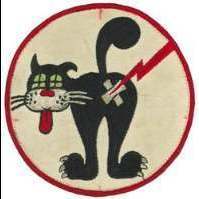
Beautiful patch. How true. LeMay was a master at wrangling the Big Bucks for SAC out of Congress. -

By Martinjmpr · Posted
Yes, the issue of the BDU field jacket lagged behind the BDU uniform. I was in the National Guard from 1983 - 86. It wasn't unusual to see an OD green field jacket over BDUs. I went active in late 86. When I went through reception I was issued 2 brand new BDU field jackets. I don't think I ever saw anybody wearing an OD green field jacket at my first duty station in Germany. -
By Tennessee · Posted
Good work bringing the story back to light, John! I hadn't seen it before, until just now, sifting through my favorite Forum site!! Thanks! David -
By Randy · Posted
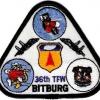
They also had Strat Recon units with RF-84s assigned. Safe to say, SAC had it all in the 50s. There was probably a Strategic Mess Kit Repair Squadron hidden in there somewhere. Here's a 91st Strat Recon Sq (Fighter). Randy -

By Arisaka99 · Posted
Here is an unmarked Navy issue Marbles 6” JPSK with its original box for reference.
-
-

-

-
-
-
-
.jpg.2ce6a8d90c750304bcf9d4faa9318f5d.jpg.5a23d93005bf9ba70918d137e8d2e4fc.jpg)
-
-
-

-

-

-

-
* While this forum is partially supported by our advertisers, we make no claim nor endorsement of authenticity of the products which these advertisers sell. If you have an issue with any advertiser, please take it up with them and not with the owner or staff of this forum.