
-
Current Donation Goals
-
To send a donation, just click on
FORUM DONATIONS in the box above. -
Recent Posts
-
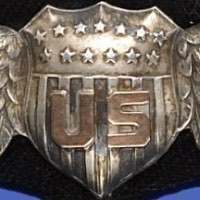
By cwnorma · Posted
There really isn't a great explanation for why an older hallmark sometimes shows up on later era pieces. Sometimes, firms reserved their older hallmarks for prestige lines. Other times, the finishing jeweler may have accidentally grabbed the wrong stamp from a bin of hallmark stamps on the bench Some jewelry companies were very strict about which hallmarks could be used. Others practically desultory. The three-cartouche (European like) Robbins hallmark is normally associated with the WW1 and before era. Robbins seems to have retained this older hallmark and used it in later eras for higher end items (it occasionally shows up on 14k badges from the WW2 period). Warm regards! Chris -

By braxbrad · Posted
greetings would you sell it thanks -

By Threewood · Posted
Identified. Robbins Now the follow up question, why/when was this hallmark used? It is on a WW2 jump badge. -
By dustin · Posted
With Marbles you can only get a general date range that straddles WWII and the information floating around, as Charlie noted, is contradictory and not always consistent. I can say that the attributed Marbles knives that I have and seen to WWII service members have either the left facing serif or no serif. I think that is about as good as it's going to get, a general idea. There is no difference being between the commercial pattern and those procured by the US Government, the only way to determine if they are "GI" is if they were so kind the inscribe/stamp something on the scabbard or knife itself. Those procured by the USAAC/USAAF were Local Purchases (1930's-1941) or Purchase Orders through Wright Field and contractors for several sustenance kits. Then there are procurements by the US Navy through Local Purchasing Offices. With all that said I do not think there is any viable way to determine quantities since most if not all purchases were small and sporadic from a multitude of sources. This then leaves a good measure of a guessing game that will likely never be resolved. -
By Threewood · Posted
These are on the back of an airborne jump badge. Has anyone seen this or something similar? -
By dustin · Posted
This is interesting and think this one of the biggest misnomers to knives in that the pommel is aluminum, they are actually a polished zinc. -
.thumb.jpg.20eab27d1db72c9ceb1281c5bbcb22e0.jpg)
By larkworthy · Posted
This is a Smith & Wesson pre-Victory model revolver that was purchased as a part of a 1,000 unit order by the Treasury Department on December 2, 1941 - just a few days before the U.S. entered WW2. This particular revolver, serial number 982602 was shipped to the United States Maritime Commission in San Francisco on May 11, 1942. It is possible this revolver was used for guarding the ship building operations in the San Francisco area. It is configured with a 4" barrel, midnight black magic finish, and smooth walnut grips that is consistent with the majority of 38 special chambered Victory models. Since this revolver was issued prior to the V serial number it is considered a pre-Victory model. Below are some details of the Maritime commission from wiki and a few other resources: From 1939 through the end of World War II, the Maritime Commission funded and administered the largest and most successful merchant shipbuilding effort in world history, producing thousands of ships and other vessels, including Liberty ships, Victory ships, and others, notably Type B barges; Type C1, Type C2, Type C3, and Type C4 freighters; Type R refrigerator ships; T1, T2, and T3 tankers, and Type V tugs. Most of the C2s and C3s were converted to Navy auxiliaries, notably attack cargo ships, attack transports, and escort aircraft carriers and many of the tankers became fleet replenishment oilers. The Commission also was tasked with the construction of many hundred "military type" vessels such as Landing Ship, Tank (LST)s and Tacoma-class frigates (PF)s and large troop transports for the Navy and Army Transportation Corps. By the end of the war, U.S. shipyards working under Maritime Commission contracts had built a total of 5,777 oceangoing merchant and naval ships. In early 1942 both the training and licensing was transferred to the U.S. Coast Guard for administration, but then late in the fall of 1942, the Maritime Service was transferred to the newly created War Shipping Administration which itself was created for the purpose of overseeing the operation of the fleet of merchant ships being built by the Emergency Program for the needs of the U.S. Armed Services. The WSA was added to the list of wartime agencies created within the Roosevelt Administration and was intended to relieve the already full plate of responsibilities of the Commission, yet they shared the same Chairman in Admiral Land and so worked very closely together. The Maritime Commission was abolished on 24 May 1950, and its functions were divided between the U.S. Federal Maritime Commission which was responsible for regulating shipping trades and trade routes and the United States Maritime Administration, which was responsible for administering the construction and operating subsidy programs, maintaining NDRF, and operating the U.S. Merchant Marine Academy which had been built and opened during World War II and which continues to be funded and operated today as one of the five Federal Service Academies. -
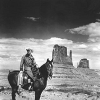
By Justin B. · Posted
I agree, 1866 reg. Tily dates the photo as 1870, but no information as to why. -
By tully216 · Posted
CAN NOT REMEMBER WHERE I HAVE SEEN THIS ONE. HELP, Mark -
By KingCornChip · Posted
Well glad to know they went to a good home. Cool to see the former 32nd veteran's group president's stuff. Maybe I'll see you out there in the wild sometime.
-
-

-

-

-

-
-
.jpg.2ce6a8d90c750304bcf9d4faa9318f5d.jpg.5a23d93005bf9ba70918d137e8d2e4fc.jpg)
-

-
-

-

-

-

-
* While this forum is partially supported by our advertisers, we make no claim nor endorsement of authenticity of the products which these advertisers sell. If you have an issue with any advertiser, please take it up with them and not with the owner or staff of this forum.