-
Thank You for Supporting USMF
-
Forum Donations
-
-
To send a donation, just click on
FORUM DONATIONS in the box above. -
Recent Posts
-
By militbuff · Posted
I know a good amount of our members have passed away in recent years. Does anyone belong to the Facebook USMF? I wonder if more people go there. I don’t belong to Facebook, so I don’t know. My kids say forums are only for old farts (like me) these days 😆. Your grouping is really gorgeous. Hard to find such WWII groupings anymore. -
By Colt.45-94 · Posted
Recent Antique store find. Group photo of a class of USAAF pilot trainees in 1944, and it looks like every man in picture signed himself to it. A T-6 "Texan" trainer aircraft be seen in background too. Text reads: "Squadron 2(?) Class 44-H, War Eagle Field, Polaris Flight Academy, Lancaster California" War Eagle Field was set up in '41, in the Mojave Desert, North of Los Angeles, near Lancaster California. It was only operation in for the war years. Then was closed and the property was sold. Wikipedia link for some info on the wartime airfield: https://en.wikipedia.org/wiki/War_Eagle_Field -

By mbec · Posted
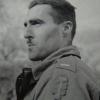
I’m sure this has been answered before but was this sort of work done with just a hammer and punch and patience? If so wow! mark -
-
By doyler · Posted
The B2 has been linked iss said to be Wilkinson sword marking/stamp. Here is a B2 2nd pattern issued to a ranger I have who was issued the knife when training under the Brit commandos. -

By patches · Posted
A AIT PT Sweatshirt from around 1968, worn by one Terry D. Clark, Post no doubt Fort Polk as it has TIGERLAND on it, A Company 4th Battalion 1st Training Brigade. Clark will be KIA in Nam with the 2nd Battalion 14th Infantry 25th Infantry Division May 24, 1969, he will be featured in the seminal LIFE Magazine of June 1969 showing photos of one week's KIAs. As far as the motto on shirt, hard to get it, says TRISTO something CATS OF TIGERLAND, with a cat with a top hat on, checked for tristo, it's a Italian word with a couple or more meanings to wit wicked, evil, or sad, we guess in this context meaning wicked,, like the Wicked Cats of Tigerland, a bit of a high brow use of a word most Americans wouldn't know apart from Italian Americans, that is if they still speak Italian LOL -
-
By vernon · Posted
During WW2 ribbon bars continued to be hand sewn directly onto uniforms or sewn on base bars then attached military clothing. However, the rapid expansion of the United State’s Armed Forces helped expedite the development of the American ribbon bar. Creative inventors applied for ribbon bar patents with multi bar designs that could be mass produced economically and efficiently. Some of these bar designs never became important. Other designs such as the slide on ribbon bar assemblies were widely accepted and worn. These ribbon bars were appealing because their ribbon carrying elements were independent of each other and could be easily mounted, moved around, and removed from multi bar assemblies. Ribbon bars were obtained at government supply outlets and retail dealers or provided by the government. Joseph Levyn of New York City held several ribbon bar patents including a slide on assembly. His assembly consisted of pre assembled ribbon carrying elements that slid onto a flat base bar with a pin back attachment (see pictures). The bent sides of the ribbon carrying element allowed them to glide onto and lock on the base bar. His patent was applied for in 1944 and granted in 1946. Levyn’s slide design and later period variants were widely worn and used both pin back and clutch back fasteners. Some other notable ribbon bars of the WW2 period and beyond follows (See pictures); “Slip On Campaigner” ribbons were distributed by the Goodwear Fabric Company of New York City ( A post on this ribbon bar can be found in this Sub- Forum). The “Slip On” ribbon design looks very similar to J. Levyn’s ribbon bar. Wolf-Brown Inc., Los Angeles, California sold molded plastic ribbon slides mounted primarily on aluminum base bars (patent applied January 1944, granted January 1946). The ribbon fabric for early Wolf-Brown ribbons were sealed between clear plastic that was molded to form edges on the ribbon mounts to slide onto base bars. Friction held the ribbons on the base bar. The plastic encapsulation of the cloth gave the ribbons a lustrous appearance and protected the cloth from adverse environmental conditions. A rare Wolf-Brown construction consisted of a plastic ribbon element and the base bar glued together for wear (See picture). A rare wire ribbon holder/fastener has also been used with their molded plastic ribbons (See picture). It should be noted that after WW2 Wolf-Brown also sold lightweight brass cloth slides for their brass base bars. The designer of this ribbon was J. Wolf ( Patent applied June 1950, granted January 1953, see pictures). Viking “Kwickset” ribbons (Patent applied September 1944, granted March 1949) were sold by Hilborn-Hamburger Inc., Bronxville, New York. The edges of the ribbon element were pushed over the round extensions of the base bar for mounting instead of being slide on the base bar. This allowed for a “kwickset” of the ribbon bar complex. An interesting feature of the assembly was the identification label on the back of the ribbon elements. When mounted on the base bar the identification of the service ribbon on the label could be seen framed through the rectangular appurtenances holes in the base bars (See picture). The metal base bar have a non reflective black finish of unknown origin. “Fetha Wate” ribbons were distributed by N.S. Meyer Inc. of New York City ( A. Raeburn, inventor; Patent applied 1949, granted 1949). The edges of the ribbon cloth was crimped onto thin, ribbed, and flexible brass slides that slipped easily onto a lightweight base bar. The clutch back base bar sometimes possessed grooves for gripping onto and securing the mounted slides. The thin ribbon edges could also be squeezed down to further tighten the ribbon element to the base bar. The trade name “Fetha Wate” denoted the ribbons light weight features. Gemsco’s “Staz-On” ribbons (Harry Elkies inventor, Patent applied July 1946, granted January 1950) was a ribbon bar slide and fastener design. The front ribbon plate was attached firmly to a clutch back base bar by folded end tabs and the edges of the ribbon plate. The assembly with its friction-lock fastener resulted in a firm non wobbling complex that “Staz On” clothing. The friction-lock fasteners in Gemsco’s patent are similar in appearance to Ballou’s clutch fasteners. Collectors may occasionally find ribbon carrying elements mismatched with manufacturers. A common switch is Wolf-Brown plastic slides on Goodwear Fabric base bars (See picture). War Department Specifications No. 7-3A September 1920 directed that military ribbons for metal and badges be constructed from silk. Quartermaster Corps Specification P.Q.D. No. 285A April 1943 specified that ribbons be constructed from regenerated cellulose rayon of semi-luster. Various techniques and ribbon designs were used to protect the ribbon fabric from fraying, adverse environmental conditions, and wear. Transparent plastic/cellophane cloth coverings of various thicknesses were sometime used to protect the surfaces of ribbon cloth. However, soldiers were sometimes told to remove these coverings because of regulations. In other examples “Slip On” ribbons were were coated with a waxy substance to protect ribbons and “All-In-One” ribbons were displayed under a thick plastic covering. Several metals were used in the construction of ribbon bars during and after WW2 and were; zinc/zinc alloys, steel, aluminum, and brass. The internal structure of some bars also included thick fabrics and cardboard for support and to keep the cloth tight on bars. Service personnel were stationed in diverse climatic conditions during and after WW2. Occasionally the metal parts of ribbon bars would corrode and result in a deterioration of the metal and staining of the ribbon cloth. Carbon steel (alloy of Iron) oxidizes to iron oxides leading to a flaking away of the metal. A common form of zinc corrosion is a zinc patina. Advanced zinc corrosion produces “white rust” which appears as a chalky white powder (See picture). Aluminum metal erodes slowly and forms a thin aluminum oxide surface protection layer against further corrosion. Due to wartime rationing and priorities and the fact that ribbons were considered a low cost replaceable military item it appears that ribbon bar manufacturers during WW2 did not apply anti corrosive coating to the metal parts of ribbons. After collecting American ribbon bars ribbon preservation should always be practiced. It is important to avoid exposing ribbons to direct sunlight, high humidity, and extreme high and low temperatures. Use a clean soft brush to remove surface dust and dry foreign material from ribbon cloth. Do not clean ribbons with water, soap, or household cleaners. Learn to live with stains on your ribbons. Clean minor metal corrosion with a dry stiff brush while keeping the corrosion matter off the ribbon cloth. Figs. 1,2. Levyn’s ribbon bar design Fig. 3. Top row- Wolf-Brown plastic slides on a clutch back aluminum base bar Middle- 3/8 and 1/2 inch “Slip On Campaigner” ribbon bars Bottom- One half inch Viking “Kwikset” clutch back base bar Fig. 4. Bottom view of ½ inch Viking “Kwikset” ribbons Figs. 5,6. “Fetha- Wate” ribbons on a Meyer’s card Figs. 7,8. Navy “Fetha-Wate” ribbon grouping Fig. 9. Ribbon base bar variation. Top Row- grooved Meyer’s base bar, 2nd- grove-less Meyer’s base bar, 3rd- pinback “Staz On” base bar, 4rth, 5th- Studley’s base bars Fig. 10. Various ribbon bar components. Top Row- “Slip On” single bar, “Fetha- Wate” slide 2nd- Wolf-Brown aluminum single ribbon base bar, aluminum slide with its folded ribbon. 3,4rth- Wolf- Brown cloth ribbon slides, 5th-8th various types of aluminum base bars some used by Wolf- Brown Inc. Figs. 11,12. Top Row- Clutch back “Staz On” ribbon base bar, Middle- rare Wolf-Brown plastic ribbon assembly, Bottom- rare wire ribbon holder and clothing fastener found with some Wolf- Brown plastic ribbon slides Figs. 13,14. Top Row- Cloth ribbons on “Staz-On” base bar, 2nd- “All-In-One” plastic base bar, 3,4rth- plastic pin back mounts Figs. 15,16. Examples of plastic/cellulose ribbon coverings Fig.17. Metal corrosion on ribbon bars. Note the “white rust” on the bottom bar. Figs. 18,19. “Staz On” ribbon grouping of Sailor John Wilson. Wilson was in the thick of things at Pearl Harbor on the USS Detroit Figs. 20,21. Mixed ribbons in an Army Air Force grouping, Top Row- “Slip On” ribbons, Bottom Row, left to right- “Slip On” ribbon, Wolf-Brown plastic ribbon, cloth ribbon with plastic covering- all ribbons on “Slip On” base bars. Figs. 22,23. Wolf-Brown ribbon grouping worn by AMM1 Harvey Einhart; he was assigned to several Navy squadrons including VB-110, Lt. Joseph Kennedy’s Squadron. After the war Einhart joined the Air Force and later rejoined the Navy. Fig. 24. Ribbons sewn onto Sgt. William May’s B-14 Flight Jacket. Sergeant Mays of Niagara Falls, New York was a B-17 ball turret gunner with the 568th Bombardment Squadron stationed at Suffolk, England. Fig. 25. Wolf-Brown plastic slide ribbons on the summer tan uniform of B-17 pilot lieutenant Thomas Casey. -
By jumpship · Posted
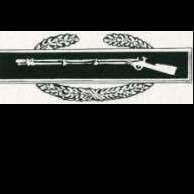
You are welcome. They could be US Navy, etc. I checked US Army enlistment records and “Find a Grave” and didn’t find anything promising. -

By BeansEnHay · Posted
I’m very late to this post, but I have the named Good Conduct medal to Augustus S. Kerr. I was thinking of moving it on. I thought I would first look for the current owner of his Purple Heart here. The GCM was sold by a dealer before 2011, I think and has changed hands a couple times. I saw a photo of Kerr’s Purple Heart on the forum several years ago. Thanks Rob
-
-
-
-
-
-
-
-
.jpg.2ce6a8d90c750304bcf9d4faa9318f5d.jpg.5a23d93005bf9ba70918d137e8d2e4fc.jpg)
-
-
-
-
-
-
-

-
-
-
-
-
* While this forum is partially supported by our advertisers, we make no claim nor endorsement of authenticity of the products which these advertisers sell. If you have an issue with any advertiser, please take it up with them and not with the owner or staff of this forum.