
-
Current Donation Goals
-
Forum DonationsRaised $7,139 of $7,500 target
-
-
To send a donation, CLICK HERE to go to the DONATE page for options.
-
Recent Posts
-
By zzyzzogeton · Posted
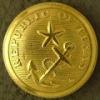
The Paterson Colt came out in 1836 and was modified in 1839. The 1836 "type 1" was tested by the US Army during the Seminole War, eventually rejecting it as being both unreliable and impractical. The unreliable part came from the fact that the trigger was hidden in the gun frame until the hammer was cocked back, which is when the trigger dropped out. It was dangerous in that it was EXTREMELY DIFFICULT to decock safely. Also, there was no trigger guard, so accidental discharges were frequent. The impractical part came from having to be partially disassembled to be reloaded, and field reloading was dangerous. Five shots were great but if you needed 6, you were up the creek. After the US Army chose not to purchase any more, Colt made modifications with respect to reloading, resulting in the 1839 Model 2. The Texas Navy purchase 180 of them, along with a like number of Colt's revolving rifles and shotguns, likely saving Colt from bankruptcy. After Sam Houston defunded the Texian Navy (It was being too successful in keeping the Mexican Navy and Army tied up, inhibiting his goal of getting Texas into the US), Captain Hays of the Texas Rangers light fingered enough of them from a warehouse in Galveston to provide his company of Rangers with 2 Paterson Colts apiece. A newspaper article of the time reported that the Rangers also carried extra loaded cylinders as well. That may or may not have been true, but they did have 2 Colts each, which proved very advantageous in their battles with Comanche warriors and rustlers/bandits. After Texas was annexed into the US, General Zachary Taylor sent Samuel Walker, another Texas Ranger Captain, back to New Jersey, where he worked with Colt to upgrade the weapon, resulting in the Walker Colt. It had a loading lever for easier reloading and a trigger guard. The Walker Colt cylinder engraving depicted a scene as described by Walker to Colt about some of the battles where they successfully used their Patersons. One drawback of the Walker Colt was for the reloading lever to drop down due to recoil. The fix was to tied a leather cord or string around the barrel and the lever to hold the lever in position. The Colt Model 1851, also known as the Navy Colt, was only sold to the Navy in small number, although the Army bought over 17,000 of the estimated 215,000 produced in the US. It got its nickname from the scene engraved into the cylinder of every 1851 made from 1851 to 1871. The engraving was of The Battle of Campeche, between the Texian Navy and the Mexican Navy in April and May 1843. In this battle, no ships were lost, but the Mexican Navy withdrew, and the Texian Navy called it a win. The scene was directed by Colt to be put on the cylinders in admiration of Commodore Edwin W. Moore, Commodore of the Texian Navy and the Texian Navy after correspondence between the two. And the fact that the Texian Navy purchases of 540 pistols, rifles and shotguns saved him from bankruptcy. Remember I mentioned that Sam Houston had defunded the Navy? Well, the Battle of Campeche occurred because Commodore Moore "rented out" the Texian Navy to the Mexicans of the Yucatan peninsula in their rebellion against Santa Anna and his Mexican government. His attitude was "I need money to keep the Navy afloat. Might as well have the Mexicans pay us to fight the Mexican Navy and keep the Mexicans from invading Texas again." Sam Houston tried to court-martial Commodore Moore, but he was acquitted. 🙂 After all, he was charged with running the Navy and he needed money from somewhere. -
By Salvage Sailor · Posted
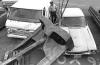
Source: navsource.net Net Tender Story My father Paul Edwards, was stationed at Net Depot, Indian Island, WA in 1942, where he painted a large mural on the library wall at the request of his CO. All my life I've wanted to know if it was still there. In April we were in Port Townsend and got a Public Affairs Officer number from the guards at Naval Magazine Indian Island. The officer took my call and has arranged for my father, now 97 and healthy, my brother, born in '42 in Port Townsend, my sister and me to an official tour of the base with the CO and tour officer and press officers. The murals are there now in a prominent place and are included in VIP tours from DOD and Congress. The Boxwood (YN-3) is shown at the dock. Here is a photo. Dave Edwards -
By Salvage Sailor · Posted
General Quarters Exercise Aboard USS Elder (AN-20), circa 1953-54 -
By Salvage Sailor · Posted
General Quarters Exercise Aboard USS Elder (AN-20), circa 1953-54 -

-

By twthmoses · Posted
Very nice find 👌 it’s a schlueter and lot say 483A, from around early may 1945. -
By zzyzzogeton · Posted
One caveat on ROTC Midshipmen and the crackerjacks. They would have only been worn while on active duty for their 3rd Class cruise, i.e., the summer after their fish year and before their sophomore years. For 2nd class cruise (between sophomore and junior years), they would have worn Marine equivalent utility uniforms, as 2nd Class Midshipmen were sent through the Marine side of the house for that summer cruise. This was so that Midshipmen were exposed to both sides, allowing them to choose whether they went Navy or Marine track during their junior year, with their 1st Class cruise being either Navy or Marines, depending on which way they chose to go for their junior and senior years. Back on campus, most ROTC personnel only wore their uniforms on days they had Naval Science classes to attend, and then they would have worn either a khaki uniform or a blues uniform, depending on the "uniform of the day", not the crackerjacks. Well, unless they were cadets at Texas A&M, The Citadel, or VMI. These cadets would have worn their respective university's cadet uniforms daily. At Texas A&M, a NROTC midshipman would only be issued the NROTC uniforms shortly before they went on which ever "cruise" they were scheduled for and then turn in the uniforms when they returned after the cruise. At A&M, I was issued my various Midshipman's uniforms 2 weeks before my cruise and turned them in a couple of weeks after returning to campus for summer school. Failure to turn all items in by the start of the fall semester resulted in a bill from the uniform office for what ever item(s) were missing. -
By HBT · Posted
That's fascinating. I hadn't noticed the transitional features on this one. Thanks for pointing that out. -
By Uniforms of the Day · Posted
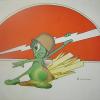
This was found at an old Centralia, WA estate. I wish I had a name. Company M, 1st Washington Volunteer Infantry was prinarily from the Centralia area. They served in the Philippines. This one is numbered #17783. -

By USMCR79 · Posted
Wilbur G Buohl Rank: Private Enlistment Date: 5 Jun 1901 Muster Date: Dec 1901 Station: Camp Heywood, Charleston SC, He was at Camp Heywood in the US December 1901, January & February 1902 when Waller marched on Samar.
-
-

-

-
-
-
-
.jpg.2ce6a8d90c750304bcf9d4faa9318f5d.jpg.5a23d93005bf9ba70918d137e8d2e4fc.jpg)
-

-
-
-

-

-

-
* While this forum is partially supported by our advertisers, we make no claim nor endorsement of authenticity of the products which these advertisers sell. If you have an issue with any advertiser, please take it up with them and not with the owner or staff of this forum.