
-
Current Donation Goals
-
Forum DonationsRaised $5,456 of $7,500 target
-
-
To send a donation, just click on
FORUM DONATIONS in the box above. -
Recent Posts
-

By easterneagle87 · Posted
SWEET!!!! Great score! Finding out whose it is would be icing on the cake. I hope it is eventually ID'ed. -
By Father V · Posted
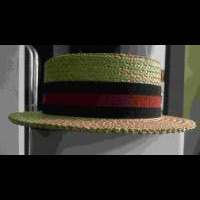
Uniform Change 15 apparently covered the hats for the Yeomen. https://www.history.navy.mil/research/library/online-reading-room/title-list-alphabetically/w/womens-uniform-1918.html HATS 267. To be straight-brimmed sailors, of navy-blue felt or white rough flat straw, shaped to conform to following dimensions: Brim 2-3/4" from crown to outer edge. Crown to be 3-3/4" high, 6 1/4" wide at top and 6-3/4" at bottom, 7-3/4" long at top and 8 1/4" at bottom. To be ordered to fit head size of person wearing it. Except for the chin strap (that wasn’t actually required by regulations, apparently), the dimensions would have been in conformity with the M1866 USN Officer’s Straw Hat, further verification that it truly had settled into a standard form by then. -

By HopeColeman · Posted
I realize how it could appear that way. However, there is a stamp with the last four of the service number in the trunk and that number is stamped inside each piece of apparel in the trunk. As for the other items though, I guess there isn’t anything that proves their connection. -
By Mikeym_us · Posted
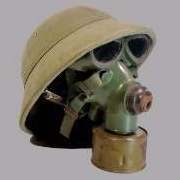
Got this off of Ebay for $125 just missing the visor assembly but that will be replaced by the SPH-4 double visor assembly so no problem there as Army SPH-4's (Excluding the SPH-4B) were upgraded with those anyways. Also missing is the complete drop cord ear seals earphone elements boom mic swivel parts (I have the parts needed anyways) and boom mic assembly. Helmet is extra large and comes with original impact liner and I put in a size large HGU-56 TPL assembly and it fits quite well. I do have some NOS in original package mic assembly and cables and NOS earphone elements H-347/AIC. just need to buy the drop cord ear seals and the boom mic frame and thumb screw. -
By blitz67 · Posted
I thought I might be able to get an I.D. from the guy I purchased it from, but he says he can't find the paperwork he had with it. Its definitely not fake, very well made and I paid $5 for it. Thanks for the help! -
By Ranger-1972 · Posted
This would have been the "normal" collar insignia of an enlisted man in the new US Army Air Corps (which was not created until 1926). It was the winged propeller on a flat disk. The second photo shows the checkered (or hatched) version of the disk, with a rim around the edge. This is a photo of an enlisted man in Hawaii wearing the Army Air Corps collar disc in the late 1920s. Credit to Salvage Sailor, who posted it in a US Militaria Forum about the Pineapple Army DUI of the Hawaiian Division before WWII. -
By blitz67 · Posted
To me it looks like someone had his empty trunk and started filling it with miscellaneous military stuff they found. Not sure why he would have a pack board and an ammo can in his trunk, didn't field gear get turned back in before leaving the service? and why would he have flight gloves, just my opinion. -
By Cap Camouflage Pattern I · Posted
Armor, Body, Fragmentation Protective, With 3/4 Collar. FSN 8470-823-737(0-3 depending on size) -
By Ranger-1972 · Posted
In 1902, the uniforms worn by officers, noncommissioned officers and privates in the Army were completely changed. On 18 December 1902, the Army adopted new uniform regulations (The Regulations and Notes for the Uniform of the Army of the United States) that redesigned almost the entire uniform, as well as branch insignia for artillery officers. Because of some changes desired by General Nelson Miles and President Roosevelt, the implementation of the new uniform regulation was postponed until 1 July 1903 – at which time all officers were to have the new uniform. The uniform regulation was further amended on 24 August 1903, 16 October 1903, 16 November 1903, 6 February 1904, 10 March 1904, 12 May 1904, and 31 December 1904. In July 1904, the Army published General Order No. 122, which specified that all troops serving in the United States – except artillery – were to get the new dress coat, caps, ornaments and breast cords (though the old pattern trousers were to be used until the supply was exhausted). There were distinctly different "undress" (day-to-day wear) and "full dress" (parades and ceremonial occasions) uniforms for officers. For noncommissioned officers and privates, the distinction between the "undress" and "full dress" uniforms was whether or not the branch-colored breast cords and woven paddles were worn across the chest. Likewise, the cap for the "full dress" version of the uniform included a (removable) band around the base with bands in the branch color above and below a dark blue band in the center. The visor and chinstrap on the cap and the shoes were black; the belt was russet brown. The "undress" version (what the British call "walking out dress") was variously referred to as "undress" and "dress" -- but was distinctly different from the "full dress" uniforms for officers and enlisted men. In 1907, the branch insignia were changed. Enlisted men normally wore their regimental number above and their company letter below the apex of the insignia (the exception being the Coast Artillery -- enlisted soldiers wore their company number below the crossed cannon). Regimental-level NCOs (Sergeant Major, QM Sergeant, Commissary Sergeant, etc.) did not wear a company letter. Officers never wore a company letter -- just the regimental number. There was no aviation branch in the Army prior to WWI, so there are no pre-war versions of the blue uniforms piped for that branch. During WWI, the wear of dress uniforms was suspended, except at White House functions (G.O. 49, War Department, 28 April 1917 and G.O. 63, War Department, 15 May 1917). G.O. 86, War Department, 3 July 1919 rescinded regulations prescribing dress uniforms for officers and enlisted men. There are photographs showing the military aide to President Wilson wearing the full dress blue uniform, but I've never seen an image of an NCO or enlisted man wearing the blue uniform during the First World War or the 1920. Fun fact -- the suspension in authorization for the blue uniform from 1917-1929 is why there are no photos of General MacArthur wearing the high-collar dress blue uniform (though there is a photo of him in that uniform as a lieutenant). The dress blue uniforms described in Special Regulations 41 and 42 were reauthorized on an optional basis in 1929 (Circular 5, War Department, 26 Jan 1929). These were the "same" uniforms that had been worn prior to WWI (though during the 1930s, there were changes such as the authorization to wear cuff insignia indicating service during the war and, later, authorization to wear shoulder sleeve insignia). By the 1930s, enlisted men wore the collar disc rather than the pre-WWI branch insignia on their standup collars, as well as their regimental crest (if one existed). The 1929 version of the dress cap for enlisted men was different from that worn prior to 1917, with a wider crown, a flatter visor, and a different insignia (an American eagle on a disk, rather than the branch insignia). The belt worn by enlisted men with the blue uniform was black -- not brown. War Department Circular 5 (26 January 1929) II – Blue uniforms. – 1. Officers, warrant officers, and enlisted men of the Army are authorized but not required to wear the prescribed blue uniforms; such uniforms, however, will not be worn on occasions involving formations with troops. The procurement and wearing of the blue uniform is entirely optional on the part of the individual and will be at his own expense. Commanding officers are expressly forbidden to exercise pressure of any sort, or to seek to induce individuals to procure blue uniforms. The blue uniforms authorized are those described in Special Regulations (Regulations for the Uniform of the United States Army) Nos. 41 and 42, as amended, except that the cap shall be the latest adopted shape. Present Army Regulations on the uniform are being revised to conform to this new authorization. 2. With reference to this authorization for wearing of the blue uniform, the Commanding Officer Philadelphia Quartermaster Depot, has been directed to procure cloth and other materials for the manufacture of approximately 150 uniforms of each of the various types required for officers, and 15,000 uniforms for enlisted men. 3. The cloth and material for the officers’ uniforms will not include caps, insignia, gold belts or shoulder knots. They will include gold braid for sleeves for appropriate uniforms. The cloth and materials for the enlisted men’s uniforms will include everything except the old breast cord, it being assumed that this article will not be required for the present. 4. It is estimated that three to four months will be required for the Philadelphia Depot to procure the materials indicated above and to begin the manufacture of the uniforms, thereafter the officers’ uniforms can be completed in from three to four weeks from date of receipt of order and, if necessary, they can be manufactured at the rate of about ten per day. The enlisted men’s uniforms can be completed in approximately four weeks from date of receipt of order, and they can be manufactured at the rate of approximately 1,500 per month. (A.G. 421 (1-22-29).) By order of the Secretary of War C.P. Summerall Major General Chief of Staff War Department Circular 58 (4 November 1929) I – Blue uniforms. – In connection with Section II, Circular No. 5, War Department, 1929, the following is published for the information and guidance of all concerned: The Philadelphia Quartermaster Depot, Philadelphia, Pa., is now ready to accept orders for the blue uniform for both officers and enlisted men of all arms and services. (A.G. 421 (10-30-29).) In 1936, the Army adopted a roll-collar version of the blue uniform (with no pockets on the breast or below the waist). In 1937-38, this 'experimental' version was replaced with a version that had pocket flaps on the breast & below the waist (but no visible pockets). Hope this helps. -
-
-

-

-
-

-
-
.jpg.2ce6a8d90c750304bcf9d4faa9318f5d.jpg.5a23d93005bf9ba70918d137e8d2e4fc.jpg)
-
-
-
-

-

-
-
* While this forum is partially supported by our advertisers, we make no claim nor endorsement of authenticity of the products which these advertisers sell. If you have an issue with any advertiser, please take it up with them and not with the owner or staff of this forum.