
-
Current Donation Goals
-
Forum DonationsRaised $5,431 of $7,500 target
-
-
To send a donation, just click on
FORUM DONATIONS in the box above. -
Recent Posts
-

By mvmhm · Posted
I thought it odd that he was an old man by WWII standards....age 36 when he joined the Army in 1944....I forgot to mention, he was an ambulance driver. Note the photo of the ambulance with the name "Evelyn" painted on the side. Mark sends -
By mvmhm · Posted
..and the dagger...a pre-RZM Anton Wingen piece.... Mark sends -
By mvmhm · Posted
Mike brought the dolch in wrapped in his Grandfather's WWII pillow sham. Unfortunately he kept that as he was using "for something else"....that is to say, as a cover for his turntable.... -
By Salvage Sailor · Posted
711th MP Battalion, Fort Lawton, Seattle 1943-1944 711th MP BN Dondero First Lieutenant Arthur C. Cheyne was listed on a roster of personnel, dated Christmas 1943, of Company C, 711th Military Police Battalion, at Fort Lawton, near Seattle, Washington, as it's commanding officer. The attached photo is of brothers, Arthur and Benjamin Cheyne, about 1945, in Menlo Park, California. -
By mvmhm · Posted
This was a walk-in late today. Mike's grandfather, Private First Class Ellsworth A. B A R B O served with the 371st Medical Battalion, 71st Infantry Division in WWII. That unit drove through the Rhineland (and the areas where I was stationed from 1989 -1998) on their way to ultimately Linz, Austria. This dagger was accompanied by a "submachine gun" and a "sword that looked like it would have been carried by a King" according to Mike's memories of his childhood in the 1960s. He said it along with the other two items were kept behind the basement furnace and he would sneak a peak at them when he was down there. His Grandfather gave him the dagger circa 1967, and the other two items went to other family members. The dagger is SA Gruppe Westmark marked (formerly the SA Gruppe Rhineland-Pfalz). The grip has a chip missing and one repaired from the tang nut being overtightened (you can see the plier tooth marks on the nut)...and a person or persons unknown played around with a grinder on the blade. Still, it's not too bad looking. It also came with a two piece hanger that had been buckles onto a long strap that looks like it's too small to be a chihuahua collar. Mark sends -
By zzyzzogeton · Posted
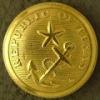
Very peripheral support for straw hats is a book published back in 1998 by Bruce Marshall - Uniforms of the Republic of Texas and The Men Who Wore Them. A significant source of uniforms and equipment used by the Texian Navy, Army and Marine Corps came from the the US Navy, Marines and Army, Some purchased from the same sources, some via surplus sales, and maybe some via five finger discounts. As did a bunch of the US Navy's sailors. When LT Edwin Moore left the US Navy to become the Commodore of the Texian Navy, he recruited about 80 other Naval personnel to accompany him to Texas. The wear of straw hats in the Texian Navy of 1835 to 1845 was likely a carryover from US Navy personnel. All pictures snitched from The Texas Military Forces Museum' website. All 26 plates are available at https://www.texasmilitaryforcesmuseum.org/republic/uniforms.htm Texian Navy Seaman in Summer Whites According to Mr. Marshall's book, Texian ships maintained a store of "hands of grass" on board for the sailors to weave their own hats as necessary. Texian Navy Gunner with "the standard black straw hat". Texian Midshipman And only peripherally to the navy Texian Galveston Coast Guards -

-

By yokota57 · Posted
I think you have discovered the rare prototypes for the 1960s "Hippie Chick" hats. -

By Just an Old dude · Posted
Lark, I haven't commented before but have been watching your posts with great interest. You have posted some phenomenal side arms with amazing history and things I haven't seen in decades. Well done, Sir! Thank you for sharing! OD -
.thumb.jpg.20eab27d1db72c9ceb1281c5bbcb22e0.jpg)
By larkworthy · Posted
Below is a Smith & Wesson New Model # 3 in 44 Russian, blue finish, 6" barrel, serial number 26197 that shipped on June 27, 1890 to the United States Government, National Armory, Springfield, MA for the Revenue Cutter Service. The Revenue Cutter Service was the predecessor to the United States Coast Guard and served in a similar capacity from 1790 until the formation of the USGC in 1915. The factory records show a few different shipments to various Captain's from the 1882 up until 1894. Most were configured with a 6" but some were shipped with 6.5" and 5" barrels. These revolvers were in service for several years and were eventually phased out by the 1902 and 1905 S&W Military & Police revolvers in 38 Special.
-
-

-

-

-

-
-
.jpg.2ce6a8d90c750304bcf9d4faa9318f5d.jpg.5a23d93005bf9ba70918d137e8d2e4fc.jpg)
-

-

-

-

-

-

-
* While this forum is partially supported by our advertisers, we make no claim nor endorsement of authenticity of the products which these advertisers sell. If you have an issue with any advertiser, please take it up with them and not with the owner or staff of this forum.