
-
Current Donation Goals
-
To send a donation, just click on
FORUM DONATIONS in the box above. -
Recent Posts
-

By easterneagle87 · Posted
Recent mini group pick up. Nice mini bar with Berlin Airlift attribution and sterling mini jump wings. -
By easterneagle87 · Posted
Recent pick up. Un-attributed LOM mini group with mini sterling jump wings. No initials or markings on the back. Will post it over on the LOM forum as well. -

By doyler · Posted
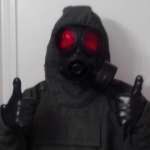
BOYT 43 is a common marking form the BOYT Harness and Leather Company. Boyt operated two plants one in Des Moines Iowa and one In Iowa Falls in WW2. The Iowa Falls plant closed after the war and the Des Moines Plant burned. Current location is Osceola Iowa -
-
-
-
By doyler · Posted
Here are the reference pages from the JC Harrison M1 guidebook. This may give a little more info on the parts or numbers of your rifle -
By Father V · Posted
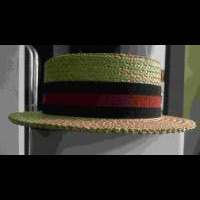
Recently as I was paging through some Civil War era photos, some commenters were looking at Naval officers in straw hats and saying that they were not regulation headgear. That might have been true of the Army, I honestly don’t know, but in the Navy these were most certainly in the regulations. This led me to a deep dive into the world of straw hats for officers. Note that straw hats for enlisted men are an entirely different subject and we will only touch upon them to contrast them to the officer versions. The first mention I can find of such hats occurs in a Regulation issued by George Bancroft, June 4, 1845 with an effective date of Jan. 1, 1846, and was thus regulation for the Mexican-American War: https://thenavycwo.com/the-archives/uniform-regulations?task=download.send&id=100:regulations-for-the-uniform-and-dress-of-the-navy-of-the-united-states-of-america-1841&catid=15 (Harvard College’s copy), pg 16-17 (internal): “STRAW HATS. In summer or in tropical climates, officers, when in undress and without epaulets, may wear on ship board white straw hats— the body of the hat to be six inches in height, and the rim three and a half inches in width.” In the regulations that follow in the years following, I detect three different sets of specifications and so I will assign 3 different theoretical models Always with uniform regulations (even today), one can’t just assume that what is written is precisely what actually happened in practice. As with all my articles/posts about these obscure 19th century uniform, external evidence is required for verification. That evidence in order of importance is surviving artifacts with good provenance, photographs, art from eyewitnesses or artists known to be picky about details, and lastly text descriptions from eyewitnesses. Of far less use are engravings, and indeed I generally completely ignore them. For each of the models, the level of evidence varies drastically and so it’s best to discuss the state of things before diving in. M1846- 1 photograph (probably a daguerreotype); and one very early painting which suggests particular dimensions that were in use at that time. This is rather sparse. No known such hats are known to survive, though that’s hardly surprising given the relative lack of durability in straw, the comparatively small pool of USN officers at the time, and the difficulties in provenance since such hats were used extensively by civilians. M1862- many photographs, especially from Matthew Brady, but others as well; one surviving hat with solid provenance at the National Civil War Naval Museum. With this sort of evidence available, we need not rely on art. M1866- some photographs, no known surviving hats, but later fashion follows these dimensions as the most popular form all the way to comparatively modern times. 1st Model: M1846 Fortunately, the Mexican War was the first conflict for which the then relatively new daguerreotype photograph was available but was quite expensive requiring a copper plate covered in silver. Keeping in mind that straw hats were exclusively “underway” uniform (only to be worn onboard ship, not on land and weren’t considered suitable to be seen on land), it is amazing that any photographs would be produced, let alone survived, but as they say, history is stranger than fiction and we have one. First, the best version of the photo is held by the Newport Historical Society and they generously provided me a high quality image for use on the Forum, for which I needed to sign a guarantee and so I will remind the reader that I don’t have the rights to the image and publishing for profit will require separate arrangements with them. Regardless, here’s the link to their image information: https://collections.newporthistory.org/Detail/objects/30758 Courtesy of Newport Historical Society. The officer is Stephen Bleecker Luce, who is important enough to have a Wikipedia page https://en.wikipedia.org/wiki/Stephen_Luce as well as the usual Navy information, though there’s an error in the combined register. Luce, Stephen B. Midshipman, 19 October, 1841. Passed Midshipman, 10 August, 1847. Master, 15 September, 1855. Lieutenant, 16 September, 1855. Lieutenant Commander, 16 July, 1862. Commander, 25 July, 1866. Captain, 28 December, 1872. Commodore, 25 November, 1881. Rear Admiral, 5 October, 1885. Retired List, 25 March, 1889. Here’s the error, and it’s significant for the dating of the photo: (Navy Registers of 1850, 1851, 1852 https://www.usmcu.edu/Portals/218/HD/Lineal Lists/1850-1852.pdf?ver=2019-03-28-114255-650×tamp=1553865945284) He wasn’t a passed midshipman until March of 1848. I think the photo is him as a passed midshipman because of a detail on the collar: Detail As you can see, there is something of the same shade as the anchor above the anchor and only partially covered by the long tail of his cravat (as it was called at the time). That I think to be most probably a star, which in the uniform regulations of 1841 was what insignia was used to distinguish a passed midshipman from a midshipman (as it had been since the 1830 uniform regs). According to a biography of Luce https://www.google.com/books/edition/Life_and_Letters_of_Rear_Admiral_Stephen/nSpCAAAAIAAJ?hl=en (pg 34), he had been on the USS Columbus during the Mexican War and had only been detached to the Academy to be examined for passed Midshipman on March 8, 1848 so that month is the earliest the photo could be, with the latest being his promotion to Master in 1855, but I think it most probable that he got the photo while on land to mark his promotion. The round jacket was usually just for use underway, but it was the uniform for midshipmen even on land at the new Academy (see my post on blue cloth caps concerning midshipmen). It would be relatively easy for a passed midshipman to sew (or have sewn on) the star and throw on the hat from his time in the fleet and get a photograph before returning to sea duty. Lastly, in the 1840’s and early 1850’s, there must always be some attention paid to which photographic technology is actually being employed. First, the image is not what it appears. It looks like a modern photograph of a cased image, but it is in fact a photo of a photograph of a cased image. This was verified by a staff member at the museum. Someone in the family of Stephen B. Luce apparently took a photograph of their original and donated that photograph to the Society. Both the staff member and I agree that it was most likely a daguerreotype, but no digital record of the original appears to exist. It is most probably either in the hands of a now distant descendant or relative or lost. Analyzing the photo in detail results in the surprising conclusion that the hat isn’t regulation. To establish this we’ll have to engage in some reconstruction using modern reproductions and comparing the images produced. The crown is too tall. Let’s try the M1862 dimensions instead. The profile isn’t the taller M1846 but the M1862! Let’s couple this with another image we used back in the blue cloth cap post: ^1826 https://ussconstitutionmuseum.org/2015/09/02/hats-caps-and-chapeaux/ (Note, I couldn’t get the brim in my M1862 to match the art because it’s too tight on my head. I did what I could). Again, the profile better matches a less tall crown. This isn’t a lot of evidence to go on, but I think it at least possible that what the Navy was looking for was a hat with a noticeably taller crown than the usual enlisted man’s hat. Indeed, as the crown sizes shrink, so too do the explicit details that contrast with the enlisted hats. First, enlisted hats almost always had a bow with 2 tails that extended away from the crown. ^from a group of uniform items from George Washington Brown https://www.horsesoldier.com/products/identified-items/uniforms-and-cloth/43524 also featured in Bluejackets pg 226, 243, etc. Incidentally, this hat also includes the sewn circle pattern at the top center of the hat that was often but not always found on enlisted caps & hats, but never on officer hats, as we’ll see in the next section on the M1862. What do these images have to teach us? Ultimately that the taller 6” crown isn’t in evidence in the Navy. Now it is entirely possible that they used it but no artistic rendition exists. I have reviewed every possible source of the antebellum Navy (e.g. the Exploring Expedition). There are several sketchbooks and sketches out there, but even in the tropics, the eyewitness artists invariably show officers in blue cloth caps. One of many examples: Note the sailors in their short crown straw hats. Now, it’s not like the taller crown wasn’t made in this era. We have at least one surviving hat of similar dimensions to the regulation hat, though civilian: ^5.5” tall https://www.nhhistory.org/object/194979/hat Henry Clay’s hat ^https://americanhistory.si.edu/collections/object/nmah_498446 Mine for comparison: And quite a few daguerreotypes: Links available on request. Note this last one features a hat even taller than 6”. In that same range of height is a photo of a military man, most likely of Mexican War era, though I could not find the actual source of the photo or who owns the original, given that it’s a daguerreotype with a simple mat, it’s likely early. I take no position on the identity of the man, and it’s immaterial to the point of this post. In conclusion, there’s a lot we don’t know about this early model. The only naval examples we have for certain show a smaller than 6” crown, even though 6” and taller crowns were around and used by gentlemen in the period. M1862 As is usual we don’t know if these dimensions were merely baptizing what was already being done or genuinely imposing a new set of dimensions. There’s at least one example with solid provenance held by the National Civil War Naval Museum, though since they removed their digital collection from public access, it’s taken some clever dredging of private photos of their collection to get anything: ^https://m.yelp.com/biz_photos/national-civil-war-naval-museum-columbus?start=60&select=liUp9ED3e4cPaEupTZlryg ^detail of https://images.findagrave.com/photos/2024/28/20397008_dae8b0e6-2828-4848-9849-93400ea3ce81.jpeg John T. Luck Assistant Surgeon, 24 January, 1862. Resigned 23 June, 1868. There are quite a few photos. I’ll give a selection of the most instructive. ^This I include first because it is of a minority type, with a slightly rounded top, which I also believe Dr. Luck’s to be. The vast majority of surviving photos show a much more flat top. Mine for reference: ^detail of https://www.history.navy.mil/content/history/nhhc/our-collections/photography/numerical-list-of-images/nhhc-series/nh-series/nh-1---nh-3067/nh-500---nh-599/nh-575-uss-monitor--1862-.html This one is significant for what it doesn’t show, namely the enlisted sewed circle in the center. It’s just plain straw. ^https://www.loc.gov/item/2011647352/?__cf_chl_f_tk=ZkPG6gbdpyUL_xzVSH3_EEK1bexHefdOyfQ6ofLbCxM-1782838004-1.0.1.1-Ydb.qg.2HnKa.BsU3Z7lpAHLn5t0wmyK3fqvK0unKQw ^https://www.metmuseum.org/art/collection/search/268125 ^https://catalog.archives.gov/id/530272?objectPage=2 ^from 1873 https://www.history.navy.mil/content/history/nhhc/our-collections/photography/numerical-list-of-images/nhhc-series/nh-series/NH-124000/NH-124444.html Although this is almost at the end of the service life of the officer straw hat, I believe that it shows all three models, though the 6” is perhaps on a civilian, it wouldn’t surprise me to discover he was a chaplain. Included in “plain black” I also believe to exclude ship names such as this enlisted hat: ^https://griffinmilitaria.com/product/civil-war-era-uss-mahopac-sennet-straw-hat/ The expert at the site mentions (as does the Navy History site) a “regulation” in 1866 that “introduced” white sennet enlisted hats but the various authors never produce a text or source that shows this. Plenty of visual evidence shows US sailors with such hats well before the end of the Civil War, so that is at best baptizing previous practice. That might also be the case for the named tally, but in the absence of an actual source, it’s really anyone’s guess. Regardless, a name is not “plain,” for which we actually have a text. M1866 The post-war dimensions is what most modern people would recognize as the old-fashioned straw hat/boater/skimmer and is associated with barbershop quartets for instance. Here’s my own classic boater and its dimensions: Note that more “modern” style boaters are thicker and sturdier. ^https://www.loc.gov/pictures/item/2016647920/ Also one of the only examples from a reputable source that shows enlisted type hanging ribbons for an officer adjacent type. It’s also possible that the previous midshipman with the rounded crown may also be this size. It’s hard to tell. Note that since this style of hat became so ubiquitous, finding a specifically Naval one would require solid provenance and I don’t know if any are extant. Since by this time the gentleman’s straw hat and the sailor’s hat have become short crowned, the regulations add “unlined.” Note that as far as we can tell, that was nearly always the case, at least as far as the daguerreotypes show. The type of lining meant includes binding with cloth at the edges: I repeat the top view below for reference. Note that sometimes gentlemen bound the edges in civilian hats, but this appears to have been the minority option. I haven’t yet encountered an officer in uniform wearing bound edges (except maybe the leftmost of the three seated officers above), so I think this was an implied or customary usage. In summary, I think all of the regulations on this item were to ensure that the officers were visually distinct from the enlisted men while also giving the officers something lighter to wear. The model doesn’t appear to have been the earlier round hats (which had much much smaller brims), but rather civilian fashion. The End of the Straw Hat Eventually, the straw hat gave way to the M1883 (cork) helmet which stayed in official use until WW1, but stops being pictured after the boxer rebellion and probably was simply unused by officers, even if allowed. ^Spanish American War, most likely https://www.loc.gov/pictures/item/2016804172/ ^https://www.history.navy.mil/our-collections/photography/numerical-list-of-images/nhhc-series/nh-series/USN-901000/USN-901029.html -

By Manky bandage · Posted
That is nice a nice blade, the cartridge case is Japanese. At first I thought maybe from the Burma area, but the scabbard style is rather Filipino looking in my opinion. -

By Pastor Paul · Posted
Wonderful information and gracious replies. Thank you all!!
-
-

-

-
-
-
-
.jpg.2ce6a8d90c750304bcf9d4faa9318f5d.jpg.5a23d93005bf9ba70918d137e8d2e4fc.jpg)
-
-
-
-

-

-

-
* While this forum is partially supported by our advertisers, we make no claim nor endorsement of authenticity of the products which these advertisers sell. If you have an issue with any advertiser, please take it up with them and not with the owner or staff of this forum.