
-
Current Donation Goals
-
To send a donation, just click on
FORUM DONATIONS in the box above. -
Recent Posts
-

By John1980 · Posted
Serial number 219763 these are tough to tell only bought it because very cheap find house sale it works can fire it bkackpowder cartridge. I like trapdoor but I don't pursue them iam k98 collector more come across one cheap under market value buy it -
By John1980 · Posted
Front sight has been replaced. Think it's cut-down -
By thorin6 · Posted
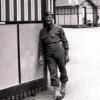
Everything I see here says real carbine Trapdoor. Rear sight, trigger guard, sling ring are all correct as I can see. If the barrel is exactly 22-inches and the front sight is brazed on, most likely this is a carbine. However, I would need to see the serial number, as the trap door shows the date of 1884. Also a good picture of the front sight and left side showing the barrel band and spring. Check the nose of the stock for a filled in ramrod space that would indicate a cut-down stock. As for the sling ring, I have put one on a cut-down stock, just needs a little woodwork to cut out the proper space. So that may not be definitive. Still and nice looking Trapdoor. -

By Manky bandage · Posted
I’m leaning towards this being a restored (sort of) M4a2. And after discussing with the previous owner, the buckle and strap was replaced using salvaged A11 components and he also did the side panels on the shell itself as it was in a sorry state when he got it. The U shaped yokes however look to of been period done and the stitching does look better there. So it’s a couple of a things; a restoration retro fitted helmet to an earlier specification using original period parts. Or a restoration of an -already modified helmet, the yoke stitching does in my opinion look better than the rest. Either way, it will do as a displayable and usable placeholder for a while until I pick up an original unmolested example. Once I get some down time I’ll give it a good going over and examine the stitching. Certainly an interesting learning curve so far and great to see people’s thoughts and opinions. I’m leaning towards leaving it as is, still looking around for images of these in use by glider and troop transport pilots. I had a file of really good images but lost them on the old PC unfortunately. -

By G-Company · Posted
Thank for your response Andrew and Camillus. Camillus, i doubt that. The fabric used for this pouch is consistent in colour, texture, etc. i think it’s more likely that Jeff QMD did indeed ‘checked” this pouch and has stamped their own marking also on the back. Still keeps me figuring about the canteen pouches made in 1940, by Luce Manufacturing Co. I have never heard of canteen pouches made by this maker before, let alone 1940 dated. -

-

By Colt.45-94 · Posted
Another unique item in my collection: A US M1936 Musette Bag, reused by the IDF as a medic bag. 1942 dated. Made by the Atlantic Products Corporation it's "rubberized"-type Musette bag. Named to an officer, Captain T. A. Robertson. I think the name was pre IDF use. I belive the bag is privately donated Item. Israel received substantial amounts of western arms and equipment from sympathetic governments post '48 but still individuals and small NGOs likely contributed. Marked up with hand painted red Hebrew text, a red medical Star of David, and stamped with what I understand to an IDF property equipment mark. The the Hebrew letter "צ" in a circle. The bag came filled with a mix medic items including WWII era US and Canadadian bandages, and Israeli made, 1960s dated, medical items. The carry strap is also WWII US surplus. A 1944 dated GP strap. Link to a thread with more info/pics: -
By Rhscott · Posted
Just a few notes from the Stanton book on uniforms. -
By AmandaK39 · Posted
Hello everyone! I am researching my grandfather, Ford Wilson, ASN 6665872, and I am hoping someone may have information, photographs, documents, or personal accounts related to him or his unit. I am researching my grandfather as a project for my father, who never had the opportunity to learn much about his father's wartime experiences. Every new document, photograph, or story helps us better understand and honor his service, and it has become a meaningful way for our family to reconnect with a part of our history that was nearly lost. What I know so far: • Born March 3, 1916, in Manchester, Kentucky. • Served in the U.S. Army during World War II. • Assigned to the 32nd Field Artillery Battalion, 1st Infantry Division ("The Big Red One"). • Held the rank of First Sergeant. • Served in North Africa, Sicily, Normandy, France, and Germany. • Landed in Normandy (Omaha Beach) on D-Day, June 6, 1944. • Later received the Bronze Star for actions near St. Laurent-sur-Mer on D-Day. • Possibility of name in the battalion history book Proud Americans: Men of the 32nd Field Artillery Battalion in World War II. • Family records indicate he deployed from Salem, Indiana. • Five Wilson brothers reportedly served during World War II at the same time. Like many veterans of his generation, he rarely spoke about his wartime experiences, so much of his story has been left for later generations to piece together. I would be grateful for any information, photographs, unit records, newspaper articles, or personal recollections related to Ford Wilson, the 32nd Field Artillery Battalion, or the Wilson brothers' military service. Thank you for helping us preserve and honor his story, I never got to meet him. I am new to researching military history so deeply appreciate any leads. Amanda -
By patches · Posted
In warm hot weather they just didn't wear the coat, just shirt sleeves just like during the war in Europe, only in Hawaii, Panama, the Philippines, and Puerto Rico was were the new Khaki uniform issued and worn in the field. this officially approved for standard issue in 1938.
-
-

-

-
-

-
-
.jpg.2ce6a8d90c750304bcf9d4faa9318f5d.jpg.5a23d93005bf9ba70918d137e8d2e4fc.jpg)
-
-

-
-

-

-
-
* While this forum is partially supported by our advertisers, we make no claim nor endorsement of authenticity of the products which these advertisers sell. If you have an issue with any advertiser, please take it up with them and not with the owner or staff of this forum.