
-
Current Donation Goals
-
Forum DonationsRaised $2,141 of $7,500 target
-
-
To send a donation, just click on
FORUM DONATIONS in the box above. -
Recent Posts
-
By Manchu Warrior · Posted
I appreciate all the comments. Thanks! -
By ludwigh1980 · Posted
I think that is the earlier and rarer MP38 versus and MP40 with the milled flutes on the "tube". -
By ludwigh1980 · Posted
It looks a bit beefier than the MGC68 Japanese Replica. I think it is a real one and that receiver tube even in the state it is in is still a big no-no as Mr. Jerry mentioned. "DANGER DANGER ! WILL ROBINSON!" -
By tdogchristy90 · Posted
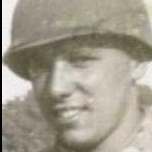
Joseph L. Martin Jr. was born on January 8, 1926, to Joseph and Vina Martin, of Rumford, Maine. Joseph went to Stevens High School in Rumford and worked as a sales clerk at Dorion Groceries before enlisting into the United States Marine Corps Reserve on March 28, 1944. Martin, as part of the 9th Recruit Battalion, went to the Replacement Depot, Marine Base, Parris Island, South Carolina on March 30, 1944 for basic training. He was then sent to the 65th Replacement Battalion, Camp Lejeune, North Carolina on June 9, 1944 and placed into a Rifle Platoon. On August 10, Martin embarked aboard the SS Santa Isabel out of San Francisco, California and arrived and disembarked seven days later on August 17, 1944 at Naval Station Pearl Harbor, Territory Hawaii. On September 18, 1944, Martin joined Company B, 1st Battalion, 24th Marine Regiment, 4th Marine Division with the MOS of 746, automatic rifleman. Throughout the month of January 1945, Martin continued his training by performing maneuvers around the islands of Hawaii. On January 27, Martin sailed from Pearl Harbor, Territory Hawaii, and arrived at Eniwetok, Marshall Islands on February 5. A couple days later, on February 7, he sailed from Eniwetok, arriving on February 11 at Saipan, Marianas Islands. On February 13, he performed rehearsals at Tinian, Marianas Islands. Then on February 16, he sailed from Saipan, arriving and disembarking at Iwo Jima, Volcano Island on February 19, 1945. On February 19, 1945, the 1st Battalion, 24th Marines landed on Blue Beach 1 in support of the 25th Marines. Struggling ashore against volcanic sand and ash that made it difficult to move or dig in, Martin’s Company B, 24th Marines was given orders to beef up the right flank and relieved L/3/25 atop the Quarry, a natural fortress of steep, rugged terrain that concealed Japanese machine gun, mortar, and artillery emplacements that dominated the extreme right of the landing beaches. Close to midnight, amid sporadic enemy fire, B company, 24th Marines had taken up its positions on the volcanic island of Iwo Jima. Following intensive naval gunfire, the V Amphibious Corps began its northwest push across the island when the attack jumped off at 8:30 am on February 20. B/1/24 which was attached to the 25th Marines was to maintain their positions in the Quarry until the front caught up with them. Despite a stubbornly slow advance, and a misdirected air strike on Martin’s B company, 24th Marines in the Quarry that killed five Marines and wounded six, the dogged advance by the Marines had captured airfield #1 by the end of the day. On the night of February 20/21, the 4th Divisions line was unsuccessfully attacked by a small enemy force and tangled with enemy patrols who tried to infiltrate the divisions area. At 8:10 am, the Marines began their attack for the day. As the 25th RCT jumped off, to which 1/24 was attached, they were able to make some inland progress within the rugged terrain of the Quarry with the help of tank support. Following their progress inland, 1/24 spent most of February 22nd, which had turned rainy and nasty, mopping up along the coast, encountering light small arms or mortar fire from the pillboxes and caves they were clearing. The following day, 1/24 was placed back into its parent regiment as the 24th relieved the 25th Marines. The 24th Marines then pushed toward airfield #2. Limited tank support caused by rough terrain, mines, and anti-tank fire impeded movement of the 24th and they were ordered to dig in around 3 pm. Running along the edge of one of the runways of airfield #2 was a ridge known as Charlie-Dog Ridge. Along this ridge lay a semi-circular rise of ground known as the Amphitheater. This area was known for its Japanese defenses covering flat ground to one side and volcanic outcroppings and draws to the other side. On February 24th, As the 24th Marine Regiment moved across Charlie-Dog Ridge and the Amphitheater, the 1st Battalion moved forward slowly over chaotic terrain in the face of hidden enemy gun emplacements. By 5 pm the 24th RCT consolidated on the edge of airfield #2. By the early morning of February 25, the majority of airfield #2 was in Marine hands, the responsibility of the 3rd Marine Division. As for the 4th Marine Division, they were charged with securing the eastern side of Iwo Jima. When 1/24 began their attack on the eastern side of the Island, they were met with heavy automatic weapon and mortar fire from the many caves and crevices that helped make up the infamous Meat Grinder. Only about 100 yards into the advance, 1/24 was stopped in its tracks by concentrated enemy fire. Relieved by a fellow unit, 1/24 spent most of February 26 reorganizing, reequipping, or sending out patrols to search destroyed vessels along beaches Blue 1 and Blue 2 from which enemy harassing fire was occurring in the rear. On March 1, 1945, under cover of darkness, the 24th Regimental Combat Team was to relieve RCT 23, which was involved in securing Hill 382, part of the Meat Grinder that consisted of Hill 382, the Amphitheater, and Turkey Knob. As they advanced on Hill 382, the 1/24 was eventually pinched out. Continuing the assault beyond Hill 382, the 24th Regiment moved out on March 3 into terrain made up of mounds and shallow corridors covered with reinforced concrete emplacements controlled with machine gun and rifle fire as well as zeroed enemy mortar and artillery. The only way for the Marines to move within such a confined and heavily fortified area was through the slow and meticulous movement of infantry units using the likes of flame throwers, grenades, and demolition satchels to reduce the enemy stronghold. The attack inched slowly and painfully ahead, and when it settled for the night, had advanced roughly 350 yards. Only holding a narrow front, B Company, 1st Battalion, 24th Marines, Martin’s unit, was the only company of 1/24 still on the line. March 4 dawned grey and dull with intermittent showers that cancelled air support. Only making minor gains for the day, the Marines counted just 150 yards of advance when they settled for the night. Like the day before, the Marines ran up against a tenacious enemy defending from tightly integrated positions that exacted a heavy cost from the Devils Dogs as they advanced, both in casualties and exhaustion. The next day the 4th Marine Division reorganized and prepared to continue the attack on March 6, 1945. RCT 24 renewed their attack on March 6 when they jumped off at 9 am. Martin’s Company B, 1/24 was the only company of the battalion in the assault. Japanese rifle, machine gun, and mortar fire hit the Marines as they moved forward. Enemy resistance from prepared fortifications and caves in the jagged ridges held the Marines to small gains. RCT 24 continued their relentless push over the next two days, further strengthening regimental lines and withstanding any attempt by the Japanese to break the Marine drive across Iwo Jima. As the Japanese were further compressed by the Marines’ steady advance, and with nowhere to go on the sulfur island, the enemy was forced under pressure to counter attack. On the night of March 8/9, the intensity of enemy mortar, rocket, and artillery fire increased, followed by a Japanese force numbering around a thousand attacking the Marine lines in what was called “no wild banzai charge” but a coordinated attack that used the terrain to first probe Marine lines before jumping off in a full assault. Heavy and desperate fighting ensued as the Marines attempted to stave off the enemy. They chucked grenades by the crate load to not give away their positions, fired mortars and machines gun rounds as furiously as they could, and fought desperately to defend their foxholes. When the Japanese had expended their effort by daylight, roughly 900 Japanese lay dead within the Division lines, 250 within the 24th Marines, and 60 in front of the 1st Battalion’s line, Martin’s unit. Following the night time assault by the Japanese, and with high casualties, it was determined that RCT 24 should reorganize before continuing their drive across Iwo Jima. Following reorganization, they attempted to push forward, with 1/24 making little progress in the face of stubborn Japanese resistance to their front. The following day, March 10, 1945, the 1st Battalion was moved off the line and by early afternoon was placed in reserve. Joseph L. Martin Jr., Company B, 1st Battalion, 24th Marines, was killed in action on March 9, 1945, caused by a shell fragment to the head during the desperate fighting against the Japanese counter attack. He had just turned 19 that January. He was initially buried in the 4th Marine Division Cemetery, Plot 1, Row 29, Grave 1432, Iwo Jima Island. He was repatriated to the United States and now rests in the Saint Johns Cemetery, Rumford, Maine. … -
By Mr.Jerry · Posted
An awesome piece. Just a word of caution (I am NOT a lawyer, or law enforcement officer) but even in the current state, that is the "Part" (the receiver) of the gun that is a no-no. -

By Titanfan · Posted
Looks like it may have been buried at some point. Any chance of seeing the m42? -
By otter42 · Posted
I would had paid $50 for it, cool looking wall hanger! -
By dhcoleterracina · Posted
I would send photos to the "Great War Relics" site. I've always found him good to deal with. He deals almost exclusively with relic items. -

By BEAST · Posted
Nice looking kepis. What are the buttons on the "UC" kepi? It is possible that "UC" was won by a cadet organization. -
-
-

-

-

-

-
-
.jpg.2ce6a8d90c750304bcf9d4faa9318f5d.jpg.5a23d93005bf9ba70918d137e8d2e4fc.jpg)
-

-

-

-

-

-

-
* While this forum is partially supported by our advertisers, we make no claim nor endorsement of authenticity of the products which these advertisers sell. If you have an issue with any advertiser, please take it up with them and not with the owner or staff of this forum.