-
Thank You for Supporting USMF
-
Forum Donations
-
-
To send a donation, just click on
FORUM DONATIONS in the box above. -
Recent Posts
-
By aznation · Posted
On the back of the card there's that small stuck piece of paper that's in Spanish. It shows: Primer encuentro con el enemigo. Un grupo de soldados aliados arriba a la costa hostil, bajo una iluvia de balas. Algunos caen; otros siguen adelaute; otros, heridos, son atendidos por sus agregados santiarios o por sus camaradas de combat. Escenas como esta estan ocurriendo ahora en costas del continente europeo. Translation to English: First encounter with the enemy. A group of Allied soldiers lands on a hostile shore, under a hail of bullets. Some fall; others press forward; others, wounded, are tended to by their medics or by their comrades-in-arms. Scenes like this are unfolding right now on the shores of the European continent. -

By Steve1987 · Posted
Greetings Collectors, I've just completed another update on my website www.combat-relics.com Please stop by and check it out! Sincerely, Steve -
-
By aznation · Posted
Russell was with the 528th Bomb Squadron that belonged to the 380th Bomb Group (H) More on "LADY LUCK" here => http://380th.org/HISTORY/PARTV/LadyLuck.htm If you want to see more on the site => http://380th.org/ he 380th Bombardment Group (H) flew B-24 Liberator bombers primarily in the Southwest Pacific Theatre in WWII. They were part of the 5th Air Force and were known as the FLYING CIRCUS and as the KING OF THE HEAVIES (note the lion in the insignia). In addition to flying combat missions, the group operated as a training unit for Royal Australian Air Force (RAAF) crews in B-24 operations. The group was awarded both the United States Distinguished Unit Citation and the Philippine Presidential Unit Citation for its combat service in Borneo, New Guinea and the Philippines. QUICK FACTS * Constituted as 380th Bombardment Group (Heavy) on 28 October 1942 * Activated on 3 November 1942 at Davis-Monthan Field, Tucson, Arizona * Inactivated on 20 February 1946 at Clark Field, Luzon Assignments * IV Bomber Command, 3 November 1942 – 17 April 1943 * V Bomber Command, May 1943-20 February 1946 Attached to: Royal Australian Air Force (RAAF), May 1943 – 20 February 1945 Attached to: 310th Bombardment Wing, 24 March – 9 August 1945 Squadrons * 528th Bombardment Squadron: 1942–1946 Mascot: HERKY, the clown * 529th Bombardment Squadron: 1942–1946 Mascot: LITTLE BEAVER, the Indian boy sidekick of RED RYDER in the cowboy movies of the 1930s * 530th Bombardment Squadron: 1942–1946 Mascot: BUGS BUNNY * 531st Bombardment Squadron: 1942–1946 Mascot: a fierce DONALD DUCK Stations * Davis-Monthan AAF, Arizona, 3 November 1942 * Biggs AAF, Texas, 2 December 1942 * Lowry AAF, Colorado, 4 March – 17 April 1943 * Fenton Airfield, Australia, May 1943 * RAAF Base Darwin, Australia, 9 August 1944 * Murtha Field, Mindoro, Philippines, 20 February 1945 * Motobu Airfield, Okinawa, 9 August 1945 * Fort William McKinley, Luzon, 28 November 1945 – 20 February 1946 WORLD WAR II OPERATIONS The history of the 380th dates back to 28 October 1942 when the unit was established. The 380th Bombardment Group (Heavy) was activated on 3 November 1942 at Davis-Monthan Field, Tucson, Arizona. The 380th BG consisted of four bombardment squadrons, the 528th, 529th, 530th, and 531st. Shortly after being activated, the group moved to Biggs Field, El Paso, Texas where it underwent extensive combat training. After completing training, the 380th moved to Lowry Field, Denver, Colorado to undergo final combat training. The 380th BG went overseas in April 1943 to become the second B-24 unit in the Fifth Air Force at that time after the 90th Bomb Group. The other Heavy Bomber unit (the 43rd) flew B-17s. The group arrived at Fenton Airfield, Australia, and also encompassed a part of Western Australia at Corunna Downs Airfield, a top secret airfield in the Pilbara, north of Perth Western Australia in the RAAF's North West Area of operation, where it was assigned to 5th Air Force, V Bomber Command. The Command's purpose was to engage in destroying Japanese strongholds in the Pacific. Later moving to RAAF Base Darwin, the group was placed under Royal Australian Air Force (RAAF) command, assigned to the Australian North West Area Command operating out of Darwin, Northern Territory, Australia, and was the only B-24 Liberator unit attached to the RAAF. The 380th was placed under the control of the Royal Australian Air Force (RAAF) and assigned to train RAAF personnel on the B-24 and to secure Australia's safety against a threatened Japanese invasion along its northern coast. Upon its arrival in Australia, the 380th immediately began combat operations. This was thus the only heavy bomber unit available to cover the whole of the Dutch East Indies (1,000,000 square miles) from July 1943 until late in 1944. At that time the successes in the New Guinea campaign had brought the other Fifth Air Force units close enough to the East Indies to join the 380th in that task. The 380th made the longest bombing missions of WWII, to the oil refineries at Balikpapan, Borneo (200 miles further than the Ploesti mission in Europe) and to those at Surabaja, Java (as long as Ploesti). Both of these missions were done several times during the group's stay in Australia. In addition to attacks on the Japanese oil supply, the 380th was heavily engaged in crippling their shipping fleet to reduce the Japanese capability of supplying their far-flung forces. The group also heavily bombed the numerous Japanese airfields in the East Indies to reduce the Japanese threat to Australia and New Guinea forces. In its service with the Australians, the 380th served longer under the operational control of an Allied country than any other Air Force unit (from June 1943 until February 1945). As part of its duties in Australia, the 380th carried out the operational training of 52 Australian crews and their associated ground staffs so that the Australians could take over the East Indian campaign activities of the 380th when they were assigned to The Philippines in February 1945. Many of the Australians so trained have become part of the 380th Bomb Group Association, the current veterans group, strong evidence of the strong ties of friendship, which developed between the two countries in their long service together. During April and May 1944, the 380th engaged in the most intensive and sustained operations since arrival in the southwest Pacific, neutralizing the rear bases through which the Japanese might reinforce their air force in the Wakde-Hollandia area of the Dutch East Indies. From the end of May 1944 until it moved to Murtha Field, San Jose, Mindoro, Philippines in February 1945, the 380th concentrated on neutralizing enemy bases, installations and industrial compounds in the southern and central East Indies. In April 1945, Far East Air Force relieved the 380th of its ground support commitments in the Philippines. During the month, the group flew the first heavy bomber strikes against targets in China and French Indochina. In June 1945, the 380th was placed under the operational control of the 13th Air Force for pre-invasion attacks against Labuan and on the oil refineries at Balikpapan in Borneo. For nearly two weeks, the Group's Liberators kept these targets under a state of aerial siege. After the Borneo raids, the 380th flew its last combat missions to Taiwan. After the cessation of hostilities, the 380th moved to Okinawa and flew reconnaissance patrols over the Japanese islands. The group ferried released prisoners of war to Manila. On 18 October 1945, the unit was transferred to the 7th Air Force in the Philippines, where it moved to Clark Field on Luzon, and participated in the Sunset Project, the return of B-24s and their crews to the United States. Although some aircraft and crews were flown back to the United States, most of the aircraft from inactivating units were simply scrapped at Clark and personnel were returned via Navy ships from Manila. The 380th Bomb Group was inactivated at Clark Field on 20 February 1946. B-24 AIRCRAFT The basic unit of the United States Army Air Forces during World War II was the Group. Groups were built around the operational use of a specific type of airplane. In the case of the 380th, this was the B-24 Liberator Bomber. These planes were used in a particular class of mission suited to their capabilities. This was heavy bombardment associated with a large fraction of reconnaissance missions, particularly in the Australian phase of the 380th's service in the 5th Air Force. The 380th was assigned to the South West Pacific War Area because of the long-range capabilities of the Liberator and the need for its services there at that point in the war (Spring 1943). A total of 137 planes served in Australia and New Guinea. Of these, 53 served further in The Philippines. LOCATION As noted above, the 380th was based in Northern Territory, Australia, from May 1943 through February 1945. At that time, the Group moved to Murtha Strip, San Jose, Mindoro Island, The Philippines. There they joined the rest of the 5th Air Force in attacks on Formosa, Indo China, Japanese areas of The Philippines, and on China itself. As the war progressed, the 380th moved with the rest of the 5th Air Force to Yonton Strip, Okinawa, to begin the attack on Japan proper. The atom bomb negated this need and the war ended. SQUADRONS The 380th was composed of four Squadrons: the 528th, 529th, 530, and 531st. The mascot of the 528th Squadron was HERKY, the clown, as shown on the insignia to the left. The mascot of the 529th Squadron was LITTLE BEAVER, the Indian boy sidekick of RED RYDER in the cowboy movies of the 1930s (our era). The mascot of the 530th Squadron was BUGS BUNNY and he appears on their insignia as well. The mascot of the 531st Squadron was a fierce DONALD DUCK as shown by the insignia presented here. The insignia were sewn on their leather flying jackets as in all Air Force units in WWII. POST WORLD WAR II AND CURRENT OPERATIONS The 380th Bombardment Group remained inactive from 20 February 1946 until its redesignation from Heavy to Very Heavy on 13 May 1947. On 29 May 1947, the Group was activated at MacDill Field, near Tampa, Florida, as a B-29 Superfortress reserve unit under the 49th Air Division. The group remained an inactive reserve unit until being called to active duty on 1 May 1951 during the Korean War. Fifteen days later on 16 May 1951, after the personnel had been processed for active duty and transferred to other units for service in Korea, the Group was inactivated. Reactivated and redesignated as the 380th Expeditionary Operations Group in early 2002 to support the War in Afghanistan, the group participated in Operation Enduring Freedom (OEF) and Operation Iraqi Freedom (OIF). The 380th Expeditionary Operations Group (380 EOG) is the operational flying component of the United States Air Force 380th Air Expeditionary Wing and conducts combat operations as part of the Global War on Terrorism. It is a provisional unit stationed at Al Dhafra Air Base, United Arab Emirates, and is assigned to the United States Air Forces Central component of Air Combat Command (ACC). -
By jumpship · Posted
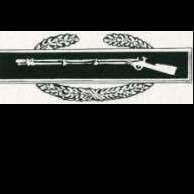
The Co I 12th IR Fritz Enl. Record: Source: NARA I did a search for a BSM for the above Fritz in the 4th ID GOs, but did not get any hits. There were more than 6,000 of these awarded by the 4th ID, so my search is likely incomplete. However, I did find his award of the Combat Infantryman Badge through a search of the 12th IR orders; the quality of many of these documents is very poor, so the info is incomplete: G.O. No. 15 Hq 12th IR ?? Oct 44: Source: NARA via Golden Arrow Research Given that he earned a CIB, he would have been eligible for a retroactive (1947) BSM based on the regulations below (if he or kin requested one): Award may be made to each Servicemember of the Army who, after 6 December 1941, has been cited in orders or awarded a certificate for exemplary conduct in ground combat against an armed enemy between 7 December 1941 and 2 September 1945, inclusive, or whose meritorious achievement has been otherwise confirmed by documents executed prior to 1 July 1947. For this purpose, an award of the CIB or CMB is considered as a citation in orders. Award of the BSM from these documents will not negate the original award or the CIB or CMB. Documents executed since 4 August 1944 in connection with recommendations for the award of decorations of higher degree than the BSM will not be used as the basis for an award under this paragraph. Veterans and retirees may submit letter application to National Personnel Records Center (NPRC – MPR), 1 Archives Drive, St. Louis, MO 63138 – 1002. Soldiers who retired or were discharged after 1 October 2002 and the primary next of kin of Soldiers who died after 1 October 2002 should send their letter application to Commander, U.S. Army Human Resources Command, (AHRC – PDP – A), 1600 Spearhead Division Avenue, Fort Knox, KY 40122 – 5408. The letter application should include documentary evidence, if possible. From: Army Regulation 600 –8 –22 Personnel-General Military Awards Headquarters Department of the Army Washington, DC 5 March 2019 3-16 [g(3)] Change 13 to AR 600-45 dated November 4, 1947, which authorized the retroactive award of the Bronze Star Medal to soldiers who had received the Combat Infantryman Badge or Combat Medical Badge during World War II. So, that is one possibility, if this is the same James F. Fritz you are inquiring about. If you have the medal, you can post it here, and folks more knowledgeable than me may be able to give input on the engraving/period, etc. I believe this may be about him: I hope this helps. Dan -
By aznation · Posted
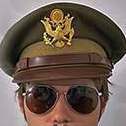
Hi Laurence, Someone else that has better knowledge of caps will have to answer you on the possible age of the cap. I do think you're correct about Locke & Co cleaning the cap. Bancroft I know is the maker of the cap. -
By aznation · Posted
Ancestry - Russell M. Hanna O'Day.pdf Morning Reports - Russell M H ODay.pdf -
By Laurencek · Posted
Any thoughts as to the date on the Cap? I guess certainly after 1960. I think Locke & Co probably cleaned the cap, but i don't see that they made it. Any thoughts. Beautifull research. Great to see the history come to life. Advertised at $220 on eBay. Thanks again Laurence -

By The Lost Cause · Posted
Thank you. I appreciate it. -
By PeleliuMarine1944 · Posted
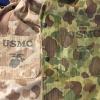
Thank you all for the replies. It really means a lot. Hoping it will turn up. I know how great of a community this is. Thanks everyone.
-
-

-

-
-
-
-
-
.jpg.2ce6a8d90c750304bcf9d4faa9318f5d.jpg.5a23d93005bf9ba70918d137e8d2e4fc.jpg)
-
-

-

-

-
-

-

-

-

-
-
-
* While this forum is partially supported by our advertisers, we make no claim nor endorsement of authenticity of the products which these advertisers sell. If you have an issue with any advertiser, please take it up with them and not with the owner or staff of this forum.