-
Thank You for Supporting USMF
-
Forum Donations
-
-
To send a donation, just click on
FORUM DONATIONS in the box above. -
Recent Posts
-
By jumpship · Posted
This is a tough one, and I don't know if this info will help or make it worse! Anyhow: Not sure if this is related to Charles J Kadlec above (see name at bottom of article): Sourced from ancestry and newspaperdotcom Dan -

By ocsfollowme · Posted
So we wait until a photo shows up. I bought mine from the eBay seller five years ago as a hope and prayer that it could be state guard. -
By ocsfollowme · Posted
From Steve Johnson: That "W/1" patch has been "identified" as a "possible state guard hat patch" for many decades. I have one of those patches, but it is in my maybe box. Despite many attempts, it has yet to be positively ID'd. -
By kiaiokalewa · Posted
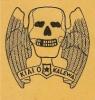
Pulled another one from the vault. Rather than an upper field cut-out black "A" the seamstress machine stitched the opening giving greater reforcement stability for the bear motif. Plus, easier to sew a rectangle shape to shoulder rather than sew around the bear too, stitch-mark traces are evident on the bear without black background backing! -

By CinamonToastCrunch · Posted
There is nobody with that name registered for the draft nor enlisted during WW2. -

By patches · Posted
Me too Jim, I even checked to see if the 2nd Armored Division had a sub unit designated as a 38th in the post war 1950s pre 1958, as in their Tank Battalions their Armored Infantry Battalions and their Armored Field Artillery Battalion, but none were. -

-
By Josh B. · Posted
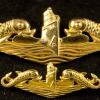
I can vouch for Ben. He bird dogged a great set of medals to a WWI submariner for me a few years ago. -

-
By Arisaka99 · Posted
I collect mostly US pistols and rifles, but also foreign “spoils of war”. For the consideration of the group and comment, here is my .02. In the firearms community, there seems to be a broad swath of what people consider or advertise as provenance: proof that a weapon was carried by a certain person or present at a specific location or event. “Buy the item not the story” is a commonly accepted nugget, but that only carries one so far. What is the difference between provenance, evidence, hearsay, and baseless fabrication? A tiered system may be the best approach that matches condition, forensics, and validated provenance. Some elements can be met with expert assistance- not someone claiming to be an expert in a random location but someone with community recognized expertise and credibility (or your own access to definitive references and data). For consideration, I offer the Tiers below for use, modification, or debate. As a note, items from Tiers 2-4 have potential for additional research and upgrade, but owners should be prepared for a dead-end and value accordingly. - Tier 1 (Validated) provenance is an item with government or manufacturer documentation (inventory, shipping records, authenticated capture papers with SN, etc.). Alternate but fully acceptable documentation could include a notarized, first person affidavit from the person who carried the weapon strengthened by period records such as a photo, weapons card, or other media such as a journal, letter home, or period shipping materials unmistakably identifying the item. A final criteria meeting this tier could be a weapon marked with identifying information such as personalized engraving or unit markings that have been authenticated to a wholly correct weapon by a community recognized expert. For maximum value, items would be in original condition without evidence of post-use modification. Tier 1 items not in original configuration (reworked, chromed, or sporterized) would be reduced in value accordingly but might still be high in historical or collector desirability or family sentimental value. Any item in Tiers 2-5 might reach Tier 1 with additional research, but probability drops as you get farther away from clues or into items with few primary data sources. - Tier 2 (Attributed) is something that complies with the known parameters and features of a given item, obtained directly from the family or estate of the veteran or original owner, along with service or other related documentation showing historically plausible issue and use. Volume of circumstantial evidence helps here. Sadly, this does not preclude that the attributed owner picked up a similar item after the fact, so there will always be some room for doubt. Value is based on condition and historical originality of the item with some positive bump for the attribution (get other vet items from the group where possible). - Tier 3 (Forensically Plausible) is the same type of item as Tier 2 (all known tendencies) with no direct attribution but in original configuration. It may come with a feasible second-hand story (grandpa told me, I got it from a vet when I painted his house, etc.). Things like obvious shrapnel or other minor battle damage reinforce a possible attribution of at least someone bringing it back, but also require a trained eye to differentiate from being accidentally dropped on a concrete floor 10-years ago. This is the “buy the item not the story” tier with the value being exclusively in the item (don’t pay a penny more for the glitter). However, any available detail with a second-hand story points to an avenue for additional research. Get all the details you can, and start your research from there. Your chances are higher for items that have good, primary data sources. Good luck! - Tier 4 (Purported use) is something that has the general attributes of known items and a second or third hand story (hearsay) with nebulous or incorrect details. Buying these items as a period bring-back spans the realm of beginner mistakes to informed collector speculation on the law of averages. For example, almost all Japanese WWII weapons came home with GIs before or after the surrender with only a tiny percentage of later imports (usually marked). So in this example, although it probably came back with a vet (GREAT), locating additional provenance is almost impossible. Having some knowledge of what you are buying and access to possible sources of other data can still get you lucky with additional research. More often than not, this Tier leads to nothing definitive. - Tier 5 (Invalid) is something that was made, government rehabbed, or clearly cobbled together after the supposed use, usually represented and accompanied by attribution to a famous person or event like Iwo Jima, D-Day, or Tet by the seller. Unless you love the weapon for its own sake, and know the accurate details of what you are looking at and its average sale price, leave it set. Avoiding this mistake is a case of shopping with knowledge and scrutiny rather than baseless trust. If you are just buying the item as a shooter, perfect. You STILL might find out that it has available historical information through research.
-
-

-

-

-
-
-
-
.jpg.2ce6a8d90c750304bcf9d4faa9318f5d.jpg.5a23d93005bf9ba70918d137e8d2e4fc.jpg)
-
-

-
-
-
-
-

-
-
-
-
-
* While this forum is partially supported by our advertisers, we make no claim nor endorsement of authenticity of the products which these advertisers sell. If you have an issue with any advertiser, please take it up with them and not with the owner or staff of this forum.