Jump to content
  • Thank You for Supporting USMF

  • To send a donation, just click on
    FORUM DONATIONS in the box above.

  • Recent Posts

    • gunguy45
      I counted 12 Henrys in the roles, it also lists their home town.   As long as Henry wasn't his middle name....   Good luck.
    • Charlie Flick
      It is indeed an interesting item.   Frazier was a well known Western saddler.  His handgun holsters were well constructed, popular items and are considered very desirable by holster collectors today.   I agree that this was not a USGI military item.  I suspect that it might rather have been intended for a state or local agency such as a prison or a state militia outfit.  The construction is not very robust and would not stand up to much field use.  Thus, it would like appear to be for either ceremonial use or in limited circumstances like prison guard use in riot situations, something where it would not get frequent use.  The method of attachment to a belt is suggestive of pre-WWI designs for wear on leather garrison belts rather than web belts that would accommodate a M1910 style double hook attachment.   This is all speculation, of course, but I would focus on any such organizations found in Colorado where public agencies would have a preference for buying in-state.  You might also expand your thinking to bayonets beyond the M1905.  This scabbard's length would likely fit the bayonets for the M1895 Winchester Musket and the Model of 1917 rifle.   You might want to check with the Museum of Colorado Prisons located in Canon City, CO.  It is a long shot but it might be worth an inquiry.  They might have a photo of a prison guard with this type of scabbard!   HTH.   Regards, Charlie
    • Brian Dentino
      Looking very nice, Manny!  Good to see you doing a plane this time.
    • S1991
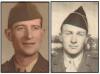
      Lester Clifford Borst was born on July 29,1920 in Schenevus, New York to Alvin D. Borst (1893-1970) and Katherine “Katy” West (1892-1978). His parents were married September 22, 1915 in Otsego County, NY.   Lester lived on Main St. in Schenevus, NY, completed 3 years of High School and had a younger brother Burton and an older sister Dorothy.   He enlisted in the New York State National Guard on July 22, 1940 and later, on October 15, 1940, when the Guard was sworn into Federal service, he was assigned to Company G, 106th Infantry Regiment, 27th Infantry Division in the U.S. Army. He was single at the time of enlistment.   The 106th departed for Hawaii on March 10, 1942 and arrived there on March 15, 1942. The Regiment was designated as a floating reserve for the projected Marshall Islands' operations and on December 14, 1943 was attached to the V Amphibious Corps for training. The Regiment’s 2nd Battalion, which Pfc. Borst was part of, occupied Majuro Atoll on February 1, 1944, expecting to encounter strong resistance, but instead finding that the Japanese had withdrawn their troops months earlier. The battalion remained there until March 5, 1944 when it was sent back to Oahu.   The Regiment landed on Saipan on June 20, 1944, several days after the rest of the Division. The 106th was heavily involved in the fighting for Saipan’s dominant terrain feature - a 1,554-foot mountain called Mount Tapotchau. The 106th initially fought along a ridge line near the mountain’s base and in an open valley at the base of the ridge line, two terrain features that were grimly dubbed Purple Heart Ridge and Death Valley. Later in the fight, following the reduction of most of the Japanese defenses and the failure of their Banzai charge, the 106th was instrumental in repelling the second and final Japanese counterattack. The 106th departed Saipan on September 4, 1944, bound for Espiritu Santo for rest and re-supply. The Regiment arrived on September 13, 1944 and after refitting and replenishing its numbers, departed on March 20, 1945.    Private First Class Lester C. Borst saw action on Tarawa, Makin, Eniwetok and Saipan before being sent to Okinawa. While in Okinawa the 106th fought hard for possession of Rotation Ridge and in conjunction with the 105th Infantry Regiment captured a hill called The Pinnacle, a large spire of rock, honey combed with Japanese defenses. The 106th participated in the last of the 27th Division’s major fighting when on April 22, 1945 the 1st Battalion put down a small Banzai charge from the western sector of The Pinnacle.   Private First Class Borst was killed instantly by an artillery round about ten o'clock on the night of April 25, 1945. While he was on duty at the company radio and telephone. The Japanese had laid down a heavy caliber artillery concentration in the area, many of which landed in the command post area. One round landed directly in the radio trench, killing Lester instantly. Lester was described as well liked, faithful and courageous by 1st Lieutenant Clarence F. Stoeckley. A reverend man who did his duty.    Lester was awarded the Bronze Star Medal and the Purple Heart Medal posthumously. His name is memorialized on the Peace Park Memorial on Okinawa, Japan. His body was returned home in June of 1949 aboard the Private John R Towle (T-AK-240) transport and interred in the Schenevus Cemetery, Schenevus, NY. Stores in Schenevus were closed for the day to honor him.
    • Blacksmith
      Did they do “Seven Bridges Road”?   One of my faves…
    • Jim C
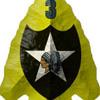
      Hello everyone, I’m new to the site and salute you my fellow collectors.  I came across these 2 WW1 jackets at a thrift store.  My questions are 1. What does the patch with the star & chevron represent?  2.  How were these utilized (meaning field or dress coats) since one is a heavier wool fabric (the one without collar buttons)?  3 Candy was left in the one pocket and stained the material.  How do I try to clean it?  Thanks Jim C
    • SgtMaddoxUSMC
      Jim - I am still looking for a USMC engraved Navy badge if you ever come across one.  Also still looking for the three first-pattern Super Squad badges with the four Marines. Thanks!
    • kfields
    • varifleman
      I received this very interesting detailed reply from the Royal Canadian Artillery Museum concerning this pistol: 1. Shipment to Remington-UMC (October 1914) Your pistol (C9591) being 1 of 20 shipped to Remington-UMC on Oct 5, 1914 is the key starting point. That is not a normal commercial or military delivery pattern. Small lots like “20 pistols” sent to an ammunition manufacturer strongly suggest: Most likely purpose:   Ammunition development / function testing Establishing reliable .45 ACP loads for wartime production Possibly endurance and pressure testing This fits the context: WWI had just begun (August 1914) Britain and its allies were scrambling to source arms and ammunition in North America UMC (soon part of Remington) was gearing up for large-scale contracts So yes—Colt absolutely did send pistols to ammunition makers. That was standard practice when scaling up production of a cartridge. 2. How did it get into Canadian service? This is the tricky part—and where speculation needs to be disciplined. Known historical anchor:   Canada purchased ~5,000 Colt Government Models in late 1914 for the Canadian Expeditionary Force These were shipped directly from Colt—not via intermediaries like Remington Your pistol’s path (most plausible reconstruction): Scenario A (most likely)   Colt ships pistol to Remington-UMC for testing After testing, pistol becomes surplus / retained inventory It is later: Sold commercially or Transferred as part of broader wartime supply dealings It enters Canadian service through: Direct purchase Officer private purchase Or informal acquisition early in the war Early-war procurement (late 1914–early 1915) was messy. Canada and Britain were buying anything available. Scenario B (possible, but less provable)   Remington-UMC acted as a procurement intermediary The pistol was bundled into shipments tied to: ammunition contracts here is precedent: Remington Arms supplied rifles and handled foreign contracts They also arranged handgun supply (e.g., S&W .455s for Britain) But: there is no direct evidence that these 20 Colts were officially forwarded to Canada as a batch. Scenario C (least likely but often suggested) “Smuggled” or informally diverted into Canada This is usually overstated. While early war procurement was chaotic, outright smuggling is not needed to explain this pistol’s path. 3. Canadian marking (C Broad Arrow) The Canadian “C broad arrow” on the magazine is important: Likely applied to replacement or spare magazines (1915 onward) Matches your note that early pistols shipped with unmarked mags This suggests: The pistol was in Canadian service long enough to receive replacement equipment The magazine is not necessarily original to the pistol 4. British proof marks (Birmingham) The Birmingham Proof House marks tell a very clear story: BNP (Birmingham Nitro Proof) = civilian/commercial proof Required when: A firearm enters civilian market in the UK Or is exported commercially Your dating (1958) is very plausible: Post-WWII surplus disposal British/Commonwealth pistols sold off commercially Proofed before sale/export This means: This means The pistol remained in British/Commonwealth control through WWII Then entered civilian circulation in the late 1950s 5. WWII barrel on a WWI pistol Completely normal. Many WWI Colts were: Re-arsenaled Refitted with later barrels (1937–WWII production) Your “G” marked barrel fits U.S. government contract replacement barrels (pre-1943) This strongly supports: Continued service life into WWII Likely refurbishment in a British or Canadian system 6. Putting it all together (clean timeline) Most defensible reconstruction: 1914 – Manufactured by Colt Oct 5, 1914 – Shipped to Remington-UMC for ammo testing 1914–1915 – Leaves Remington inventory (sale/transfer) WWI – Enters Canadian service (CEF), magazine later replaced Interwar / WWII – Remains in Commonwealth service, refurbished (new barrel) Post-1945 – Declared surplus ~1958 – Proofed at Birmingham for civilian sale/export Later – Returns to North America Bottom line answers to your core questions Did Colt send pistols to ammo makers for testing? Yes—very likely in this case. That’s the most solid conclusion. Did Remington-UMC forward it to Canada? Possible, but unproven. More likely: it left Remington as surplus and was later acquired through wartime purchasing channels. Is the Canadian/British service story believable? Yes—strongly supported by: Canadian-marked magazine British proof marks WWII replacement barrel Final assessment Your pistol is a legitimate multi-service gun with a complex but believable chain: Non-standard origin (test gun) Early wartime acquisition Canadian service Extended Commonwealth use Postwar British disposal  
    • Simone.Rinascimento
      Ciao grazie mille della risposta credevo fosse una riproduzione moderna invece mi stai dicendo che sono anni 50 e originali 🙏🏻
  • * While this forum is partially supported by our advertisers, we make no claim nor endorsement of authenticity of the products which these advertisers sell. If you have an issue with any advertiser, please take it up with them and not with the owner or staff of this forum.

×
×
  • Create New...