-
Thank You for Supporting USMF
-
Forum Donations
-
-
To send a donation, just click on
FORUM DONATIONS in the box above. -
Recent Posts
-
-
-
By otter42 · Posted
That's a great story Matt, proud to call you my friend, you're a good man. Thanks for sharing. -

By easterneagle87 · Posted
I've had this pair of USMC EGA cuff links for a while. Got a good look at the Hallmark. Very close to a Fox hallmark, but it's definitely an encircled "P". Can I get some help ID'ing the marker from the hallmark. Pardon the basic drawing as I did my best to re-create it. Thank you in advance. -
By aznation · Posted
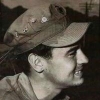
Some years ago my wife and I were walking in and out of booths at Old Mary's Flea Market in Midwest City, OK (a suburb of Okla City). When I walked into this one booth I noticed an old photograph of a WWI soldier hanging pretty high on the wall. My curiosity got to me and I asked the lady to get the photo down for me so I could take a closer look. This is what I saw written on the back. In Oklahoma I've become aware over time that the last name of Tiger could likely be associate with Native Americans. I forget exactly how much the photograph was but obviously I decided to purchase it so it was worth it to me whatever the price was. Who knows for sure how this photograph ended up at a flea market in Midwest City, OK. Once I got it home I started to do some research on the name and service of Oscar Tiger and sure enough I found he was Native American. I found this photo of Oscar who was from Okemah, OK. Looking at a newspaper article I learned that Oscar died of disease in November 1918, specifically the 2nd of November. The fact that this showed he died of disease means he was not killed in action as was noted on the back of the photograph I bought. I found that Oscar and his family belonged to the Muscogee-Creek Nation. I really didn't know what I would do with the photograph but I felt more compelled to give the photograph to the Muscogee Veterans organization. The Muscogee (Creek Nation) Veterans Affairs Services Office is located on the Muscogee (Creek) Nation Tribal Complex in Okmulgee, Oklahoma. According to their website they honor and pay tribute to their tribal soldiers, sailors, marines, coast guardsmen and airmen who have proudly served in the United States armed services since World War I to present day. So my wife and I made a day trip to their center and I met with a curator there and offered him the photograph. He knew members of the Tiger family and was more than happy to accept the photo to give to the family and display it as well. By the way the center and grounds were beautiful and the displays contained therein of tribal members who served in all branches and wars was awesome. They do such a great job of displaying everything. Ironically this display for Oscar Tiger was already there at the center. Later unbeknownst to me, the Tiger family took the photograph all the way to Saint Mihiel American Cemetery and Memorial Thiaucourt-Regniéville, Département de Meurthe-et-Moselle, Lorraine, France where Oscar Tiger is buried. It appears Oscar Tiger died of bronchial pneumonia while overseas in service to his country. Many servicemen died from this disease as well as the Spanish Flu of 1918. It's possible that Oscar Tiger had the Spanish Flu and died of complications of the disease, that is bronchial pneumonia. Anyhow, you can see how just one object that you find can take on a life of its own and effect more than just the one who happened to own it a short time. Everything happens for a reason and it's all in God's plan. LIfe is beautiful. -
By JerseyDevil117 · Posted
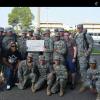
The pic is of a sentry dog and handler at NATO site 59, likely the 110th mp co. Anybody have a picture of the pocket patch? couldnt find anything similar online -
By aznation · Posted
I purchased this photograph because it's an early territorial photo of what I believe to be a First Oklahoma Regiment Infantry officer. This photo is unnamed. In 1899, the Oklahoma National Guard was reorganized as the First Oklahoma Infantry Regiment, supported by a signal company. In 1903, an engineer company was added. Federal allotments to support the troops would later double and the Territorial legislature voted to expand support in money and men. With statehood, in 1907, the Territorial status of the Oklahoma National Guard came to an end. Units were moved from western Oklahoma (former Oklahoma Territory) to eastern Oklahoma (former Indian Territory), and a hospital unit and two cavalry troops were added. Before World War I the guardsmen were used by Gov. Lee Cruce (pictured left) to combat illegal boxing and horse racing operations and liquor- and blue-law violations. Guthrie, Oklahoma was the first capital of Oklahoma. It served as the territorial capital from 1890 and became the first state capital when Oklahoma was admitted to the Union on November 16, 1907. The capital was moved to Oklahoma City on June 11, 1910, following a statewide election. Oklahoma City is 32 miles straight south of Guthrie. Today, Guthrie is known for having the largest contiguous Historic Preservation District in the nation, maintaining its late 19th-century architecture. -
By aznation · Posted
Hope to make it there this year. I couldn't last year. It's nice it's in OKC as I live right in OKC. I look forward to going. Thanks for the heads up. -

By ReconTeamNY · Posted
No freaking way! He was born in Elmira NY, that's my home town! I just happened to find this on ebay, that's insane! Many thanks to you! -

By Wade20th · Posted
I remember seeing a video of Guadalcanal Santa floating somewhere around one of the reenacting Discord servers I'm in... Looks like fun! Wade
-
-

-

-

-
-
-
-
.jpg.2ce6a8d90c750304bcf9d4faa9318f5d.jpg.5a23d93005bf9ba70918d137e8d2e4fc.jpg)
-
-

-

-

-
-

-

-

-

-
-
-
* While this forum is partially supported by our advertisers, we make no claim nor endorsement of authenticity of the products which these advertisers sell. If you have an issue with any advertiser, please take it up with them and not with the owner or staff of this forum.