
-
Current Donation Goals
-
Forum DonationsRaised $2,241 of $7,500 target
-
-
To send a donation, just click on
FORUM DONATIONS in the box above. -
Recent Posts
-

By Pennsyltucky Red Neck · Posted
and wanted to say hello. I’m in Somerset County, ‘bout 120 miles west of Gettysburg on Rt 30. Been a Civil War buff since I learned to read. So was my Dad. Also became infatuated with The Alamo and The Indian Wars on the Plains, particularly Custer and The LBH. I was a 63W in the Army (3rd shop wheeled vehicle mechanic) from 1985 to 1989 at Ft Lewis. My Old Man was a WW2 vet of the Second Armored Division (41srt Armored Infantry Regiment). Lately read “Dawn Like Thunder” by Glenn Tucker, and I’m about 1/3 way into Ian Toll’s “Six Frigates”. I haven’t figured out quite how to work this forum yet. But I’m looking forward to sharing some thoughts and discussions. PTRN -
By Cobra 6 Actual · Posted
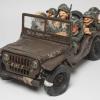
South Korea bringback: The translation is “Crazy Joe”. -

By sigsaye · Posted
PT boats, were issued foul weather gear, just like every other unit. When it was required, the boat would draw however many sets they needed for the crew. When no longer needed, it would be turned into a central issue facility. The only markings would be the standard USN stamp and maybe a number from the Central Supply center issuing the gear. Sailors did tend to “Procure “, jackets that they particularly liked. It fit right, not all torn, greased or broken zippers, such as that. The Navy, had no specific markings requirement, often, units would “Encourage” the guys to “Spiff Up” their jackets as a unit thing. They’d paint the squadron insignia on the back, get patches made and wear them on the front. I don’t think individual Boat Patches were all that common. Guys bounced around the squadron, routinely filling holes in short handed crews, while their boats were being worked on. Additionally, boat crews mostly, lived ashore in barracks/tents, or on PT Boat Tenders, where they stowed most of their gear. -
-
By BC312A · Posted
I was looking at patches worn by PT crews in the Pacific and ETO during WW2 on Motor Torpedo boats worn on jackets like the N1 deck jacket. Some patches as shoulder insignia and some squadron patches based on aircrews designs plus the stencilling also found on such jackets and clothing. Any one know if the posted patch is a standard patch worn by most PT crews or belongs to a certain squadron, would be interested to know this patches history. It also stated that it glows? so not sure if originals can be dangerous to collectors if they contain glowing radium on them for the glow effect. -
By HUD69 · Posted
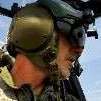
Indeed, that is from my old website, Salimbeti's website also has some more pictures. Some more info from the web. The HGU-35/P integral oxygen system features a new lightweight low profile mask, an internal oxygen duct through the helmet, and an external hose with communications wires connecting to the helmet at the rear. The NADC designed mask was developed and supplied by Carleton Controls Corporation. The "Carleton mask" is named after Carleton Controls of East Aurora, NY, a specialist manufacturer of aerospace pneumatic and oxygen systems founded in 1955. They designed the mask specifically for the HGU-35/P integrated helmet system to enable rear-duct oxygen routing. The program failed OT&E in spring 1979 and never went to production, making both the helmet and the mask exceptionally rare. Carleton is also one of the producers of the well known CRU-79/P oxygen regulator. This PDF has some more info on the testing of the HGU-35/P in two versions (high and low pressure) also an image and info on a HGU-35/P VTAS III with the same kind of mask: The VTAS-I II helmet assembly is a specially configured HGU -35/ P low pressure, form-fit , mold- in-place helmet assembly. The VTAS electronics and sensors are fitted into the specially contoured helmet shell as an integral part of the helmet. The reticle projector is attached to the parabolic visor as partof the helmet system. And from a Canadian publication: In the seventies, the USN developed a new series of helmets C HGU 33/P, HGU 34/P and HGU 35/?) attempting to utilize as few helmet shells and liner systems as possible to accommodate all Naval aviators. And from the USN: The USN has also designed a more advanced helmet that, if successful, will replace the HGU-33/P. Designated the HGU-35/P, its major innovation Is the routing of the oxygen delivery hose through the back cf the helmet. This improves the location of the centre of gravity of the helmet, resulting in less torque about the head during exposure to gravitational forces. This helmet shell was manufactured from an epoxy based composite of Kevlar and graphite. Kevlar is a light weight, high strength material and graphite is a high stiffness fibre. The helmet is custom fit by means of a V-Tec liner. It was postulated that this helmet would cause poor seat/man separation because of the routing of the oxygen delivery hose. However, no interference was experienoed during an actual seat/man separation trial carried out at the Aerospace Engineering Test Establishment (AETE). A second major concern was the extremely high breathing resistance of the assembly. This resistance was 1.7 to 2.0 times that imposed by the A13A mask when used with the same oxygen delivery system and well beyond the recommended total resistance. -
-
By doyler · Posted
There are several manufacturers on FaceBook that offer to make patches of all types even the rubberized stuff. I have a board of bullion patches a military shop had on display and the owner had the patches made in the early 1990s for resale in his shop. I recall he said he had to do an order of 10 each. I also had 6-10 34th Infantry Division bullion patches that were larger blazer style patches done for WW2 34th vets and was told 30 or less were made for them early1990s. Also spoke to a buyer for a insignia company and at that time he stated all the bullion insignia, wings and badges were sourced overseas. -
By Flukaveli · Posted
Hello, I was wondering how much this helmet would be worth. It is a fixed bale front seam helmet. The heat-stamp is 270B and with last pattern chinstraps. The helmet came with a woodland camo helmet cover. It has a Vietnam liner made by Westling House with 107 stamped right above it. The sweatband is dated 88’. The helmet has been named 4 different times, with the names R.D Holt, Plamondon, V.G. Burns and Andrew H. Thank you for help. -
By BC312 · Posted
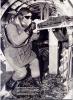
I was wondering how deck jackets were marked up for use on the PT boats during WW2. I read that these jacket were issued differently to those on board ships and aircraft carriers in that such jackets were accountable as ship stock and issued when working in the cold on deck and marked accordingly to working areas of the ship. With smaller PT boats there was no room to store such clothing and individually issued for the type of working environment which PT boats were exposed too. I was told that a patch of cloth or Disney style patch usually featuring a character on a torpedo was on the right of the coat or similar art work was on the back of the jacket with name of crew either on front above USN logo on left or on back with hull number ie PT102 and boat squadron, not in any order but marked up on the lines inspired by the airforce and using paint to hand either with cut stencils or by hand. Not sure if this is correct as it would be nice to see the type clothing used on PT boats not just the Pacific but in the ETO as well were it could be colder. Any reference books about on such a subject or photos.
-
-

-

-
-
-
-
.jpg.2ce6a8d90c750304bcf9d4faa9318f5d.jpg.5a23d93005bf9ba70918d137e8d2e4fc.jpg)
-

-
-
-

-

-
-
* While this forum is partially supported by our advertisers, we make no claim nor endorsement of authenticity of the products which these advertisers sell. If you have an issue with any advertiser, please take it up with them and not with the owner or staff of this forum.