
-
Current Donation Goals
-
Forum DonationsRaised $2,461 of $7,500 target
-
-
To send a donation, just click on
FORUM DONATIONS in the box above. -
Recent Posts
-
By MCDUFF · Posted
That is fantastic! Thank you for finding this! It really was a mystery until you found this! That driver is still very trusting!! Cheers -
By KurtA · Posted
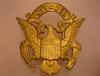
You don’t need black light photos. It’s an original vintage patch. what is “a really low price”? -
-

-

-
By phantomfixer · Posted
More info on R-14 vs ANB-H-1 and their use.. as stated the -1s replaced the R-14 in AAF helmets and headsets the aircraft utilized an adapter for the -1’s , the MC-385 adapter used to go from high impedance(-1) to low impedance (-14) I take it the AAF aircraft were set up for low impedance and Navy used high… midwarish the US adopted the high impedance for radio use.. thus the need to adapt the new ANB-H-1 to the aircraft soooo looking at what era you are replicating would dictate which receiver to use… Early to mid war, and most likely into 44, the R-14 would be acceptable -

By Proud Kraut · Posted
Thank you all for your kind feedback, I appreciate it. -
By mysteriousoozlefinch · Posted
Round up from the end of last year to now. 1997 UNICOR contract. Nebraska STARC Infantry 1st Lieutenant. A personal favorite, 1st Lieutenant with 2/252nd Armor (North Carolina National Guard) branch insignia. 2/252nd was a Roundout unit for the 1st Cav and then 2nd Armored Division. You can see where the 2nd Armored triangle was over the left chest pocket and the ghost of the North Carolina STARC under the 30th Engineer Brigade on the left shoulder. As part of the Roundout program, they were the first National Guard battalion to receive the Abrams in 1983. 1985 contract date. Also interesting to note that the pockets are all modified with Velcro closures. University of Utah ROTC cadet. TRU-SPEC Vermont State Guard with CERT patch. 330th Medical Brigade with original pin-on PFC rank, although the black finish is almost worn off one. 1999 contract. Army Reserve unit out of Illinois. New York STARC Sergeant First Class with a Desert Storm 22nd Support Command former overseas service patch. West Virginia STARC/Joint Forces HQ Specialist. Despite living in WV for many years, I never came across a good WVNG BDU. Wrong end of the state I guess. FORSCOM Staff Sergeant with 82nd Airborne Division combat patch, EIB, and EOD badge. I'm guessing they were EOD in Desert Storm assigned to the 82nd, but could have been in another non-infantry role. 27th Infantry Brigade Sergeant with EIB, jump wings, and Air Assault badge. There's 82nd AB or XVIII Corps ghosting under the 27th IB patch. 1981 mixed white tag/green tag coat. Lieutenant Colonel with Chemical Corps branch insignia, Army Materiel Command current assignment, probably a Vietnam-era 5th Infantry Division combat patch, and CIB. Short tapes. No name tape, but a MACV former wartime service patch and 8th Infantry Division current assignment. Military Intelligence Lieutenant Colonel, with CIB. The third Vietnam vet Lieutenant Colonel, this time a pilot that served with the 101st Airborne that later transferred to the Finance Corps. Wearing the Department of the Army Staff Support patch for a current assignment. A very nice, readable, 1982 white contract tag. Maryland STARC with the SF long tab over top. Also a Master Parachutist. Probably a background in one of the 20th SF Group components in the MDNG. Maryland did have a Lieutenant Colonel-ranked SF Coordinator position in the 29th Rear Area Operations Center to liaise between Maryland's (at the time) two companies and their higher HQs, per Free State Green Berets. NATO CENTAG (Central Army Group) - US Army Element shoulder patch. A Small Short. Big wide collared 1982 production with short tapes for Specialist Bruck. CENTAG had a number of staff, MP, transportation, and signals units directly attached to it. Medical Specialist Corps Lieutenant Colonel from the 804th Medical Brigade with what I tend to think of as reused OG-107 insignia. A very serif-heavy font for the branch tape. Transportation Corps 2nd Lieutenant from the Texas National Guard with Combat Action Badge. It's a guess, but I think from the 1836th Transportation Company out of El Paso and Gatesville. From scattered articles and photos, it seems like at different times during their 2003-2004 deployment that company was under the 7th Transportation Group and the 143rd Transportation Command. They did long-haul runs with HETs out of Camp Arifjan from what I read. INSCOM CWO2 on this very starched 1988 contract American Apparel coat. -
By Shanny1298 · Posted
Another one for the experts here! It’s listed at a REALLY low price IMO, so if it’s genuine, I’m going to snatch it up. It has 10 feathers, not 9, but that’s obviously one small factor. If ya’ll think it’s good, I’ll ask for some black light photos just in case! Thanks! Shannon 🫡🪖 -
By cwnorma · Posted
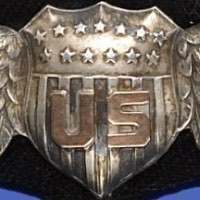
None that I've ever been able to find. But, the reciprocal is true as well. Clearly though, with respect to WW1 wings there was both copying of designs between competing firms (see: Dallas wings) and evolutionary change within lines (see: Simmang). As to Shreeve defending its Intellectual Property, the United States was a very different landscape in 1918. The badges themselves were only worn for a brief 18 months. My current theory (based admittedly on extremely limited [and mostly anecdotal] information is the solid version was a direct copy of the Shreve made by one of the Los Angeles based makers. If that tenuous theory holds, unless a cognizant employee decided to take the train down to LA from SF to check out the competition, how would Shreve have even known? Moreover, even if SF-based Shreve was aware of the copies, could they have mounted an IP challenge before the Adams wings hit the scene in 1919? (see Dallas wing patent fight) Besides all the physical differences possibly arguing for separate makers; the hollow version almost always is found bearing Shreve's hallmark. To date, none of the solid versions has surfaced with such a mark. Probative? Absence of evidence is not evidence. Adding to the challenge is that both the Shreve-marked hollow badge and the sterling marked solid badge are both so scarce that it is maddeningly challenging to find any information on either. Shreve is known to have made two WW1 era wing badges: 1) 1918 US Army Air Service Reserve Military Aviator, & 2) 1919 Philippine Air Service Aviator (phenomenally rare). Both 1) and 2) share Shreve's hollow construction and Hallmarks. The 3) solid badge remains an interesting, unresolved mystery: Ultimately all are different enough that every collector should strive to have one of each! Warm Regards! Chris
-
-

-

-
-
-
-
.jpg.2ce6a8d90c750304bcf9d4faa9318f5d.jpg.5a23d93005bf9ba70918d137e8d2e4fc.jpg)
-
-
-
-

-
-
-
* While this forum is partially supported by our advertisers, we make no claim nor endorsement of authenticity of the products which these advertisers sell. If you have an issue with any advertiser, please take it up with them and not with the owner or staff of this forum.