-
Thank You for Supporting USMF
-
Forum Donations
-
-
To send a donation, just click on
FORUM DONATIONS in the box above. -
Recent Posts
-

By vernon · Posted
American service members usually wore from three to six service ribbons at the end of WW 2. Following WW 2 the number of authorized military awards increased markedly resulting in service personnel wearing more ribbons. Frequent attachment and removal of individual ribbons or ribbon bars on military clothing while maintaining proper alignment could at times be annoying. The answer for this was to create one- piece detachable ribbon groupings. An early fix to this issue was to sew base bars with their fasteners onto the backs of large ribbon groupings to produce detachable ribbon groups (see picture). Another practice was to sew on snap on fasteners on ribbon groupings and military clothing. Some tailors integrated ribbon bars with single thick fiber or thin plastic backings to produce detachable ribbons (Examples are provided in this subforum in the post “Early Cold War USAF Ribbon Bars”). Both pin back and clutch back fasteners were used on early improvised detachable multi groups. Later novel ribbon fasteners including magnetic backings and Velcro strip fasteners were also used. An early detachable ribbon grouping was patented in 1955 by A. Bolognese of Quantico, Virginia (See picture). His mounting device for service ribbons consisted of rows of three place ribbon bars joined together with metal strips which created a ridged backing plate. Pre-assembled ribbon mounts could be glided onto the grooved mounting strips and secured by friction. Insignia distributors soon recognized the need for removable ribbon bar groupings. From the 1950’s to early 1970’s various one- piece multiple bar holders became available to American service personnel. These new assemblies were clutch back due to the phasing out of screw post and pinback fasteners by the military. Two popular ribbon holders were the MIL BAR (J. Murphy inventor, patent applied August 1957, granted April 1958) and the Unimount (G. Cherry inventor, patent applied February 1969, granted May 1971 (See pictures). The MIL-BAR was the first patented plastic ribbon holder. An advantage of plastic is that it does not rust. In 1965 Murphy founded MIL-BAR Inc. to sell his MIL BAR and other military insignia. The Unimount was distributed by Loma Linda-Cherrco of Loma Linda, California and possessed long elongated channel shaped metallic strips that pre-assembled ribbons with devices could easily slide onto. During the Viet Nam War period F. Carr, T. Carter, R. Raeburn, and A. DeCristino of N. S. Meyers, Inc. patented (1969) a multi-ribbon holder that could be cut to a desired shape and size by the user. The complex was made from molded plastic of different colors to match the clothing and service branch. Ultra Thin Ribbons from Ultra Thin Ribbons Inc. of Moore, Oklahoma first appeared in the marketplace in the mid 1980’s. Their unique design produced vivid and thin ribbons permanently fixed on a thin lightweight plastic backing. Today custom made and handcrafted ribbon racks of different styles such as slide- ons, thin ribbons, and miniature ribbons are commercially available. Alternatively, multiribbon groupings can be easily built using available kits such as SnapRacks. Over the years foreign made insignia and ribbon groupings have been hand crafted for American service members. Local tailor shops and foreign commercial vendors have supplied interesting ribbon groupings to our service members. Theater made ribbon assemblies usually differ in construction, materials used, or ribbon weaves from American made ribbons. Figs.1,2. Improvised one- piece ribbon grouping Fig.3. Snap on fastener Figs. 4,5. Tailor made multibar assembly on a thick cloth backing Fig. 6. Tailor made multibar grouping on khaki cloth backing Figs. 7,8, Tailor made multibar grouping Fig. 9. Alfred Bologneses’ mounting device for service ribbons Fig. 10. Carr and others’ combination holder sold by N.S. Meyers Figs. 11,12. Meyers’ ribbon holder (top) and MIL-BAR plastic holder (bottom) Figs. 13,14. Patent figures for the Unimount ribbon holder Figs. 15,16. Loma Linda-Cherrco Unimounts (top) and a Vanguard Industries Mounting Assembly (bottom) Figs. 17,18,19,20. Examples of Unimount, MIL-BAR, and Meyers ribbon holders Figs. 21,22. Taiwan made clutch back ribbon bar assembly Figs. 23,24. Korean made ribbon bar assembly Figs. 25,26. Chinese made ribbon bar assembly. Note: this multibar design likely predates Alfred Bologneses’ similar 1955 patented ribbon holder design. -
By Trevor24 · Posted
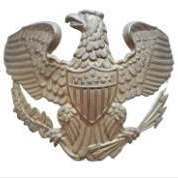
While I have a few Items from that period, I don't think I have anything iconic from that war. -
By FT.Monmouth1943 · Posted
Whose collection is that? Most of those are post war fakes. 4 of them look like they might stand a chance of being real, but they could be fake as well. Can’t tell without more photos, and wouldn’t recommend using this as a reference for real stuff since the majority are fakes. -
By FT.Monmouth1943 · Posted
That’s a post war tiger boonie made for the civilian market. -
By atb · Posted
It was US Army Strategic Communications Command and then US Army Communications Command when I wore it in 1974-76. -
By Ghost Rider USA · Posted
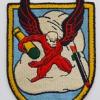
Just sharing a newer addition to my modest collection. If my research is correct, this pendant from the Grand Army of the Republic is a fraternal organization for Union veterans. Fun fact: I drive on the GAR highway on my commute to work. -
-
-
By eagle mtn · Posted
They look good to me. I wouldn’t worry about the different brands of zippers. Its not unheard of, I’m pretty sure one of my jump jackets has conmar amd talon zippers -
By Marshallj · Posted
How sad. I found his obituary. Nothing about him other than he lived and died. Extended family probably took care of everything including cremating him cleaning out the house. CMSgt. is no small accomplishment.
-
-

-

-

-
-
-
-
.jpg.2ce6a8d90c750304bcf9d4faa9318f5d.jpg.5a23d93005bf9ba70918d137e8d2e4fc.jpg)
-
-

-
-

-
-
-

-
-
-
-
-
* While this forum is partially supported by our advertisers, we make no claim nor endorsement of authenticity of the products which these advertisers sell. If you have an issue with any advertiser, please take it up with them and not with the owner or staff of this forum.