-
Thank You for Supporting USMF
-
Forum Donations
-
-
To send a donation, just click on
FORUM DONATIONS in the box above. -
Recent Posts
-
.thumb.jpeg.9d6516b62468b269edeca540f2715948.jpeg)
By Armygas · Posted
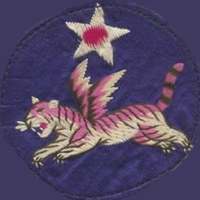
Welcome Jeremiah, My Father in Law was a belly gunner on a B-24 flying out of New Guinea to Rabal Harbor Japan. We may need to compare notes on our family flyers. I have a few artifacts from Bobs time in service, Do you have any items from your uncle? Cheers, Armygas -
By danimal03 · Posted
Wow! Stellar. Simply stellar. Thank you for sharing! -

By ScottG · Posted
There is a company that makes inflatable torso's and they actually work decent. Just make sure you Google inflatable torso and not inflatable mannequin as the results are dramatically different🤣 and you will be plagued by some horrible spam... Scott -
By 4thraiders · Posted
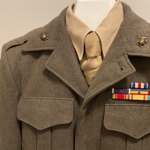
“These things I’ll never forget, when I can’t remember what I had for supper yesterday.” On February 27, 1939, Daniel Mulcare Jr. enlisted in the Marine Corps in Cincinnati, Ohio. Following boot camp, he was assigned to Company G, 2nd Battalion, 5th Marines. There, Mulcare recalled receiving exceptional training from seasoned leaders—Gunnery Sergeants and Master Sergeants who were veterans of World War I, and NCOs who had seen action in Nicaragua. After a deployment to Puerto Rico, Mulcare was transferred to G Company, 2nd Battalion, 1st Marines. His new unit was stationed in Cuba, where they continued life in the field. During one particularly dry and dusty hike, a call went out for volunteers for a new and experimental parachute unit—along with the incentive of an extra $50 per month. For Mulcare, this was an opportunity to more than double his pay and become part of what promised to be one of the most elite units in the Marine Corps.On May 12, 1941, he reported to Lakehurst, New Jersey, for parachute training. The highlight of his training was his first jump: “When my turn came for that first jump, I spit out my chewing gum, said, ‘God give me courage,’ made the sign of the cross, and jumped. Seconds later I got a terrific jolt, looked up, and saw the canopy in full blossom. I said to myself, ‘What do you know—it opened.’ It was a delightful descent, the greatest feeling. Everything below looked so small—pine trees, hangars, railroad tracks, roads, etc. (Incidentally, this was only my second time in an airplane; the first was an introductory ride a few days before.) The landing was also good. I felt great—like doing it over again right away, like a kid on a playground slide.” Mulcare earned his parachutist wings in June 1941 and was assigned to 2nd Platoon, Company A, 1st Parachute Battalion, serving as an assistant squad leader and demolition specialist. GAVUTU After months of grueling training and movement across the Pacific, H-hour finally arrived for the Paramarines. At approximately noon on August 7, 1942, Mulcare boarded his LCVP and waited for the signal to land. As they approached the shore, his first contact with the enemy came under fire from a Japanese pilot shooting at them with a pistol from his downed plane. Mulcare had been designated the first man off the boat, tasked with carrying a Bangalore torpedo to clear any barbed wire obstacles on the beach. However, Lieutenant Nickerson took a quick look ahead and saw no wire. He ordered Mulcare to drop the Bangalore and follow him ashore instead. Mulcare exited the craft second, just behind Nickerson. After advancing roughly 75 yards inland, they came under intense machine gun fire from multiple concealed positions. At that moment, his platoon was alone on shore—1st Platoon had been hung up on the reef and was forced to wade through chest-deep water before reaching land. Looking across the causeway toward the neighboring island of Tanambogo, Mulcare spotted a Japanese machine gun position roughly 600 yards away. Knowing his Reising submachine gun was ineffective at that range, he held his fire. Instead, Marine Herb Meyer engaged the position with a single, well-placed shot from his Springfield M1903 rifle, silencing the gun. “As more Marines came ashore, we were hit from every direction. The rocky hill ahead was a honeycomb of caves and dugouts, hidden under logs and palm fronds, with snipers even in the trees. I thought 1st Platoon was on our left, but we started taking fire from that flank. I shouted for them to cease fire, thinking it was friendly—then realized it was four Japanese soldiers. I fired with my Reising; they were later found dead, though I can’t say if it was my doing. It was chaos. One Marine beside me was panicked, constantly in my way—on top of me, beside me, even under me at one point. During the fighting, a bullet grazed my helmet and another tore through my sleeve. There was no cover, and the enemy was well concealed. We were eventually pulled back. I took cover behind a stove and refrigerator outside a wooden building, joined by Walton and 1st Sergeant LeNoir. They spotted movement on Tanambogo and moved to snipe from the shoreline, with Walton acting as spotter. Within ten minutes, LeNoir returned shaken—Walton had been killed the moment he raised his field glasses. He died kneeling, just as he remained until we buried him the next day. He was a well-liked, sharp Marine, and his loss hit hard. With Walton gone, I assumed command of the scattered squad. By late afternoon, we regrouped and began mopping up operations.” “August 8, 1942. The next morning after daybreak I got pinned down behind a coconut log from a 20 mm anticraft gun on Tanambago. I could feel the heat from the tracers. Lying flat on my stomach with an entrenching tool, I dug a hole and rolled into it when it started to rain and fill up with water. Then the firing stopped. Planes from the Enterprise came to our aid with SBD's dive bombers”. After further time spent on Gavutu Dan moved over to Tulagi then back shipboard until the Tasimbasco Raid EDSON’S RIDGE- It is fitting that Dan’s first experience when finally in position on the ridge would be with the officer of its later namesake; Merritt Edson. “ Now that we reached our destination the powers that be were trying to figure out how and where to set up our defense. Nick told me to spread my men out all the way to the end of the ridge which was ridiculous. I was griping to my squad that you could put a whole platoon between squad members and still wouldn't reach. We needed a whole regiment to defend this area. I was really sounding off when a marine said "Son, get Major Miller for me". I said "who are you?" Thinking I'm a squad leader and he thinks I'm a runner. He said "Edson's the name" turning hiscollar lapel over displaying a hidden eagle.It was Colonel Merret Edson of c.o. of the Ist Raider Battalion. I said "aye aye, sir". Put Lippy in charge and took off and brought Major Miller to Col. Edson.” The Paras were down to half strength and attached to the 1st Raiders under Edson’s command. September 12th - I was coming back from noon chow at our field kitchen, a flight of Mitsubishi bombers appeared overhead (we didn't get the air raid signal) and started dropping "grass cutter" bombs with an extended detonator causing the bomb to explode at ground level.The bombs falling sounded like a fast freight train. The whole load was dropped on the ridge. A piece of shrapnel struck me on the helmet. I had my face buried into the ground and holding onto grass at the roots and praying to God to get me out of this, that I'd even give up smoking. My forehead was wet. Thinking it was blood I felt it with my hand, it was sweat.” Sept 13th-14th- After enduring ongoing shelling—many rounds proving to be duds but still keeping everyone tense—Mulcare’s unit was ordered on September 13 to bury all their 60mm ammunition for unclear reasons. That night, the platoon moved to a new position along the ridge’s eastern side in the jungle after two sleepless nights, only to be met almost immediately by intense action as the 11th Marines began firing 105mm artillery. Amid the confusion, Marines struggled with missing gear—helmets, bayonets, even shoes. Upon reaching the ridge, they learned Japanese forces had broken through the lines. Under Colonel Edson’s direction, they opened fire on enemy troops near a burning area previously occupied by B Company. In complete darkness, visibility was nearly zero. Perkins began firing a machine gun, declaring he was making “Custer’s Last Stand,” and was killed within minutes. The enemy was extremely close—charging directly into their positions and dying at their feet. Dan’s squad contributed heavy firepower with two light machine guns and a BAR, holding their ground despite the chaos. The battle intensified with screams, chants, and relentless attacks. An artillery spotter helped direct precise fire as rounds landed dangerously close. Weapons overheated from continuous use. Overhead, flares from spotter planes illuminated the battlefield like daylight, followed by mortar and grenade fire. Repeated enemy charges broke through at times, leading to close-quarters fighting and casualties behind their lines. Mulcare describes it as the worst night of his life, crediting survival to luck, faith, and the 11th Marines. The following account estimates that the 11th Marines’ 5th Battalion inflicted 2/3 to 3/4 of Japanese losses that night (Sept. 13–14, 1942), firing nearly 2,000 rounds of 105mm ammunition. Flares created strange odors, causing confusion and fear of gas attacks. A false “withdraw” order caused further uncertainty, especially since they were already on the highest ground. During brief lulls, Marines exchanged dark humor—mocking the enemy leader Tojo—before more attacks resumed. The narrator closes by emphasizing how unforgettable the experience was, contrasting it with the ease of forgetting ordinary daily details. “There was a break through to the left of us and Smith, our platoon sergeant, turned our squad toward the trouble. In no time we got a heavy attack from the direction which we were defending. A mortar or grenade went off to my left hitting me in the left arm and knee. I was in a sitting position with the left elbow on the left knee. It was just a flesh wound. It rolled me over on my right side. I resumed the position when one hit me on the back, then exploded sending me airborne for a few feet. I was stunned for a little while. Then my left arm started getting stiff. I thought I better see a corpsman. Other fellows in the squad were calling “Danny, I’m hit.” Charlie Smith the Plt. Sgt. was killed. On the east side of the ridge near the top, a road had to be bulldozed. Jeeps were working in relays carrying wounded to the field hospital. I helped Dick Lynch who couldn’t walk and called me as I passed him in the dark lying by the side of the road. I thought the corpsman would just patch me up, but I was getting a little bloody, so he made me get on to the jeep. I sat on the back tire, holding Demasters on who was passing out from morphine. His name used to be Demastus on Marine Corps records. He kept saying that everything was getting black. It was black for everybody. The night was the blackest I had ever witnessed. We passed one area where machine gun fire was very close to the road. It was coming from the Pioneer Bn., an engineer outfit who were holding off the Japs that outflanked us. It must have been about 4:30 a.m. when we reached the field hospital. The ride seemed short—about 15 minutes.” After Guadalcanal, Dan went back stateside and became a para instructor. After this stint he went to an experimental parachute unit before being offered a commission in 1945. Instead of furthering his in the Marines, he left and started a family of his own with his wife Pat. They raised four incredible children who are very proud of everything their dad did. Dan didn’t see himself as a “war hero”, but everyone who’s read his story and knows what he did wouldn’t call him anything less. His son said his dad told him he used that knife at Guadalcanal. The leather band was said to be a trench cover for a mido watch his son recalls his dad giving to him and telling him he used it through his entire time over seas including gavutu and Edson’s ridge. The family gave me his Memoir which is about 35 pages long of very detailed time in the paras both training and combat wise. I hope to get it out to the community with some extra details, maps and pictures. The son wrote a nice letter of provenance and has been stellar through researching his father. -
By ScottG · Posted
Thanks Lewis and you are correct, it should be a fun little project. Scott -
By yokota57 · Posted
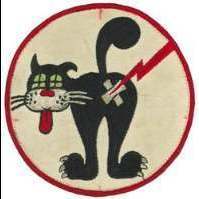
I appreciate you posting this one. It helps us all to keep an eye on the "Vintage Military Lighter Market". Excellent work! -
By Gear Fanatic · Posted
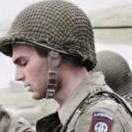
Already jealous just looking at that picture. I go to yardsales in my area frequently and can’t find anything good. Best I’ve found is some commemorative plaques from the 60’s but nothing special. I try and I try and nothing pops up. I’ve always had my best luck in tips of places and homes that had stuff. -

-
By Regular122 · Posted
S. G. Adams Boxed example with application card. A 'France' clasp medal to unknown recipient. -
By Regular122 · Posted
Joseph Mayer manufactured boxed example to Robert M. Smith with 'France' clasp.
-
-

-

-

-
-
-
-
.jpg.2ce6a8d90c750304bcf9d4faa9318f5d.jpg.5a23d93005bf9ba70918d137e8d2e4fc.jpg)
-
-

-

-
-
-
-

-

-

-
-

-
* While this forum is partially supported by our advertisers, we make no claim nor endorsement of authenticity of the products which these advertisers sell. If you have an issue with any advertiser, please take it up with them and not with the owner or staff of this forum.