
-
Thank You for Supporting USMF
-
Forum Donations
-
-
To send a donation, just click on
FORUM DONATIONS in the box above. -
Recent Posts
-

By McT_Aviation · Posted
How the USS Walke looked leading into the battle. -

By Dave T · Posted
Thats a hens tooth! Thanks for sharing! Did the 502 Officer this set belonged to serve overseas? -
By McT_Aviation · Posted
This a great Navy Purple Heart just acquired from a picker who has pulled some amazing items for me. I've always been interested in acquiring one of these Type 1 to examine the case, engraving, and certificate. Herbert Steinert Rank: Machinst Mate 2nd Class Serial Number: 337-29-32 Assignment: USS Walke (DD-416) Origin: St. Louis, MO Date of Death: 15 November 1942 Manila American Cemetery MM2C Herbert Steiner was born 21 July 1918, and enlisted in the U.S. Navy on 9 April 1940. He reported to the USS Walke on 13 January 1941 where he remained until the sinking of the Walke. Steinert joined the crew of the USS Walke at an interesting time as the ship was preforming Neutrality Patrols in Caribbean as they monitored Vichy French vessels. In June, the Walke escorted vessels to Iceland to deter expanding Kreigsmarines who moved further eastward intercepting aid to Great Britian. MM2C Steinert's group includes his officially engraved sterling Type 1 Purple Heart with its small Purple coffin box as issued by the US Mint. Also his Certificate issued with his Purple Heart. When Pearl Harbor was attacked, the Walke was finishing its overhaul at Boston Navy Yards and was quickly dispatehed to the Pacific. Operating initially with the USS Yorktown for the first year of the War, the Walke earned two Battle Stars for her part in the early Solmons Islands operations and in support of air strikes on Japanese forces in Papua New Guinea. After a refit at Mare Island Navy Yard in August 1942, USS Walke found herself escorting the US Battleships USS South Dakota & USS Washington into the waters around Guadalcanal in the morning of 14th November 1942, where the night before the US Navy had suffered a terrible defeat in the First Naval Battle of Guadalcanal and the US Airfield had been shelled by Japanese ships. Steaming with the two Battleships and the three Destroyers USS Gwin, USS Benham & USS Preston, the Walke took the position of lead ship and used her newly-installed Radar system to track the sea and air ahead of the group. As night fell, the Destroyer force formed into a 'Van' or a column well ahead of the two Battleships and began conducting looping patrols of "Ironbottom Sound" on an East-West route. As midnight on 14 November approached, the group was nearing the Western end of its patrol when Japanese radio traffic began to increase and the Destroyers went to battle stations, unsure of what was lurking in the dark behind Savo Island. At 23:00hrs (11:00pm) the long range Radar aboard USS South Dakota picked up three Japanese ships rounding the North Side of Savo Island, roughly the same time the Japanese force spotted the US Destroyer Van and moved to intercept them. Aboard USS Walke, the crew had no sooner decoded the message from Washington about enemy ships then her own radar began to pick them up. Accelerating to attack speed, the Walke and her escorting Destroyers closed on the Japanese force which they assumed consisted of only three Destroyers, when in fact it was three Destroyers followed by two Light Cruisers. USS South Dakota opened the Second Naval Battle of Guadalcanal at 23:17hrs (11:17pm) with a salvo directed at the lead ship of the Japanese group rounding Savo and at 23:22hrs (11:22pm) the Walke opened fire, followed in short order by the Gwin, Benham and Preston. Walke first fired upon the distant Japanese Light Cruiser Nagara, only to find a Destroyer in closer range to which she shifted her attention. By this time, the Nagara or the other Japanese Light Cruiser Sendai, had targeted the Walke and began to pummel her with their 6-inch guns. The Japanese Destroyers Ayanami and Uranami also began to fire onto the Walke, demolishing much of her after superstructure and starting large fires which only aided the Japanese gunners. Roughly seven minutes into the battle, the Walke was struck in the bow by a single "Long Lance" torpedo which blew her bow clean off the ship and was followed shortly thereafter by the detonation of the ships forward 20-millimeter ammunition magazine. The Walke, with a massive hole in her bow and riddled by shellfire quickly began to sink and was orderedabandoned. A mere ten minutes after the fighting started, the Walke sank bow-first into Ironbottom Sound, taking 75 members of her crew with her, including her Captain. 151 of her crew were rescued the following day, though another six died from their injuries. USS Walke earned her third and final Battle Star for her part in the Third Battle of Savo Island. A year passed before Steinert was declared dead. It took seven months before his Purple Heart was approved and sent to his wife, Fern, at their Vallejo, CA address. For an unknown reason; she was unable to be located as she may have moved to Chicago after learning of her husband's dissapernace. Another year passed before the award was sent to his parents in St. Louis, MO. It was July 1945 and the war was over in Europe. It had been nearly three years since their son had passed. A harsh reminder that while others were coming home; their son wouldn't be. -
By manayunkman · Posted
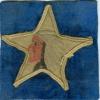
I’ve had written numbers twice before from vets. This isn’t from a vet but from a guy who collected patches after the war and passed in the 1990s. -
By katieony · Posted
Can't get much more minty than that belt bucle! -

-
By muddyboots · Posted
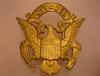
Age and patina could very well be the culprit. Here are some other examples of USCG and USN pins; left to right: Pancraft, H&H, N.S. Meyer and one unmarked with Sterling on the N. It's interesting how the USCG ages differently. -
By KurtA · Posted
It has a chain line that replaced rope on these badges in very early World War II. Because it has an open catch verses locking catch, I would say it is one of the early "chain" examples. Made just prior to the "strategic metals" requirements of WW2, so it is not sterling. I think the blackening is just a loss of the plated finish and oxidation due to being exposed to moisture, etc over the years. You can see remnants of the original gilt plating on the reverse top. -
By muddyboots · Posted
I love the salty patina on USCG and USN badges and pins, and you can tell it was well used by someone, with wear patterns and a drip of white paint on the top and back. The moment I saw this, I had to have it. I’m assuming it’s a 30s or early 40s Hilborn-Hamburg. Has anyone seen any USN badges or pins in the blackened plating? Any thoughts and opinions welcome. -
By Misfit 45 · Posted
Bluezebra, First of all, your AFH M1905 dated 1943 with brown grips would be a prize in any collection. However, an AFH M1 UNCUT dated 1943 is super rare. The first one that I think anyone from this forum had ever seen was found on ebay in 2021. It was bought by a forum member for over $1200.00 as I recall. No photo that I have found has been published in any book. Most collectors had concluded that it did not exist until that one finally showed up. Had the ebay seller marketed it for what it really was, and had good pictures, it may have gone much higher. No other example has been seen since (to my knowledge). Marv
-
-

-

-

-
-

-
-
.jpg.2ce6a8d90c750304bcf9d4faa9318f5d.jpg.5a23d93005bf9ba70918d137e8d2e4fc.jpg)
-

-

-

-

-

-

-

-

-

-

-

-
* While this forum is partially supported by our advertisers, we make no claim nor endorsement of authenticity of the products which these advertisers sell. If you have an issue with any advertiser, please take it up with them and not with the owner or staff of this forum.