-
Thank You for Supporting USMF
-
Forum Donations
-
-
To send a donation, just click on
FORUM DONATIONS in the box above. -
Recent Posts
-

By Escht · Posted
I had never seen either the caterpillar nor the moth before. I think the markings are supposed to make predators think it is some form of a snake. It was a large caterpillar as you can see the scale of the decking wood it was on when I took that photo. One took longer to go to pupation so presumably if it survived over winter it will be turning up in a few days. Hope there are more later this year, they're welcome to munch on the vine leaves as I'm always having to cut them back later in the season to let sunlight reach the grapes. -
By Guy56 · Posted
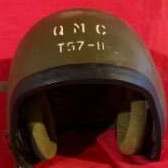
All, Please pardon my absence. I’ve been sorting through helmets, helmet pictures, test documents, etc. While sorting through my photos, I spotted some gems that I had forgotten about. Several photos I have dealt with the 1919-Pattern (AKA Chaffee helmet) tanker helmet. Amazingly, the 1919-Pattern tanker helmet was used as late as 1940, assuming the photo is dated correctly. I also have several of 1937-dated photos of the 1919-Pattern helmet in use. Why so late? Some units in the U.S. Army are more equal than others and new equipment is fielded to them first. Lower priority units use what they have until they eventually get the newer equipment. So tankers wearing the 1919-Pattern helmets in the late 1930s and early 1940s were almost certainly in lower priority units. When I was on active duty I served in a low priority division from 1986 to 1989, the 5th Infantry Division (Mech). If you want to see the 1937-dated photos let me know. -
By General Apathy · Posted
. Hi Kevin, wow can't recall seeing any of these when I lived in the UK. the head on the caterpillar looks like some type of snakes head . . . . . Norman D. Landing, Forum Normandy Correspondent, 02 April 2O26. … -
By General Apathy · Posted
. Hi Johan & earlymb. I do feel that the metal knob for the blackout switch is a hard one to find. o.d. plastic is much more common to find. Norman D. Landing, Forum Normandy Correspondent, 02 April 2O26. … -
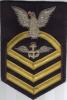
By 0bx · Posted
Not many Navy rate collectors out there but these Chief Petty Officer Airship Rigger rates are pretty rare. -
By Escht · Posted
Now for something completely different. Last September I found a couple of large caterpillars on my vine leaves, no doing any harm to the crop. I kept 2 over winter, fed them leaves until they entered the pupae stage. Yesterday the first of them emerged as a fully grown moth. They are Elephant Hawks Head Moths, soon as it's had a few days to get sorted out it will be off into the night sky. -
By Escht · Posted
A few more examples, lots of other stuff from same era of time including trucks, trailers, low loaders, buses,too many to keep putting on here. There is also a large workshop manual for the Matador Truck and a few other British trucks. -
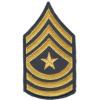
By hardstripe · Posted
ASMIC Is updating their Engineer DUI Catalog. The new version will combine the old Parts 1 and 2 and provide full color images for every US Army engineer unit. After several weeks of work we have about 15 DIs that were in the old catalog that we can't find a photo for. The new catalog will cover 152 pages and illustrate over 2,000 Engineer DIs. We need a full color image, preferably an actual photo of the DIs shown, saved as a jpeg with 300 DPI resolution. The new catalog is scheduled for release on July 1st and will be available at our ASMIC Military Show, Jul 17th. Thanks in advance -
(1).thumb.jpg.d18e8b8c77ca0637391719b69c739068.jpg)
By 36thIDAlex · Posted
The Uniform of Major Lavern Hodges, Commander of D Company, 100th Battalion, 442nd Regimental Combat Team from the Vosges through the Maritime Alps and Po Valley. I was excited to recently add yet another 442nd uniform to my collection, particularly given their important connection to the 36th Division. Funnily enough, the first 442nd uniform I ever acquired belonged to one of the soldiers under this guy’s command! His full story here: https://www.36thdivisionarchive.com/pa-eto-hodges A native of Erick, Oklahoma, Lavern Hodges grew up in a farming family that turned to the grocery business after the dust bowl ravaged the region. Both Hodges and his father went in on opening their own grocery in Elk City, Oklahoma, leading them to great success throughout the 1930s. With war on the horizon, however, Hodges was one of the first three men in Oklahoma to voluntarily enlist under the selective service law, joining the 45th ID in January 1941. After Pearl Harbor, he was promoted to sergeant and eventually given a commission, going through OCS in the summer of 1942. His first post afterward was as a basic training instructor at Camp Wolters. He left the position and became a company commander in the 42nd ID in early 1944. Hodges was finally sent for overseas service in the fall of 1944, arriving in Europe that October. On November 2, he was part of a group of 23 replacement officers joining the racially segregated 442nd Regimental Combat Team in the Vosges Mountains. Because the 442nd had just suffered mass casualties only days before while rescuing the “lost battalion” of the 36th Division, he became a replacement platoon leader in D Company of the 100th Battalion. He was met with a weary and battle-hardened company which could barely boast a measly 57 men to its roster. After a week holding off German forces near the rescue site, Hodges and the 442nd were sent down to the French Riviera, where they replaced the FSSF in the Maritime Alps. Their new job was to keep German and Fascist Italian forces from crossing the border and moving into Southern France. This meant holding a line throughout the cragged, cold, and rainy mountaintops of the Alps. On December 9, 1944, Hodges was promoted to company commander of D Company, meaning he now oversaw all its machine gun and mortar teams deploying in support of the 100th Battalion. The company was now back to 127 men and, under his leadership, successfully countered German patrols throughout the next several months in scattered and sharp skirmishes. His 81mm mortar teams proved especially useful in the difficult terrain. Hodges grew to truly love and respect his men and came to understand the broader social mission for equality that drove most of his Nisei soldiers. He constantly wrote home about their exceptional record and superior performance. In one letter to his wife, he firmly pronounced that “they are Americans, and dislike the connection of Japanese in their designation.” He saw them to be great patriots to whom all Americans owed “a debt of gratitude.” In March of 1945, the 442nd was relieved by French troops and sent back to Italy where it joined the Allied efforts against the Gothic Line. Knowing they were going into heavy mountain combat, Hodges ordered his men to abandon their heavy machine guns in favor of carrying BARs and lighter .30 cal setups. These proved extremely effective once they began a quick and intense campaign against dozens of well-defended hills. Thanks to their efforts, the 100th was able to seize objective after objective, driving the Germans further north until they surrendered on May 2, 1945. Interestingly, during this second Italian campaign, D Company was one of the only in the 442nd with a single white officer: Hodges. After the 442nd proved itself in combat, Nisei were allowed to receive battlefield commissions. By April of 1945, Hodges was the last Caucasian in the company with all Nisei platoon leaders and company officers. One, Lt Francis Takemoto, went on to be the first Asian-American general in the U.S. Army. In occupation, Hodges continued to lead his company in its many new missions. This included processing tens of thousands of prisoners at Ghedi Airfield, undergoing MP duties, and preparing for a possible deployment to the Pacific. The war ended soon enough, however, he and the rest of the 442nd were ordered to remain in Italy as an occupying force until June of 1946. During this time, Hodges was promoted to Major and made Executive Officer of the 100th Battalion. Hodges came home and immediately set to work rebuilding his career, opening an entirely new supermarket which dominated southwestern Oklahoma for over a decade. He eventually got out of the business, opening a nursing home with his wife, and became a prominent civic leader in Elk City. Most importantly, however, Hodges never forgot his Nisei comrades. He was an active member of the VFW, American Legion, Japanese American Veterans Association, and the 442nd Regimental Association. He was proud of his boys and advocated for them until he passed in 1979, a retired Lieutenant Colonel in the Army Reserves. -
By bruno1993 · Posted
Thanks for your reply. I found CHRIS A. MCKINNEY but he has way more awards than the ones on this ribbon bar, which makes it difficult to determine if it's really his.
-
-

-

-

-

-
-
-
.jpg.2ce6a8d90c750304bcf9d4faa9318f5d.jpg.5a23d93005bf9ba70918d137e8d2e4fc.jpg)
-
-

-

-

-

-

-

-

-

-

-

-
* While this forum is partially supported by our advertisers, we make no claim nor endorsement of authenticity of the products which these advertisers sell. If you have an issue with any advertiser, please take it up with them and not with the owner or staff of this forum.