
-
Current Donation Goals
-
Forum DonationsRaised $2,461 of $7,500 target
-
-
To send a donation, just click on
FORUM DONATIONS in the box above. -
Recent Posts
-
By ASMIC2971 · Posted
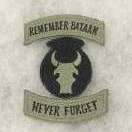
This triangle is for E Troop 19th Cavalry. Troop formed c.1967 and assigned to Hawaii National Guard. There’s a little bit more information on the unit in Sawicki’s Cavalry Regiments of the U.S. Army book. -

By Charlie Flick · Posted
You are most welcome, Arisaka. When I first became interested in the Reising guns there was not a lot of solid information to be found on the .22 LR M65 and MC-58 versions. Arms researcher/collector Dave Albert (who is also a member here) went after that topic with a vengeance. The result was his excellent book which encompasses all of the Eugene Reising designs, with particular emphasis on the .22 rifles. His book is written for collectors and I commend it heartily to you and anyone else interested in the subject. Regards, Charlie -
By Bluehawk · Posted
"During World War II, the United States faced threats not only on distant battlefields overseas but also along its own shores. While soldiers fought in Europe and the Pacific, another dedicated force quietly guarded America’s coastlines at home. Among these defenders were the courageous members of the Coast Guard Beach Patrol — horseback-riding servicemen known as the legendary “Sand Pounders.” By 1945, the Coast Guard Beach Patrol had become an essential part of the nation’s coastal defense system. Tasked with protecting more than 3,700 miles of American shoreline, these patrols played a vital role in maintaining national security during one of the most dangerous periods in modern history. Approximately 24,000 men served in the Beach Patrol during the war, enduring long hours, harsh weather, and isolated conditions to keep watch over the nation’s beaches. "The idea of mounted beach patrols may seem unusual today, but horses proved to be the perfect partners for coastal defense. Many beaches, dunes, marshes, and stretches of sand were difficult to navigate with vehicles, especially before the development of modern off-road transportation. Horses, however, could move swiftly and efficiently across unstable terrain, allowing patrolmen to cover large distances quickly while remaining alert for suspicious activity. Patrols usually worked in pairs, riding approximately 100 feet apart to maximize visibility. Each team was responsible for monitoring about two miles of shoreline. Their mission was straightforward but critical: watch for enemy submarines, saboteurs, smugglers, suspicious vessels, stranded sailors, and any unusual activity along the coast. During wartime, the threat of German U-boats lurking off the Atlantic coast was very real. Enemy submarines had already sunk American ships near shore, and military leaders feared that enemy agents could attempt to land secretly on U.S. beaches. The patrolmen rode day and night in all kinds of weather conditions. Whether under blazing summer heat, freezing winter winds, heavy rain, or dense coastal fog, the Sand Pounders maintained constant vigilance. Many patrolmen described the work as exhausting yet deeply meaningful. Their horses became trusted companions, often forming strong bonds with their riders after countless hours spent together on lonely stretches of shoreline..." -
By Charlie Flick · Posted
Thorin: Neat knife. I think you have an Ideal model in the 7 inch length. The subjects of how to date Marbles knives and how to determine if they are USGI are fraught ones which, as far as I know, have not been definitively nailed down. The two guys whose opinions on the subject I respect would be Frank Trzaska and Dustin, both of whom are members here. Perhaps they will weigh in here. In the meantime you might want to take a look at an earlier thread on this subject which might shed a little bit of light on the subject for you. Regards, Charlie -

By Arisaka99 · Posted
Charlie from you that means a lot. Thanks for the expertise on so many topics and “off prime” military firearms! Like so many others, I have learned a ton from your comments and posts dating back for a long time in different venues. Thank you also for keeping your passion for the hobby and willingness to answer sometimes repetitive questions with your own knowledge, observations, and research. -
By Charlie Flick · Posted
Hello Lyle: You sure have been making some nice martial S&W finds lately and this is also a good one. Congrats! Regards, Charlie -
By Charlie Flick · Posted
A very nice rifle, Arisaka, and I agree that it is a Marine Corps example. These are tough to find in good, unmodified shape so you made a nice pick up there. Have fun with it. Regards, Charlie -
By MCDUFF · Posted
Hi Ken, I saw this photo posted recently of a Jeep being offloaded mid June 1944 in Normandy. 1. Brave driver! 2. where did the cables/ rope affix to at the rear of the Jeep? Cheers -
-
By ludwigh1980 · Posted
ESTATESALES.NET , hardly anyone advertises in local papers anymore. Besides looking at that site, Thursday, Friday, Saturday I fill up the car with gas, my bill fold with cash and drive looking for signs. Some of my best find were just random. Being at the right place at the right time with the dough! You have to keep looking, keep searching. I get much more enjoyment out of stumbling upon something than a BIN on ebay and usually a much better deal.
-
-

-

-
-
-
-
.jpg.2ce6a8d90c750304bcf9d4faa9318f5d.jpg.5a23d93005bf9ba70918d137e8d2e4fc.jpg)
-
-

-

-

-

-

-
* While this forum is partially supported by our advertisers, we make no claim nor endorsement of authenticity of the products which these advertisers sell. If you have an issue with any advertiser, please take it up with them and not with the owner or staff of this forum.