
-
Current Donation Goals
-
Forum DonationsRaised $2,311 of $7,500 target
-
-
To send a donation, just click on
FORUM DONATIONS in the box above. -
Recent Posts
-
-

-
By QuNoobJunior · Posted
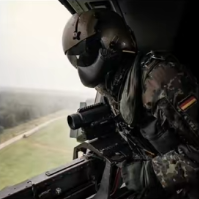
Hello everyone, a few months ago I got myself an X-Large SPH-4b shell and a SPH-4 earcup retention assembly. Original condition: After cleaning the shell and waiting for the correct SPH-4b retention assembly to arrive, I almost had all parts needed to assemble the helmet. Most parts I took from an SPH-5 which didnt fit me. I used the ANVIS 6 singlevisor housing with a ANVIS 6/9 replica, since the dualvisor I have is the wrong color and missing the correct visors. I used some spare earcup spacers to stop the visorknob from digging into the helmet. The Velcro for the NVG battery and liplight is original. Perhaps the nametag and rank of the pilot? Also looks like there was some liquid inside the helmet which also seeped down into the earcup chaffingpad. The only things missing would be the liner, green cross straps and maybe the correct flat earpads. I still dont really know what to do with the dualvisor, I was thinking about either painting it fully black or colormatching it to the helmet, or if I should just keep the singlevisor ( if historically accurate). Thanks for reading, any help or feedback is welcome! -
By HUD69 · Posted
Indeed, the translation program makes your replies not sound very friendly. The people reacting on you are experts. and the time frame you mention is so large that everything is possible. No rules apply for correct or incorrect clothing (so your question why someone was wearing something.. most of the time because it is what they had or what looked cool) See below my take on things, The Vietnam War spans precisely the transition from cotton to fire-resistant aircrew clothing. Three generations overlap throughout the conflict: • Cotton, non fire-resistant (start of the war – c. 1967): K-2B and CWU-1/P / CWU-2/P (USAF), OG-107 cotton-sateen utilities (Army), and cotton summer coveralls (Navy / Marines). • Fire-resistant interim — CS/FRP-1 (from 1967): “Coveralls, Flying, Summer, Fire Resistant Polyamide.” A one-piece suit in an early DuPont aramid (HT-1, the precursor to Nomex). First issued to Marine Corps pilots in Vietnam in 1967, then adopted across all services. • Nomex, second generation (from c. 1968): the one-piece CWU-27/P (all services) and the US Army two-piece set. The helicopter-specific driver is central: crews suffered severe burns in crashes and JP-4 fuel fires. This pushed the transition. The US Army Concept Team in Vietnam (ACTIV) evaluated improved fire-resistant flight coveralls in 1967 under the “Clothing System for Army Aviation Crew Members” requirement and the “Fire Resistant Flight Uniform (ENSURE DA 174),” supported by Edgewood Arsenal tests on the effectiveness of aviator garments against gasoline fires. US Air Force Helicopter operations: chiefly combat search-and-rescue (HH-3E and HH-53 “Jolly Green”) and UH-1F/P. Early–mid 1960s. The K-2B (“Coverall, Flying, Man's, Very Light, Type K-2B,” MIL-C-6265 series; rep. NSN 8415-265-7378), cotton, sage green. Alongside the CWU-1/P (MIL-C-25786; rep. NSN 8415-576-3406) and the heavier intermediate-weight CWU-2/P (MIL-C-27156, c. 1961, wool/rayon). All cotton/blend — not fire-resistant. The K-2B was a cross-service lightweight summer coverall, also worn by early Army, Navy and Marine helicopter crews (see those sections). 1967. Introduction of the CS/FRP-1 as a fire-resistant interim suit, also worn by USAF helicopter crews. c. 1968 onward. The CWU-27/P Nomex one-piece coverall becomes the standard (MIL-C-83141, later -83141A). This is the suit you flagged as “last” — it remained the basis for decades. US Navy Helicopter operations: SH-3 Sea King (ASW / plane-guard), UH-2 Seasprite, later SH-2. Start of the war. Cotton flying clothing with no fire protection: the lightweight cross-service K-2B coverall and the naval versions of “Coveralls, Flying, Summer.” 1967. The CS/FRP-1, identical to the other services; Navy-tagged examples are marked “Coveralls, Flying, Summer, Fire Resistant Polyamide.” Fire-resistant Nomex gloves were introduced alongside. c. 1968 onward. CWU-27/P Nomex. The Navy was partly ahead on fire resistance, since deck fires and over-water ditchings created the same urgency. US Marine Corps Strongly helicopter-oriented: UH-1E, CH-46 Sea Knight, CH-53, plus the OV-10. Start of the war. Cotton coveralls and utilities, including the cross-service K-2B lightweight flying coverall — none fire-resistant. 1967. The USMC was in fact the first issuing branch of the CS/FRP-1 — first issued to Marine Corps pilots in Vietnam in 1967, with a front zip, rounded collar and an adjustable hook-and-loop waist belt. c. 1968 onward. CWU-27/P Nomex, shared with the other services. US Army The lead service for helicopters (UH-1 “Huey,” AH-1 Cobra, CH-47 Chinook, OH-6 / OH-58). The most distinctive development line sits here, because early in the war the Army had almost no dedicated flight-clothing programme. c. 1962–1966. Army helicopter crews largely flew in ordinary OG-107 cotton-sateen utilities (the standard field uniform, Olive Green shade 107) — not a dedicated flight suit. Where an actual flying coverall was worn it was typically the cross-service cotton K-2B. This is why the OG-107 turns up in this context: for want of anything better it was the de-facto flying dress of the early Huey crews. 1967. The CS/FRP-1 fire-resistant interim, in parallel with the Army's own evaluations (ENSURE DA 174). c. 1968 – end of the war. The iconic two-piece Army set: “Shirt, Flyer's, Hot Weather, Fire Resistant” and “Trousers, Flyer's, Hot Weather, Fire Resistant,” in Nomex, shade OG-106. This became the standard dress of helicopter crews and other flight personnel. Two nuances fellow collectors often confuse: • The two-piece set came into broad aircrew use toward the end of the war. Veterans grumbled it looked less “cool” than the one-piece coverall, but the advantage was being able to wear the shirt loose in the heat. • The Army kept the two-piece set in service long afterwards; the one-piece CWU-27/P was used by the Army as well, and the two-piece variant was only phased out in the 1990s. (and introduced again in the last decade) Hope this helps, and I leave it to the experts to add missing information. -
By otter42 · Posted
Found this on Griffin Military site. Your color is a little different then Dan's. -
By kfields · Posted
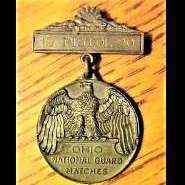
Is this one of the immediate post WW1 Division patches or Repro? Bought it at the flea market for $5 🤔 this morning. Thanks! -
-

By Pennsyltucky Red Neck · Posted
I Just finished up a book about this by David L. Preston titled “Braddock’s Defeat”. Very good book, and it gets into the nuts and bolts of who did what and where, on both sides. I’ve long held an interest in this, mostly because it’s Pennsylvania, and the cast of characters is sort of a who’s who 20 years later in our Revolution. Braddock received most of the blame for this debacle, mostly from subordinates and others who were nowhere near the fight. This re-examines what went wrong, mainly by the discovery of French after action reports that weren’t available before. Most are aware of Washington and his role, as well as Thomas Gage who went on to try and collect guns at Lexington 20 years later. Among the civilian drivers and workers were also Daniel Morgan, Daniel Boone and several others who’s greater moments were yet to come. Boone actually abandoned his wagon, and cut one of his horses out of the team to ride to safety! He was 21 at the time. Braddock deserves a lot of credit for merely getting an army through 125 miles of wilderness and rugged mountains. The French had the rivers for transportation, but there were two very steep and swampy portages they had in getting guns and supplies through from Montreal. Very good reading of this is your cup of tea! PTRN -
By Forum Manager · Posted
The administration was forced to suspend the account of community member historylives. It was brought to the attention of the admins that this member was actually previously banned member costa, registered under a new username. This is expressly against the rules, as stated in RULE 2.5 - Account Limit Each member is limited to registering no more than one account. If the owners and operators of USMF find that a member has registered, or attempted to register, more than one account, that account is subject to removal and the members may face suspension and or banning. By registering on USMF you agree not to hold more than one account. If someone is banned for any reason and it is discovered that they have created another account with different information, that account is subject to immediate banning. Once banned, someone may not join under another name. The original post has been updated. -
-
-

-

-
-
-
-
.jpg.2ce6a8d90c750304bcf9d4faa9318f5d.jpg.5a23d93005bf9ba70918d137e8d2e4fc.jpg)
-
-
-
-

-

-

-
* While this forum is partially supported by our advertisers, we make no claim nor endorsement of authenticity of the products which these advertisers sell. If you have an issue with any advertiser, please take it up with them and not with the owner or staff of this forum.