-
Thank You for Supporting USMF
-
Forum Donations
-
-
To send a donation, just click on
FORUM DONATIONS in the box above. -
Recent Posts
-
By mikie · Posted
While the repaint and remodel of the master bedroom is basically finished, the adjacent bathroom is getting torn apart. This is hampering my putting my collections back up. I not only collect military, but also sci-fi related stuff and whatever else has caught my eye over the past 50+ years. What a mess. I know it’s really small potatoes compared to what size collections some of you have. It would be one thing if I had outbuildings or a TARDIS-like shoebox. But I don’t. So the past two days I’ve just been staring at this mess (there is more out of shot) and crying a lot. mikie -
By aerialbridge · Posted
Marvelous group, spanning Butler's 30+ years service from the Spanish American War as Gridley's aid on USS Olympia (C-6) at Manila Bay when the US became a global navy power overnight, to commander, aircraft squadrons, Battle (Pacific) Fleet in May 1929. Butler's WWI command of the pre-Spanish American War era-protected cruiser USS San Francisco commissioned in 1890 (crew earned the Sampson medal for blockade duty around Cuba) during WWI and for which he earned the DSM, is noteworthy. The cruiser was ordered refit as a minelayer around 1910 and a couple years later designated a mine planter. San Francisco was flagship for Capt. Reginald Belknap, commander of the "all volunteer" Mine Squadron One (also known as the Yankee Mining Squadron) the primary American naval unit responsible for laying the North Sea Mine Barrage during World War I. Operating from June to October 1918, the squadron's mission was to seal the 250-mile gap between Scotland and Norway to trap German U-boats. Based in Inverness and Invergordon, Scotland (known as Base 18 and Base 17, the unit conducted 13 "excursions" to plant mines. The squadron deployed in planting formation of columns, two to five abreast and spaced 500 yards apart at full speed to maintain a precise interval between mines. This structured formation allowed multiple ships to lay mines simultaneously across a wide area essential for creating the massive North Sea Mine Barrage. At the signal "First Mine Over," ships dropped mines at intervals of 12 to 15 seconds for several hours. As a minelayer in a column exhausted its mine supply, another vessel would drop back to take its station and continue the sequence, ensuring no gaps were left in the barrier. The mines were stored on rails and pushed manually toward "barn door" openings in the stern of the launching deck. Mines were initially spaced 250 feet apart, but this was later increased to 300 feet to prevent sympathetic detonations caused by premature explosions. Eighteen rows were layered at three target depths (surface, 160 feet, and 240 feet) to target both surface ships and submerged U-boats. Navigation was critical and latitude and longitude were precisely maintained using a taut-wire (piano wire) unreeled from a guide ship to ensure parallel rows across the 230-mile-long barrage. This was no easy feat in the often turbulent and unpredictable North Sea, when predicting the weather was closer to the ancient adage, “Red sky at night, sailor’s delight. Red sky in the morning, sailor take warning”, than 21st century meteorology. The squadron laid 56,571 mines—over 80% of the total barrage—which contributed to the destruction or damage of approximately 22 German U-boats. Your group is particularly appealing to me, since my gramma's oldest brother was a mustang ensign USNRF (USN, 1912-16 QM2c) and assistant navigator on one of the 10 "planters", USS Saranac, a converted, old wooden merchant ship. As one navy historian wrote, "The men who created this mine barrier were unsung heroes. They overcame a number of issues, most notably the difficulty getting sufficient numbers of personnel for this service. According to Rear Admiral Daniel Mannix, then a lieutenant commander commanding one of the mine-layers, volunteers were few because the mines were filled with a 'new and terrible explosive' (TNT), which terrified many, and because Navy men disliked mine-laying on principle, referring to it as 'rat-catching,' and observed that in battle you might surrender but if a mine on a mine-layer exploded 'you made a hole in the water that…took three months to fill up. . . . ' The mines were lined up on rails, the number depending on the size of the mine-layer, and were pushed manually toward the 'barn door' opening in the stern of the launching deck. As a compartment emptied, the doors to it closed, and doors on another compartment opened, the moveable section of mine track adjusted, and the mines in that compartment were hauled out. When a planter had dropped all its mines, another planter steamed alongside and quickly took its station. On average, the planters dropped a mine every four to twelve seconds and the entire drop took four to seven hours." As the squadron commander and Butler's friend and colleague, Capt. Belknap wrote in 1920, "To quote a Saranac poet—' 'They gave us a job we had to do, A little bit risky—yes—that’s true; A good deal like work, both night and day But a darn good game for a man to play.' Congrats on your pick-up and thanks for posting it. Here's three pictures of Butler covering the three historic periods of his career. The first picture is of Admiral Dewey with his staff and the Olympia officers sometime between May 20, and June 1, 1898. Captain Gridley is conspicuously absent as he was seriously ill at the time of the battle and left the ship shortly after, dying at Yokohama en route to the US. Butler is circled, and to his right is Lt. Stokely Morgan, the Captain of #1 Turret who standing on the turret during the battle, relayed Gridley's order "to fire" to the starboard gun captain, Olympia's CBM Patrick Murray, who fired the gun and commenced the battle. The second photo is the ships' captains of Mine Squadron One, Belknap the squadron commander is seated center and to his right is Butler. Directly behind Butler is Capt. Sinclair Gannon, who commanded USS Saranac, my great-uncles' ship. The last picture is of Butler reading his orders in May 1929 when he took command of aviation squadrons for the Battle (Pacific) Fleet, on his flagship USS Saratoga (CV-3). Some neat USN history in your group. Can't help but wonder where Butler's full sized medals are. I'm guessing in a private collection or they'd likely be displayed at the Navy Museum at Anacostia or maybe at USNA. -
By jumpship · Posted
This site (and contacts there) may be helpful, if you are not already familiar with it: https://www.80thdivision.com/photos.html Dan -

By Proud Kraut · Posted
I can only echo that. Excellent painting and weathering. And I really like the way you fixed all the equipment, boxes, jerrycans, C-rations etc. at the tank, great work! Together with your father´s insignia and these incredible photographs an outstanding modeling project. Thanks very much for sharing! PK P.S.: I really would like to see your tanks in action. -
By Cobra 6 Actual · Posted
This one, perhaps: It covers 1782 to publication date (1996). -

-
By 1944m1helmets · Posted
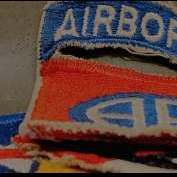
@268th C.A. any explenation why there is this goldish glow around the grooves of the stamp? also, the grooves dont feel very deep. -
By jkenk · Posted
Copy of my reply on another discussion board: VERY informative discussion on “H” plate belts on this forum; thank you all. Is there a similar discussion on belts with “C” type closures? I found my one book by Dorsey (“American Military Belts and Equipment”) to lack details that he devotes to the other topics, for which, BTW, I am GREATLY appreciative. Oh, and to be very picky and branch-parochial, but also to be an unabashedly proud former 11B2P, I only collect US Army Infantry. Again, thank you all! jk -
By Legendarylawman · Posted
Some suspect that it is for a sub-inspector, as the initials MP do not match any of the more famous inspector during that time period. It has the blackish park and not the green park that came later. I need to do some more research on the black park timeline and maybe that will narrow it down. -
By BePhreed · Posted
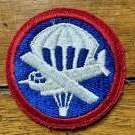
If anyone has a lead on an original company photograph of B Company, 317th INF, 80th ID, I would love to purchase one or obtain a digital copy. It was my grandfather's unit throughout the war. Thank you!
-
-

-

-

-
-
-
-
.jpg.2ce6a8d90c750304bcf9d4faa9318f5d.jpg.5a23d93005bf9ba70918d137e8d2e4fc.jpg)
-
-

-

-
-
-
-

-

-

-
-

-
* While this forum is partially supported by our advertisers, we make no claim nor endorsement of authenticity of the products which these advertisers sell. If you have an issue with any advertiser, please take it up with them and not with the owner or staff of this forum.