
-
Current Donation Goals
-
To send a donation, CLICK HERE to go to the DONATE page for options.
-
Recent Posts
-
By jumpship · Posted
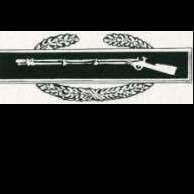
I believe it is the first 4 of his service number: But, I think he didn't pass away until 1963. -
By mikie · Posted
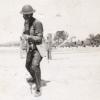
For cremini sakes, I hope you folks don’t give me shiitake for one last post about mushrooms. I used one of Anna’s photos to make this little diorama to adorn my garage bench. Notice the crow. I befriended the crows at my office by sharing peanuts with them for several years now. My friend writes as yet unpublished sci-fi and children’s stories. I’ve been acting as an unofficial editor for him for years. He challenged me to write a story for children too. I have absolutely no writing background but it sounded like a good thing to try. So I’ve been spending odd time over the past year writing short stories about my crow adventures. No sense writing if nobody reads it, so give me a yell if you want to take a look at it. No worries if you pass on it. I’m not trying to button anyone down. The morel of the story is that you never know if something small will mushroom into something big. Mikie -
By YNCM Doug · Posted
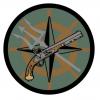
The book's title is "American Badges and Insignia" by Evans E. Kerrigan, published in 1967. -
By Adje · Posted
Hi everyone Last year i found a Grave Registration Service dog tag that appears to have been stamped incorrectly. It reads "DOANE MAUR"; I searched for this on various websites but found no match. Yesterday I found another GRS tag. While rinsing it off at home, I saw it read "MAURICE WDOANE." I suddenly realized the name "Doane" sounded familiar. It turns out I had found these two tags just four meters apart I checked the coordinates,but this latest tag also seems to contain an error. I’ve already searched for "MAURICE DOANE" and "MAURICE W DOANE," but as far as I can tell, no one by that name was killed in action. Does anyone know what the number 3202 signifies? It seems unlikely to be a laundry number. I hope someone can and will help me out. Regards -
By jumpship · Posted
Have you requested T/4 Cheever's Individual Deceased Personnel File (IDPF) from NARA? If not, that file may contain information on the final disposition of his remains. You can request this file at the email below; but be advised that there may be a cost associated and the time for fulfillment of requests may be long. Request an IDPF at email: stl.archives@nara.gov You should include as much information as possible, including his full name, service, service number, unit, rank, date of death, etc. Dan -
-
By Adje · Posted
Hi Steve, Thanks for your message. I did my best to find out where Robert Lee Cheever is buried, but unfortunately, he was 100% buried in Son en Breugel first. Many soldiers who died during Operation Market Garden were buried there. However, that cemetery was closed a few years after the war. About half were reburied in Margraten, and the rest went back to America. He is not buried in Margraten, and I also checked if he was buried at Henri Chapelle, which is in Belgium, 20 minutes from Margraten, but unfortunately, nothing there either. I find it really strange that absolutely nothing is known. You would think of the cemetery in The Rising Sun, but not there either. I thought he would be buried with his mother or father, since his mother passed away when Robert was still young, or with his father, who died in 1946. At that time, Robert was still buried here in the Netherlands. This is really strange. I will contact other people to see if they can help. It's nice that you donated that flag; I'll go lay a flower at Francis L. Swanson's grave sometime. I don't know if you'll find it interesting, but there is a documentary on YouTube about the cemetery, about when they started, and eyewitness. I couldn't find that book you mentioned yet; I'll order it tomorrow. Thanks for the tip. I myself have the book *Kruisen in de Wind* written by Captain J.J. Shomon - founder of the American cemetery and a captain in the Graves Commission in the US Army. And the book by Jefferson Wiggins, a Black soldier who helped with the graves. Both are very interesting. sorry for my English Regards -

By 3jusequlib · Posted
Hi everyone. I visited my local precious metals store and asked if they were holding any military items for me that were recently purchased for their precious metal content. I do this every so often. To my pleasant surprise they pulled this following group of wings and some other insignia out. I immediately purchased the lot at the going silver rate knowing I could always recoup most of my expenses. After doing some research online and on this forum I have concluded that the Inter War Airship Pilot Wings(Blackinton copy) and the WW1 Bomber Wings(fantasy piece?) to be fake but would like confirmation on this conclusion before I sell them back at the spot price of silver not knowing for sure they are real or not. The two Pilot Wings and the Civil Aeronautics Administration War Training Service Wings I think are good but again would like some opinions on these as well. All are marked 'STERLING' but no maker marks, so any information on the manufacturers and time periods would be great. Thanks for all your expertise and taking the time to help me out. Much appreciated...Alex All five wings: Inter War Airship Pilot Wings(Blackinton copy) Below flaw in red; hallmark in green. See Cliff's forum(below) post #40(bottom photo) for same flaw: WW1 Bomber Wings(fantasy piece?) Below non-gold nose in yellow; hallmark in green. Pilot Wings #1 Pilot Wings #2 Civil Aeronautics Administration War Training Service Wings -
By Salvage Sailor · Posted
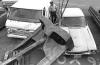
Naval Net Depot Tiburon, CA Theater January 1943 It is now the Romberg Tiburon Center for Environmental Studies run by San Francisco State University -
By BobGorn · Posted
Recently the 95th Wing held a ceremony honoring the legacy of the 95th Bombardment Group. The living children of the original crews were invited. We all got tours and the ability to have out. As part of the celebration they unveiled the new E4-B tail flash featuring the historic "Big B". It will be on part of the fleet going forward.
-
-

-

-

-

-
-
.jpg.2ce6a8d90c750304bcf9d4faa9318f5d.jpg.5a23d93005bf9ba70918d137e8d2e4fc.jpg)
-

-

-

-

-

-

-
* While this forum is partially supported by our advertisers, we make no claim nor endorsement of authenticity of the products which these advertisers sell. If you have an issue with any advertiser, please take it up with them and not with the owner or staff of this forum.