
-
Thank You for Supporting USMF
-
Forum Donations
-
-
To send a donation, just click on
FORUM DONATIONS in the box above. -
Recent Posts
-
By Salvage Sailor · Posted
Lost my detailed notes and photos of Jack Evans service career in a PC crash several years ago, but these are my scratch notes on his service. He commanded a AAA unit attached to the 2nd Armored Division from Normandy to Germany, and a AAA and FA Battalion in Korea. He was the commander of the 82nd Divisional artillery in 1965. NOTES - not detailed, nor in order so if someone wishes to fill in the blanks I'd be obliged. Father, Jack Cecil Evans, Colonel, CAC JACK CECIL EVANS, O-23517 Graduated UC Berkeley 1939 2nd Lt Reserves CAC, Economics. 2nd LT 65th CAC 1939 Second Lieutenant Jack C. Evans to Panama Canal Department, sailing San Francisco, November 30, Coast Artillery Journal, November-December, 1940, Volume LXXXIII Number 6 2nd LT Evans, Jack C., Jr. (O23517) Born California 14 Aug. 1918, A-Calif. A.B., Univ. of Calif., 39. Source Army Register 1941 & 1942. Active List promotions, 1944, 1st LT 3204 Evans, Jack C., Jr CAC (as of 1 Jul 43) Regular Army CAC Officers - Evans, Jack C, Maj., TAS, Ft. Sill, Okla., July 1948 Btry A, 6th FA Bn Sep 1949 Jack C. Evans, Jr., Capt. FA Fort Sill. Oklahoma 15th AAA AW BN (SP) Lt. Col. Jack C. Evans, Jr., Comdg. (KOREA) By Capt. Michael G. Collins Recently the 15th AAA AW Bn (SP), organic to the 7th Infantry Division in Korea, has undergone an intensive training program in preparation for ATT44-3. To prepare for the AAA Firing Phase of the test with so many new men, Lt. Co!. Evans devised a plan to use a second lVII8 sight, mounted adjacent to the primary sight on the M16 sight bar, as a means of checking each gunner's ability to use "image spin" in tracking aerial targets. To mount this sight an additional bracket is placed on the sight bar !-2" to the left of the primary sight bracket with the machined clamp up. The auxiliary sight is then rotated upward and to the rear before being inserted into the bracket. Normal procedures are then employed to orient the primary sight and to boresight the guns. Following orientation, the hub of the primary sight is placed upon the orienting point and the auxiliary sight is then oriented on the same point by use of the orienting cam screws and locking bolts until the auxiliary sight is oriented with both the primary sight and the guns. The gunner is then instructed to track the aerial target employing "image spin" to gain proper line, correct lead. The instructor is enabled to check each gunner and verify that he is employing the proper techniques by means of the auxiliary sight. This system provided a rapid and effective means of training the gunners, and the improvement was reflected in the AAA Firing conducted at Inchon in September. Source: Antiaircraft Journal, November-December, 1954, Volume LXXXXVII Number 6 Air University Periodical Index - Atom rockets for bases. ANR 78:9 Mr 2 '57 Atomic air defense. Lt Col Jack C. Evans, Jr. diag Military R 38:21-31 Apr '58 January 1965, 82nd Divisional Artillery, Col. Jack C. Evans Commanding. Source: The National Guardsman, January, 1965. Army Register 1965 – EVANS, Jack Cecil Jr 023517 B-Calif 14 Aug 18 A-Calif BSM(OLC) Grad US AWC 63 C&GS Coll 52 Arty Sch O Adv Crse (ShC) 48 O Adv Crse 50 AB in Econ Univ of Calif 39 MA Geo Wash Univ 63 2lt CA Res 19 Sep 39 to Col AUS 7 Jul 61 RA 2lt CAC 1 July 40 D/R 1 July 40 to Lt Col 1 July 60 PL 2525 Army Register 1966 – EVANS, Jack Cecil Jr 023517 B-Calif 14 Aug 18 A-Calif LM BSM (OLC) Grad US AWC 63 C&GS Coll 52 Arty Sch O Adv Crse (ShC) 48 O Adv Crse 50 AB in Econ Univ of Calif 39 MA Geo Wash Univ 63 2lt CA Res 19 Sep 39 to Col AUS 7 Jul 61 RA 2lt CAC 1 July 40 D/R 1 July 40 to Col 1 July 65 PL 1637 Office of the Chief, Research and Development, Data Automation Panel, Department of the Army February 1967, Col. Jack C. Evans, Jr., Assistant Chief of Staff for Intelligence. Jack Evans, 95 years young – Kauai magazine April 2014 Jack was born and raised in California cattle country. He joined the military, served in the United States Army and made his career as an officer for 28 years, retiring at a full Colonel. He moved to Kauai to live with his son and daughter in law in Princeville. In 2006 he moved to Regency at Pukea. He has lived an extraordinary life and enjoys each day as it comes. -

By MWDVET · Posted
Here is the version I have in my collection. It seems to fit the diagram that another member posted a while ago. Their collection contained both variants and they had what looked to be a full set. -
-
By Equi · Posted
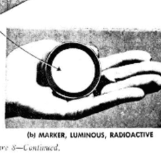
This is one of the first radium markers I got in my collection. During WW2, the Navy employed Type 1 and Type 3 luminous markers on boats serving as deck and personnel markers. This is the Type 1 variant, which is essentially just the clip-on type of marker missing the clip. These Type 1 disks were fitted with a metal ring on the back with two screws. These rings would be welded to bulkheads to hold the marker on. By 1951, the Navy had switched to Strontium-90 based luminous markers to replace the dangerous dose rates from radium. From the information I have gathered, the last year radium markers were produced was 1954 before fully switching to Sr-90. This specific disk is missing the screws and bulkhead ring on the back. It was likely removed off the ship and kept by a soldier. The phosphor inside the plastic housing has sadly broken up in spots. This marker is very weak radiation wise compared to others I have seen. Currently, this is the only Type 1 deck marker I have in my collection. -
By Titanfan · Posted
Hoodwinks is probably his unit's newspaper. Most units had similar publications they circulated on a semi regular basis, especially in occupation. -

By aznation · Posted
Yes, it's kind of funny how one small object can have such significant background information attached to it. That information was hiding all that time until you posted that little tag on the forum, so thank you for posting it and bringing this soldiers service to the forefront. I don't remember seeing too many inter-war period dog tags on the forum so that was great to see. As far as being able to find any information about anything it's all about that first time finding out how to do something. We all just need a little help initially and we're good to go and to help others. There are many great and knowledgeable people on this forum that are more than willing to help anyone. This is one of the best forums ever! So, you're very welcome and you've certainly conveyed your appreciation to me for which I am grateful. Take care and if you need or want any further assistance on how to search for information feel free to PM me. Take care...Matt -
By danimal03 · Posted
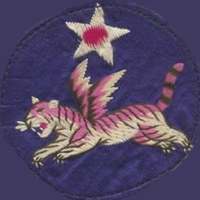
These are great images. I absolutely love this campaign. I find it one of the most fascinating aspects of the war. I have been trying to get a relic from here and every time I come close, I miss it by a few seconds or views. Thank you for sharing these wonderful images! -
-
By phantomfixer · Posted
From a WWI 29th ID vet and possibly in the 6th ID .. two m1917 helmets, one with a clear 6TH ID insignia, and this one.. what is it all his veteran caps, VFW AL etc have 29th patches.. -
By aznation · Posted
I think your hat represents is likely a souvenir related to the Củ Chi area of Vietnam. The New York Times U.S. to Keep Many Civilians in Vietnam By Fox Butterfield Special to The New York Times Nov. 27, 1972 SAIGON, South Vietnam, Nov. 25—Even as the United States military is packing, up for its expected exit from Vietnam, American officials here are secretly planning a major postwar presence of United States civilians in Viet nam, with many of them doing jobs formerly done by the military. About 10,000 American civilian advisers and technicians. most of them under Defense Department contract, will stay on in South Vietnam after a cease‐fire, according to well‐in formed sources. These civilians will do everything from run ning the South Vietnamese military's personnel and logistics computers to teaching the Vietnamese Air Force how to fly and maintain newly provided planes and repairing the complex military communications network left behind by the United States Army. About half of these civilian workers are already in Vietnam, with others beginning to arrive almost daily at Saigon's Tansonnhut Airport under new contracts signed confidentially in the last few weeks. Senior American officials insist that such a continued American presence following a cease‐fire period would violate “neither the letter nor the spirit of the peace settlement,” as one diplomat said today. But these officials, both civilian and military, have repeatedly refused to provide any details about American planning for the postwar period. “It might upset the Paris negotiations,” a spokesman for the United States military command explained, “and it's just not in the national interest to have these things known.” A few Americans and some foreign diplomats here have expressed doubts about the wisdom of such a postwar policy. “It's like 1961 or 1965 all over again,” said one Western official who has served several tours of duty in Indochina. “The Americans are full of optimism again, and once more they are proceeding as if the Vietnamese aren't even around. They're just bringing in Americans to do the job.” Until the events of the last month, the number of American civilian contract employes had been declining, falling from a high of more than 10,000 in 1970 to the present 5,000. Many of the 125 American companies that held Defense Department contracts up through last month were scheduled to he phased out, knowledgeable sources say. Their contracts last month were worth just under $100‐million. Although officials have refused to divulge anything about the new contracts, two companies that are reported to have received them are Lear Siegler, Inc., and NHA, Inc. Lear Siegler, based in Santa Monica, Calif., is a diversified manufacturer that has had a number of contracts with the Air Force for aircraft and aerospace systems maintenance. NHA, Inc., with headquarters in Dallas, was incorporated in 1968 as Norman Harwell Associates, Inc. Its name was changed to NHA soon after in corporation, and it is now engaged in land development; engineering and planning; technical data services; government contract maintenance and heavy construction. Lear Siegler is said to have been given at least 300 new jobs servicing the 120 F‐105 fighter planes that the United States rushed to South Vietnam earlier this month, and NHA is reported to have been awarded more than 200 other aircraft maintenance jobs for the South Vietnamese Air Force. Both companies have been advertising in The Saigon Post, an English‐language newspaper, for new workers over the last two weeks. But spokesmen for the companies said they were not free to comment on their newly awarded contracts. “The Defense Department won't let us talk about our work, so I'm not going to tell you anything,” said a man who described himself as the manager at Lear Siegler. He would not give his name. According to some critical United States officials, the contractors are being given cost plus contracts, which fix the companies' profits as a percentage of the total cost. Thus the higher the cost of a project, the higher a company's profit. Such contracts, the opposite of the usual low‐bid contract, tend to lead contractors to bring in excess personnel, since the more workers they have, the higher their profit, these officials say. One problem that has apparently not been resolved is who will control these civilian contractors after the United States military command pulls out. Heretofore the United States Army Procurement Agency, under the military command, has been in charge of the contractors. Embassy officials are known to think that the embassy, as the ranking civilian authority, should now exercise control. But there are indications that the Defense Department will try to keep its own control. Last week, for example, a civilian dispatched by the Pentagon, Wilfred B. Curley, arrived in Saigon to take over the Army Procurement Agency from its military commander. Mr. Curley will reportedly convert the agency into a putative civilian organization. The military command turned down all requests for an interview with Mr. Curley, on the ground that he was busy “working out new contracts.” In addition to the civilian contractors, there will also he about 1,000 members of the Agency for International Development, known here as USAID, and perhaps several hundred military attachés left in Vietnam after the peace accord is signed, knowledgeable sources say. USAID has 997 American employees in South Vietnam to day, down from a high of 2,700 four years ago. The quasi‐military agency in charge of the pacification program—known as CORDS for Civil Operations and Rural Development Support—will have to he phased out in its present form, since a majority of its 1,500 members are army personnel. But CORDS officials say they will probably preserve province advisory teams minus their army members. The commissary, with its American food and liquor, will be kept open by turning it over to a civilian contractor, officials say. But the post exchange, long the chief supplier of Vietnam's flourishing black market, may have to go. For more information on Lier Siegler Incorporated see here => https://en.wikipedia.org/wiki/Lear_Siegler#:~:text=In late 1986%2C LSI was,defense contractor in the world. Guess it could be kind of dangerous being a civilian contractor working for Lier Siegler Incorporated in Vietnam. SOURCE: Wikipedia https://en.wikipedia.org/wiki/Củ_Chi_tunnels The tunnels of Củ Chi (Vietnamese: Địa đạo Củ Chi) are an immense network of connecting tunnels located in the Củ Chi District of Ho Chi Minh City (Saigon), Vietnam, and are part of a much larger network of tunnels that underlie much of the country. The Củ Chi tunnels were the location of several military campaigns during the Vietnam War, and were the Viet Cong's base of operations for the Tết Offensive in 1968. Location of Củ Chi tunnels in Ho Chi Minh City The tunnels were used by Viet Cong soldiers as hiding spots during combat, as well as serving as communication and supply routes, hospitals, food and weapon caches and living quarters for numerous North Vietnamese fighters. The tunnel systems were of great importance to the Viet Cong in their resistance to American and ARVN forces, and helped to counter the growing American military presence. The tunnels contained various bamboo traps made by the Viet Cong to injure and potentially kill American's Tunnel Rats if they breached the tunnels. The tunnels also contained ventilation shafts to release smoke from fire and any poisonous gases pumped into the tunnels by the American troops.
-
-

-

-

-

-
-
-
.jpg.2ce6a8d90c750304bcf9d4faa9318f5d.jpg.5a23d93005bf9ba70918d137e8d2e4fc.jpg)
-
-

-

-

-

-

-

-

-

-
-

-
* While this forum is partially supported by our advertisers, we make no claim nor endorsement of authenticity of the products which these advertisers sell. If you have an issue with any advertiser, please take it up with them and not with the owner or staff of this forum.