
-
Current Donation Goals
-
Forum DonationsRaised $2,361 of $7,500 target
-
-
To send a donation, just click on
FORUM DONATIONS in the box above. -
Recent Posts
-

By larkworthy · Posted
Group, Below are pictures of a Smith & Wesson Schofield, 1st Issue, that was later issued to the San Francisco Police. This revolver, 2996, was shipped on July 12, 1875 for the United States Army as part of a 1000 unit shipment. There were approximately 3,000 first issue Schofields that were shipped to the Army An additional 5,285 2nd Issue Schofields were issued to the Army. 2nd Issue models had a few design changes, but the easiest way to tell is by serial number (greater than 3000), the top latch has a different design, and the right grip has a military acceptance stamp (if still present). In addition to the approximately 8,285 issued to the military, there were 35 first issue models and 650 2nd issue models that sold through commercial channels. The most obvious difference between military and commercial models is the lack of the U.S. Stamp on commercially sold Schofields. Since military marks can be removed, the best way to tell is to send in for a factory letter to the Smith & Wesson historical foundation. https://swhistoricalfoundation.com/letters-new/ There is some debate amongst collectors if the 35 first issue commercial revolvers were within the first 3000 serial numbers or if they were within the first 3035 serial numbers. The other interesting feature of this 1st Issue Schofield is the presence of a large stamp on the knuckle of the frame (237). Below is a write up from an auction house that provides a good summary of the San Francisco Police use of the Schofields. There are other articles written by COL Charles Pate that provide even more detail. Another interesting chapter in the story of the Smith & Wesson Schofield occurred in the San Francisco area during 1877 and 1878. In 1873, an economic depression had afflicted most of Europe and had migrated to American shores. While the combination of factors creating the crisis were multidimensional, one that directly affected the American West was the Coinage Act of 1873, the decision to move from a gold-silver monetary system to the gold standard. This ended the minting of silver coins in America, which had a disastrous effect on the silver mines of the west, as the value of silver plummeted with the government no longer buying it for use in coins. Additionally, the economic collapse had started in the major cities of the east, primarily New York, Boston and Chicago, and the lack of jobs and economic opportunity had caused many Americans to move west. The pressures placed on western US economies by the precipitous drop in silver value and the increased population resulted in widespread unemployment, particularly in urban centers like San Francisco. The end result was that thousands of unemployed and disenchanted people struggling to survive and in search of hope. Many found a hopeful message with the Workingman’s Party of the United States, a socialist labor movement. On July 23, 1877, some 8,000 members and interested parties gathered near the San Francisco City Hall for a “meeting”, which by the end of the night had devolved into a massive riot that lasted well into the next day. One of the points of tension, and a classic cry of those who would incite violence during hard economic times, was that the problem was the “foreigners”. Little thought was given to the fact that nearly all of those who gathered for this meeting were immigrants themselves who had only been in the United States for one or two generations. The chosen scapegoat were the Chinese laborers, whose massive influx over the last decade had resulted in lower wages and fewer job opportunities for newly arrived easterners. The cry of “Chinamen must go!” echoed through the night and would become the rallying cry for the Workingman’s Party, which would be the genesis of the Socialist Labor Party of America. The riots eventually petered out after heroic efforts by San Francisco Police, supported by the state militia which was called out as well. Soon thereafter a group of concerned citizens known somewhat derisively as the “Pick Axe Brigade” was formed to assist with the suppression of the violence and to discourage further rioting. However, it would take more than a year before the constant threat of possible riots would pass, and much longer before the racial tension would moderate. During this time, the San Francisco Police determined that they were woefully ill-prepared and under equipped to deal with such mass civil unrest. To that end some three hundred US army Schofield revolvers (both first and second models) were issued to the San Francisco Police Force during 1877 and 1878. According to research by Charles Pate (see his Man At Arms article on the subject), the guns were issued from the Benicia Arsenal (about 35 miles north-east of San Francisco). Since 1851, Benicia had been the primary US arsenal on the west coast and would remain so through the mid-1960s. According to Pate’s research, all the revolvers issued to the SFPD from the Arsenal were stamped with large, individual inventory numbers on the backstrap, behind the hammer. Although there are records of the guns being issued, there is no evidence that they were ever returned it seems likely that since the guns were already falling out of favor and most were soon to be sold off as surplus, that the US Army simply did not put any effort into retrieving the three hundred revolvers. The guns no doubt remained in service with the SFPD until they were obsolete, and likely replaced with double action .38 caliber revolvers around the turn-of-the-century. -
-
-
By Guy56 · Posted
Cool stuff. Even though I’ll be focusing on U.S. use, addressing other users is important as well. I’ll be looking very closely at photos of Belgian and Dutch armor crewmen. Please let me know if you find anything. Thanks very much! -

By earlymb · Posted
Hi Ken, thanks for reminding me, I don't believe I have this bracket but I think making one shouldn't be too hard I think. -
By Escht · Posted
A few nice finds this weekend. Somehow I've ended up buying another wooden aircraft model kit of a Mosquito, along with a nice TL122B torch in working condition and one of the nicest wooden scratch built tanks I've seen for a long time. -
By earlymb · Posted
Yesterday we worked on the jeep again, mainly on the construction of the 'Vintage' battery box. The bottom is now as even as I can get it while leaving as many of the internal strengthening ribs in place as possible, and construction of the lid takes quite some time as we decided to make some small changes in the design to mimic a real 1940's battery a bit more. The Optima needs to be raised a bit, so we made a foot of a thicker piece of wood. If needed it can be raised a bit higher by shimming with thin pieces of wood. We are lucky with this as it is a lot easier than having to raise the sides of the box a bit if it were the other way around. We decided to change the design of the lid a bit by having the new wooden top piece of the lid under the edge instead of on top of it. This required some careful cutting on the inside of the edge to remove internal pieces and straightening the inside cuts to get straight lines. Next time we will drill the holes for the Optima's poles to stick through as I didn't have wood drills in the correct size, and cut 3 pieces of wood to mimic the top of the 3 cells a classic 6V battery would have had. I'm thinking of using some of the lead that came out of the battery to cast the 2 lead connector-strips; I have never done this before so it might be interesting. If that doesn't work out I'll probably make them of wood too. To get a smooth finish and remove any visible trace of wood grain everything will be covered with thinned filler, sanded and painted. Last week I also received the UNC bolts and nuts I ordered to fix the body onto the chassis. Luckily I have more than enough pal nuts, although I will need to get some more plain washers as I don't have enough of these in the same size and I want all of these to be the same. I can get metric, M10 washers for this though. I was also cleaning up the garage a bit, and found a heavy crate with parts on the floor under a cabinet. In it were some pieces I had completely forgotten we had, like these GPW exhaust manifold and steering connecting rod. I have no idea how these came to be in our possession, but they seem to be in good condition so they'll go back on the shelf as spares. Another thing found in the crate was a Willys inlet manifold, the third model that is drilled & tapped for the positive crankcase ventilation (PCV) system introduced in early 1943 from the earlier road-draft tube arrangement. This was on the jeep when we got it, but a few years ago I found the first model without the 2 bosses on the 'elbows' which is correct for my jeep. The 2nd model has the 2 bosses on the elbows, but wasn't yet drilled and tapped. Both the first and second models are scarce, while this third model was also used for the post-war M38 and CJ jeeps. The manifold is in good condition and would only require some cleaning to make it ready for use (and put the plug in the center connection in the right boss after removing the vacuum connector used for windshield wipers). The best news was though that it also had the 2 studs to mount the carburettor that were missing on the manifold that is on the jeep! These seem to be a bit hard to source now, and after applying a copious amount of penetrating oil and some carefully applying of heat both studs came right out. They were in great condition and only needed some cleaning with the wire wheel before I put them on the other manifold with some thread sealer. Another small piece of the puzzle in place 😊 I have other engagements the coming 2 Saturdays, so work on the jeep will continue then. -

By Windraider · Posted
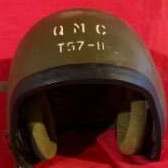
Hello, Hello, Yes, there is some information about this to be found on the web. It appears that, in addition to Belgium, the helmet was also introduced in the Netherlands as the M64. The main difference was the head size in centimeters rather than inches. https://dutchhelmets.nl/nl/helmen-hoofddeksels/tankhelmen-tank#Tankhelm-m64 https://imgur.com/gallery/usaeuro-tanker-helmet-m1938s-retro-futuristic-west-german-cousin-Rbn3vew https://www.warrelics.eu/forum/helmets/post-war-m38-tanker-helmet-help-695813/ https://www.warrelics.eu/forum/bundeswehr-forum/west-german-usaeuro-tanker-helmet-619128/ https://www.checkpoint-militaria.com/en_GB/a-92996258/helmets/tank-helmet-m64/?srsltid=AfmBOoqWDzmB8qR_Wttj8MW4kLoIvIC6KPnUwCBgx3vSgxdN8C0Z5Laa#description Given the head size in centimeters, it is more than likely a Belgian or Dutch M64. These helmets—sized in inches—were primarily used by US troops, as well as in small numbers by the West German BGS and on a trial basis by the West German Bundeswehr. Regards -

By Manky bandage · Posted
Well there you go, looks like I have a long way to go in recognising these things. 🤣 -
By FlatBackFour · Posted
I understand your theory and experience, but in this case, both the initials and number are written one over the other, in the same colour ink, and with the same handwriting.
-
-

-

-
-
-
-
.jpg.2ce6a8d90c750304bcf9d4faa9318f5d.jpg.5a23d93005bf9ba70918d137e8d2e4fc.jpg)
-
-
-
-

-

-
-
* While this forum is partially supported by our advertisers, we make no claim nor endorsement of authenticity of the products which these advertisers sell. If you have an issue with any advertiser, please take it up with them and not with the owner or staff of this forum.