January 1, 201511 yr #26 Yes. Since a month a full list with all dutch bravery awards is online. At this site and the previous issued book on the Bronze Lion he is not listed. Sorry. Herman
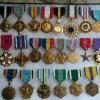
January 1, 201511 yr #27 Only in the military can you look at a guys chest and say, "Hey, great rack" and you don't get punched. Nice looking uniform.
September 15, 201510 yr Author #28 While doing research on the general I came across this article that his son wrote and found some new and very interesting things about his service and the man himself James H. Phillips 1919 1919 Class Crest Cullum No. 6355 Oct 09, 1983 Died in Charlotte, North Carolina Ashes interred in West Point Cemetery, West Point, NY Well Done; Be Thou at Peace. These ringing words from the beloved Alma Mater were well deserved of Jim Phillips, Holden to his family and early friends. Born on 14 August 1898, in Eastonville, Colorado, he attended elementary schools in Colorado and graduated from high school at Colorado Springs in June 1916. An early indicator of his leadership and drive was that he was president of the high school. He entered the United States Military Academy in June 1917, and was graduated on 1 November 1918 as a second lieutenant of Cavalry. After a tour of World War I battlefields and returning to West Point, he entered the Cavalry School at Fort Riley, Kansas and then joined the 9th Cavalry in the Philippine Islands. In 1922, Jim returned to the United States and was assigned to the 11th Cavalry at the Presidio of Monterey, California. During this tour he married his high school sweetheart, Mary Davis, to whom he was married for 53 years until her death in 1977. Two sons were born to them, James H. Jr. and Charles Davis, both of whom graduated from West Point in 1951. In 1926, General Phillips was assigned to the 2nd Cavalry Regiment at Fort Riley, and although an avid cavalryman, became convinced that the horse had lost its effectiveness on the battlefield and applied for training in mechanization at the Quartermaster Corps Motor Transport School at Camp Holibird, Maryland from which he graduated in June 1931. He then joined the Mechanized Force, an experimental unit, at Fort Eustis, Virginia and became one of the early Cavalry pioneers in mechanization. Later that year he was transferred to the 1st Cavalry Regiment (Mechanized) at Fort Knox, Kentucky, and in August 1933 entered the Command and General Staff School at Fort Leavenworth, Kansas. Upon completion of the two-year course, he became an instructor in mechanized and armor tactics at the Cavalry School, Fort Riley. In July 1940, Jim was named supply officer and commander of the provisional squadron of the 6th Cavalry Regiment (Horse and Mechanized) at Fort Oglethorpe, Georgia. At the same time Jim was preparing for war by mastering organizations and tactics, he perfected his basic military skills. He participated and excelled in polo, horsemanship and cross-country riding. Jim was also a rifle and pistol expert and was a member, coach and captain of the Cavalry Rifle and Pistol Team. He earned the Distinguished Rifle Marksmanship Badge and two legs on the Distinguished Pistol Marksmanship Badge. Under a plan devised by General Marshall, Chief of Staff, U.S. Army, to organize a section of the General Staff for the purpose of investigating new weapons, tactics, organizations and methods of combat, Jim was assigned to the Operations and Training Division of the War Department General Staff in May 1941. He was involved in the establishment and organization of the tank destroyers used in World War II. From his experience, he was convinced that the current horse and mechanized regiment was unsound and succeeded in its elimination, substituting the cavalry regiment, mechanized. These regiments proved their worth in World War II and exist today in the same concept as the armored cavalry regiments. He also originated the plan to establish a desert training area in California. This later became known as the California-Arizona Maneuver Area, the largest maneuver area in the United States. In early 1942, Jim was designated the assistant to the assistant chief of staff for Training, Army Ground Forces. In this position he helped organize and participated in all types of warfare: desert, mountain, airborne, amphibious and mechanized. During this period he wrote the Army regulation for the identification of motor vehicles in a unit, still the basis for current unit vehicle markings. In December 1943, General Phillips, then colonel, became chief of staff of III Corps with which he served at various stations in the United States until August 1944. At the time, Jim got his wish for combat as III Corps went to the European Theater, and he continued to serve as its chief of staff. One of its first actions was the relief of Bastogne, followed by the advance across the Cologne Plain, the capture of Remagen Bridge, the establishment of the bridgehead over the Rhine River, the closure of the Ruhr pocket and the breakthrough to the Austrian border. The successful crossing of the Rhine River at Remagen was a high point in Jims combat service. III Corps had been ordered by First Army to secure the west side of the Rhine River and then to conduct retraining until a bridgehead had been secured. However, General Phillips had directed the corps staff to prepare a plan to secure the bridge at Remagen and a bridgehead. At noon of 7March 1945, III Corps received orders from First Army to move south to Koblenz to meet the Third Army. However, when word was received from the 9th Armored Division that the bridge had been seized and was still standing, in the absence of the corps commander, Jim cancelled the Army orders and directed all available combat troops to cross the bridge. He then went to the bridge site to direct the action. Jim was awarded the Distinguished Service Cross by General Patton for his actions that day. At the conclusion of hostilities in Europe and the relief from occupational duties in Bavaria, General Phillips returned with the corps headquarters to the United States in preparation for further service in the Pacific Theater. In March 1946 he became chief of staff of the 2nd Service Command at Governors Island, New York. Following that tour, he was assigned to the War Department General Staff, and in July 1946 he was appointed assistant chief, Public Information Division and became deputy chief in 1948. During this period, Jim directed the writing and publication of the first official History of the Medal of Honor, US Army. In January 1949, Jim was sent to Greece as chief of staff of the Joint US Military Advisory Group and remained there for 2 1/2 years during the Greek Civil War. On his return he was appointed deputy assistant chief of staff for Intelligence, War Department General Staff. In 1953, General Phillips returned to Europe to become assistant chief of staff, G-2, US Army Europe. After three years, he returned to the US to become chief, US Army Security Agency, a position which he held until his retirement for physical disability in September 1958. He was retired at Colorado Springs, the city from which he had entered the military service. At the time of his retirement, General Phillips had received the following medals: Distinguished Service Cross, Distinguished Service Medal with OLC, Silver Star, Legion of Merit with OLC, Bronze Star with V, and the Army Commendation Medal with OLC. His foreign decorations included the Legion of Honor Degree of Chevalier and Degree of Officer and Croix de Guerre with Palm from France; the Order of Leopold with Palm and Croix de Guerre with Palm from Belgium and other decorations from Luxembourg, Greece and Iran. Following retirement, Jim and Mary moved to Carmel, California where he devoted his time to community projects, photography and the care of his flower garden. He participated in the organization of the First Federal Savings and Loan Association of Monterey County and was Chairman of the Board of that institution until 1981. After Mary died, Jim married Elva Covell, widow of Major General W.E.R. Coveil, Class of 1915. He continued to live in Carmel until shortly before his death in 1983. Elva predeceased him by two months. Jim was survived by his two sons, a sister and 6 grandchildren. My father was devoted to his family, the Corps, the Army and the nation. He is remembered with great love for his devotion and kindness and with great pride for his unswerving attention to Duty, adherence to Honor and service to Country. Well done; Be Thou at Peace. A son, Class of 1951 I think the generals last ribbon is the order of the crown from Iran
March 8, 201610 yr Author #30 Military times Hall of Valor The President of the United States of America, authorized by Act of Congress, July 9, 1918, takes pleasure in presenting the Distinguished Service Cross to Colonel (Cavalry) James Holden Phillips (ASN: 0-12331), United States Army, for extraordinary heroism in connection with military operations against an armed enemy while serving with Headquarters, III Corps, in connection with military operations against an armed enemy on 7 March 1945, in Germany. On that date when the bridge at Remagen was seized intact, Colonel Phillips ordered an immediate crossing and exploitation of tactical advantage and proceeded to the area to personally direct the operations. Although repeatedly exposed to intense enemy small arms and artillery fire and subjected to constant enemy air attack, he courageously continued his direct supervision and inspired the troops in the bridgehead area by his cool bravery and utter disregard for his own safety. Colonel Phillips' heroic actions and intrepid leadership exemplify the highest traditions of the military forces of the United States and reflect great credit upon himself and the United States Army. General Orders: Headquarters, Third U.S. Army, General Orders No. 131 (June 4, 1945) Action Date: March 7, 1945 Service: Army Rank: Colonel Company: Headquarters Division: III Corps
March 8, 201610 yr Author #31 Army Distinguished Service Medal for actions during the World War II (Citation Needed) - SYNOPSIS: Colonel James Holden Phillips (ASN: 0-12331), United States Army, was awarded the Army Distinguished Service Medal for exceptionally meritorious and distinguished services to the Government of the United States, in a duty of great responsibility during World War II. General Orders: War Department, General Orders No. 115 (1945) Service: Army Rank: Colonel Army Distinguished Service Medal Awarded for actions during the Cold War The President of the United States of America, authorized by Act of Congress July 9, 1918, takes pleasure in presenting a Bronze Oak Leaf Cluster in lieu of a Second Award of the Army Distinguished Service Medal to Major General James Holden Phillips (ASN: 0-12331), United States Army, for exceptionally meritorious and distinguished services to the Government of the United States, in duties of great responsibility from 1 July 1951 to 31 August 1958. General Orders: Department of the Army, General Orders No. 32 (September 16, 1958) Action Date: July 1, 1951 - August 31, 1958 Service: Army Rank: Major General Legion of Merit Awarded for actions during the World War II (Citation Needed) - SYNOPSIS: Colonel (Cavalry James Holden Phillips (ASN: 0-12331), United States Army, was awarded the Legion of Merit for exceptionally meritorious conduct in the performance of outstanding services to the Government of the United States during World War II. Action Date: World War II Service: Army Rank: Colonel Legion of Merit Awarded for actions during the World War II The President of the United States of America, authorized by Act of Congress, 20 July 1942, takes pleasure in presenting a Bronze Oak Leaf Cluster in lieu of a Second Award of the Legion of Merit to Colonel (Cavalry James Holden Phillips (ASN: 0-12331), United States Army, for exceptionally meritorious conduct in the performance of outstanding services to the Government of the United States from June 1942 to December 1943. General Orders: Department of the Army, General Orders No. 10 (October 24, 1947) Action Date: June 1942 - December 1943 Service: Army Rank: colonel
March 8, 201610 yr #32 A friend of mine translated the 1971 west point register of graduates I hope I don't mess this up too bad have the paper and can you write down the actual things but this seems easier Graduate # 6355 Born: Colorado 14 August 1898. Commissioned with class in cavalry. G3 (operations) Section, army ground forces 1942-1943 chief of staff, 3 corps African - European theatre's 1943-1946(Awards for ww2 DCS, DSM, SS,2LM, BSM, 2CR) chief of staff joint United States military assistance group Greece 1949 - 1951 office of the G2 (Intelligence) of the army(Washington DC) 1951-1953 G2 (Intelligence) chief, us army Europe 1953-1956 promoted to Major General 1950chief advisor of the army to the Secretary of the army (Washington DC) 1956-1958 kawarded Distinguished Service Medal retired disabled as major general 1958 chairman of the board of First Federal Savings and Loan Association of Monterey county he also has the symbol for West Point the helmet of Pallas Athena West point. Logo represents that the Graduate has donated at least $100,000 over his lifetime The helmet symbol represents a direct ancestor, or a direct descendant (or both) of another graduate - not a "donation" symbol - In Phillips case his 2 sons were graduates of the USMA Bill
March 8, 201610 yr Author #33 The helmet symbol represents a direct ancestor, or a direct descendant (or both) of another graduate - not a "donation" symbol - In Phillips case his 2 sons were graduates of the USMA Bill Thank you Bill I did not know that about the donations part that is what my friend told me I never really looked in to it I will re change the paperwork I have made
November 10, 20214 yr #34 @skipranney I realize I’m a little late to the game - this is actually my great great grandfather! I’d love to connect with you about this if possible!
May 19, 20242 yr #35 I found this photo of General Phillips in my father's items. Daddy was with the Seventh Army during WWII, but he was in Intelligence from 1942 until he retired in 1961. He did work at the Pentagon for a time (early 1950s?), that may be when he received this photo.




Create an account or sign in to comment