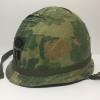
July 2, 20251 yr #1 Charles Heckert Norris was born on February 11th, 1915 in Hastings, Nebraska to Walter Norris and Luella Austill. Shortly after his birth, the family moved to Kansas City, Missouri where his father worked as a salesman to pay off the house. Charles attended Southwest High School and then completed four years of college at Kemper Military School in Boonville, Missouri, later becoming an instructor there for four years. With the threat of war looming over the United States, Norris joined the US Army Reserve on May 21st, 1940 with the 408th Infantry Regiment and then was commissioned as a 2nd Lieutenant a month later due to his prior record. After a year stateside, Norris left for Hawaii on July 11th, 1941 and joined Company C, 19th Infantry Regiment at Schofield Barracks, Pearl Harbor, which had already begun planning the defense of the island well before Lt Norris arrived. At the time however, an attack was still deemed unlikely, which would contribute to the island being caught completely by surprise a few months later. Pearl Harbor At 7:48 AM on December 7th, 1941, 353 Japanese planes began their first wave of attack on Pearl Harbor Naval Base. While the torpedo bombers headed towards battleship row, Japanese Zeros strafed Hickam and Wheeler Field, destroying a large majority of the American fighter planes parked on the runway that could have been mobilized to fight the Japanese in the air. Awoken by the sudden explosions, Lt Norris and the rest of the 24th and 25th Infantry Divisions stationed at the nearby Schofield Barracks scrambled out of their bunks, grabbing whatever weapons were available to try and defend their camp. After finishing their run on the airstrips, the Zeros turned their attention to Schofield Barracks, strafing the camp multiple times, wounding twenty eight and killing three. However, as they flew low over the barracks, they were met with a hail of machine gun, rifle, and pistol fire from the enraged US Army soldiers on the ground, which may have accounted for two of the Japanese fighter planes downed that day. After ninety minutes of chaos, the surprise attack on Pearl Harbor was over, leaving a total of 2,335 American servicemen killed and over 1,000 wounded. One day later, President Franklin Roosevelt formally declared war on Japan and the Axis powers, plunging the United States into WW2. In the aftermath of the attack, Lieutenant Norris’s 19th Infantry Regiment and the rest of the 24th Infantry Division were charged with the defense of the northern half of Oahu in case of yet another attack. Over the next year, they built elaborate coastal defenses such as beach fortifications and laid thousands of yards of barbed wire on the beaches. After a year of work and a promotion to 1st Lieutenant, Norris left Hawaii on February 28th, 1943 and joined Headquarters, 3rd Battalion, 222nd Infantry Regiment upon its activation in June. This regiment trained extensively at Camp Gruber for service in the ETO with the 42nd Infantry Division, but the Army had other plans for LT Norris. In early 1944, he attended Fort Benning’s Officer Advanced Course, was promoted to Captain on June 13th, and joined a replacement draft bound for France four days later. Into France Captain Norris arrived in France on September 1st and became the replacement commander of Company I, 175th Infantry Regiment, 29th Division as they were locked in the Battle of Brest. The Germans had turned the city into an intricately defended fortress of 30,000 men, and while some regular units fell quickly, the elite German paratroopers did not give up easily. Brutal fighting ensued over the next week, leading into the town and necessitating house to house battles, but Brest fell on the 20th. Captain Norris transferred to command Company K, but the Germans had taken a considerable amount of experienced men away from the regiment, and constant combat was wearing down on Norris as they kept pushing into Europe. This got worse during the Battle for Aachen. Aachen The 29th Infantry Division was located on the flank of the assaulting force driving into the town, but they kept up diversionary attacks against the Germans. On October 1st, “[Norris] became jittery, shaking and alarm reactions to sound, and fear of darkness due to his poor vision at night.”By the 4th, the Americans had lost 1,800 men to combat, and Norris’ condition worsened after he was knocked out by a blast concussion the day before. His breaking point came on October 5th. “[He] was in combat with his company and because of what he felt were improper orders from his CO, he disadvantageously attacked [the enemy at 3:00 AM] and about 75% of his company was wiped out.” Norris suffered a gunshot wound to his left hand’s 4th finger and was evacuated from the line. Recovery Captain Norris was treated for his injuries at a field hospital behind the lines. While his physical recovery was going well, his psychological state deteriorated as he was moved away from the front. “After going to the hospital, his nervous systems became more and more severe, particularly because of his guilt feelings for the loss of his men. He has vivid battle dreams where he continues to re-fight each battle trying to…avoid losing his men.” Hospital staff deemed it necessary to send him back to the US in February 1945 where he took on an administrative job with common check ups at the base hospitals where he showed improvement. Later Life After WW2 came to a close, Norris eventually returned to a teaching role in 1947 with the Wentworth Military Academy in Lexington as assistant PM&T, along with running the ROTC summer camp. At the end of 1949 however, he headed back overseas as Assistant Legislative Liaison Officer, HQ Supreme Command, Far East in Japan to his former enemy. The group advised the rebuilding country for political and relationship means between the two countries. Norris was highly commended for his service here and was promoted to Major in 1951, eventually leaving in February 1953 to become an English instructor at West Point. Sadly, while a faculty member here, Major Norris was admitted to their hospital after fainting at work, passing away from bilateral bronchopneumonia three days later on November 23rd, 1953. His death was associated with heavy drinking habits that plagued him for years prior, likely a byproduct of his trauma from combat. Charles is buried at the USMA Post Cemetery.
July 2, 20251 yr #3 Amazing helmet with an amazing study. He had quite the career as well. A shame he passed fairly young. I like it, a top shelf piece for sure.
July 3, 20251 yr #4 That’s an amazing helmet and story about this officer…indeed the Maryland Regiments of the 29th had a tough time of it getting into Germany, it was a hard-fought campaign.


Create an account or sign in to comment